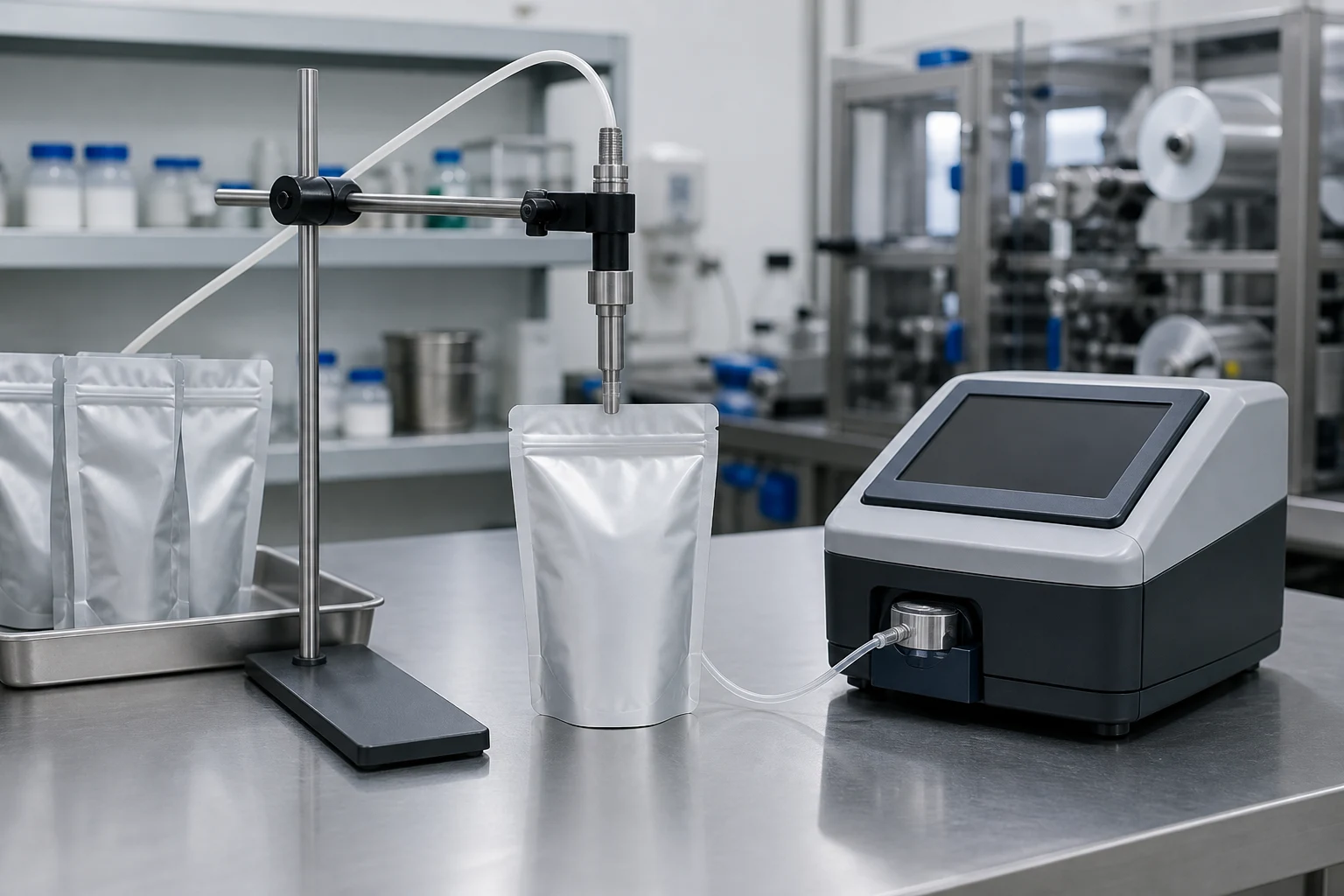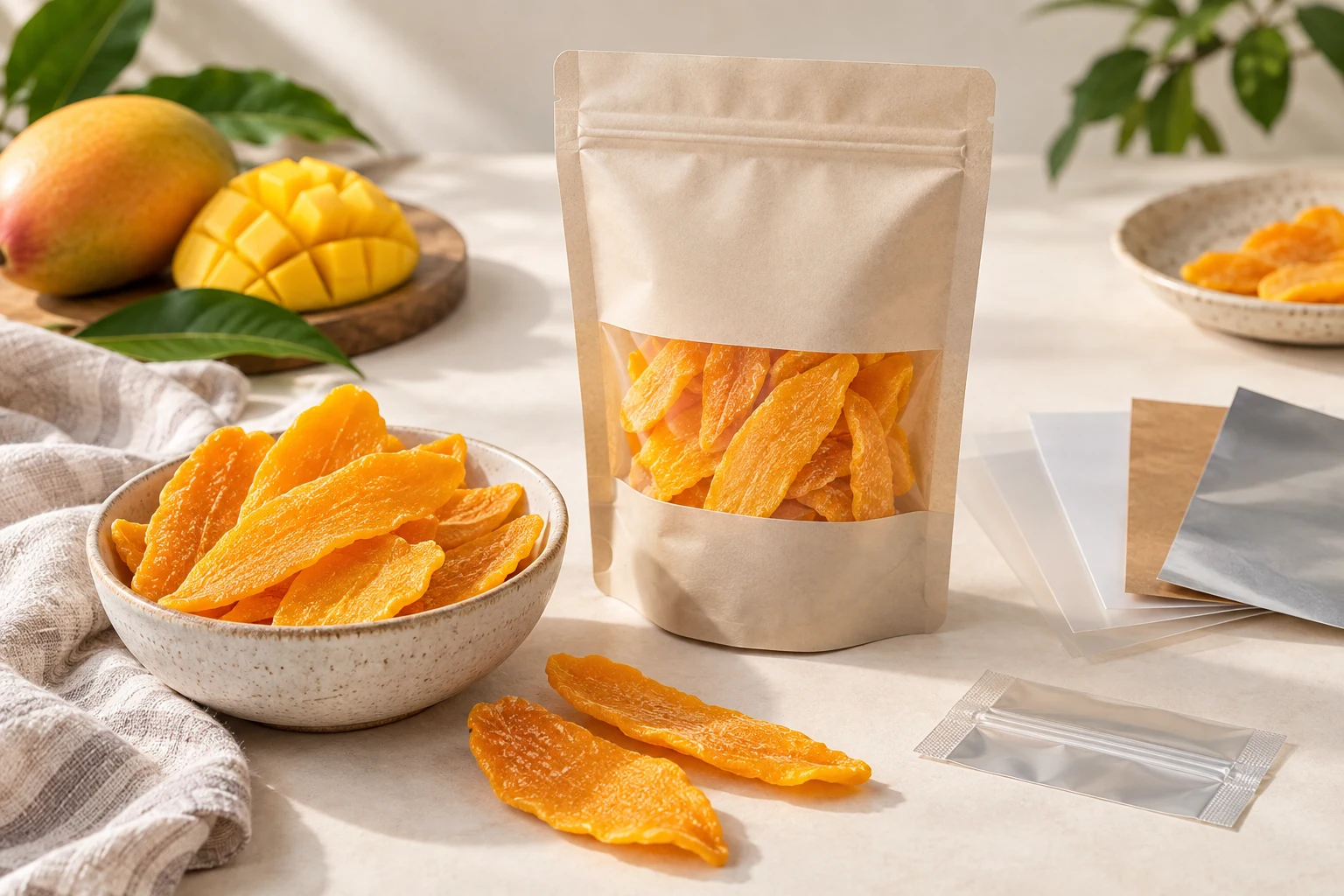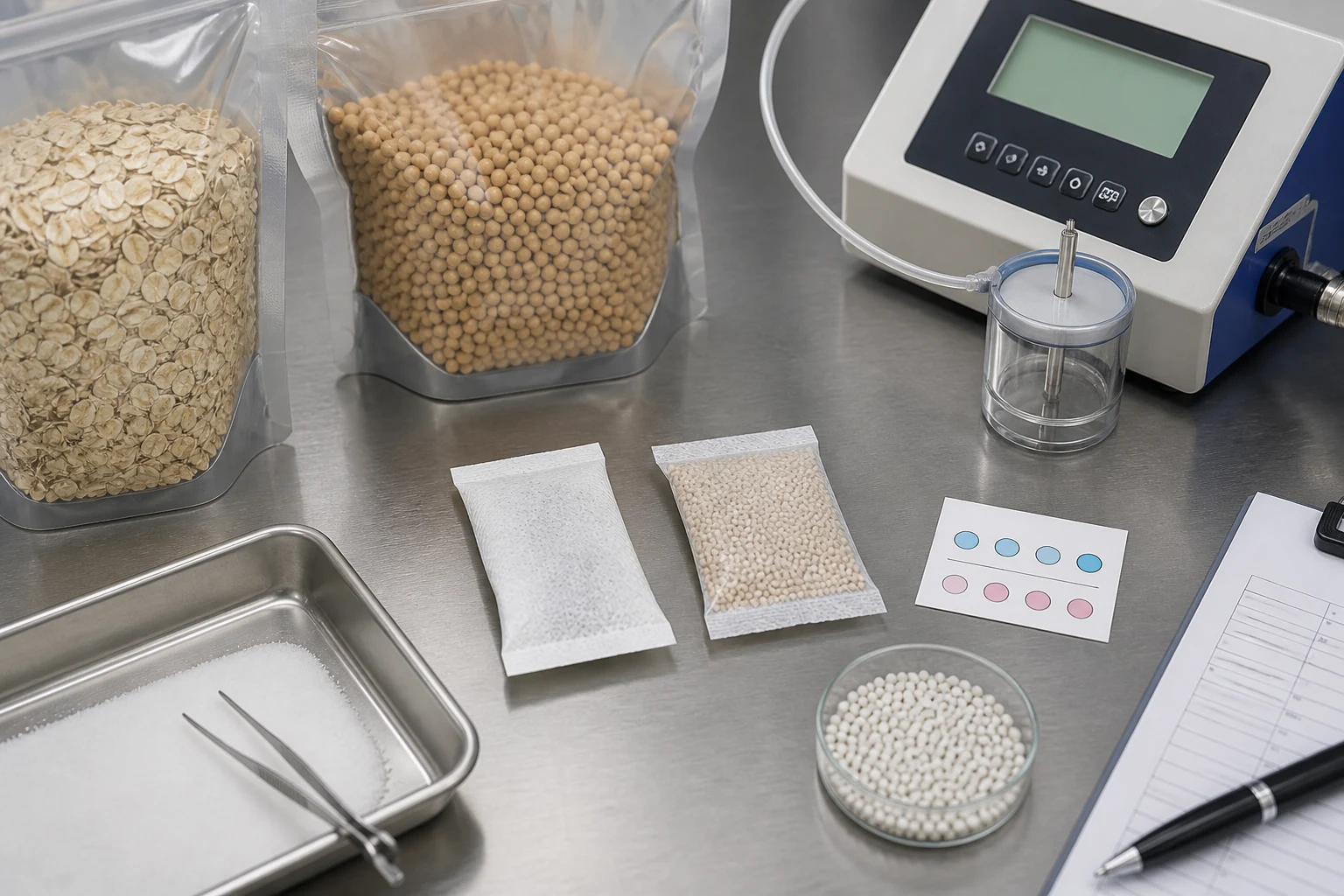
A desiccant and an oxygen absorber can both sit inside a pouch, but treating them as interchangeable can leave the real product risk untouched.
I choose a desiccant, an oxygen absorber, both, or neither by defining the product’s moisture and oxygen risks, package barrier, storage conditions, and validation plan.
I treat the pouch as a complete system. I confirm the product, material, filling, handling, and customer experience before I approve production.
What Is Each Component Designed to Control?
A package decision becomes confused when a team says “keep it fresh” without naming whether the relevant risk is oxygen, water vapor, product texture, or something else.
I use an oxygen absorber to address oxygen in a sealed-pack system and a desiccant to address moisture, then verify whether either mechanism fits the real product.
I write the product risks in plain language. I ask whether oxidation, aroma loss, moisture pickup, caking, texture change, or another issue drives the decision. I separate air inside the pouch from transmission through the pouch wall, and I separate quality effects from food-safety controls. A desiccant does not establish low oxygen. An oxygen absorber does not establish low humidity. Both can be irrelevant if the product, process, structure, and storage conditions were never defined.
How I make this decision specific
For “What Is Each Component Designed to Control?” in this should i use a desiccant, an oxygen absorber, or both review, I define the actual product, pouch configuration, intended use, and decision owner before I ask a supplier or tester for evidence. I keep the selected structure, component details, sample condition, and any stated test method together, then compare the result with the buyer’s actual route rather than a catalogue promise. That record lets me use the food barrier-film guide as a decision aid and retain a specification that another team member can check.
For Should I Use a Desiccant, an Oxygen Absorber, or Both, I state what is known, the condition it applies to, and what must still be checked with the actual product. I do not transfer a number, a test result, or a feature choice from another product simply because its pouch looks similar. The result of “What Is Each Component Designed to Control?” should give the buyer a clear next check, the supplier a precise request, and the project owner a record of the remaining uncertainty.
For Should I Use a Desiccant, an Oxygen Absorber, or Both, I request the exact pouch structure, component specification, and test conditions from the supplier. A broad material name or catalogue claim is not a production specification. The right next step is a representative filled sample, where relevant, with observations recorded before production is approved.
How Do I Choose the Pouch and Test Conditions?
A component choice can look sensible in a catalogue but fail once headspace, pouch permeability, fill weight, storage humidity, and seal behavior enter the picture.
I choose the pouch, component, and test conditions as one configuration, using filled samples and measurements that match the product and expected route.
I request the pouch structure, barrier data under relevant conditions, dimensions, sealant, closure, and product-contact documentation. I then use the real product at target fill. I record headspace, placement, sealing process, storage exposure, and sampling times. ASTM D3985 describes an oxygen-transmission method for film, while it also notes that transmission rate is not the only determinant of package performance. I therefore check the actual finished pouch rather than treat one material number as the full answer.
How I make this decision specific
For “How Do I Choose the Pouch and Test Conditions?” in this should i use a desiccant, an oxygen absorber, or both review, I define the actual product, pouch configuration, intended use, and decision owner before I ask a supplier or tester for evidence. I keep the selected structure, component details, sample condition, and any stated test method together, then compare the result with the buyer’s actual route rather than a catalogue promise. That record gives the buyer a decision aid and a specification that another team member can check.
For Should I Use a Desiccant, an Oxygen Absorber, or Both, I state what is known, the condition it applies to, and what must still be checked with the actual product. I do not transfer a number, a test result, or a feature choice from another product simply because its pouch looks similar. The result of “How Do I Choose the Pouch and Test Conditions?” should give the buyer a clear next check, the supplier a precise request, and the project owner a record of the remaining uncertainty.
When Does Using Both Make Sense?
Adding two components can sound safer, yet it can add cost, complexity, and a false sense of protection when neither has been tied to a measured need.
I use both only when separate, validated moisture and oxygen objectives justify them and the complete food, pouch, process, and safety plan supports the combination.
I do not choose both by default. I define the objective for each component, how I will measure it, and what decision the result supports. I consider moisture and oxidation sensitivity, headspace, permeability, component capacity, storage exposure, package size, and customer opening. If a component changes package atmosphere, the responsible food-safety and regulatory review must cover that food and process. The goal is a controlled product decision, not a more complicated-looking pouch.
How I make this decision specific
For “When Does Using Both Make Sense?” in this should i use a desiccant, an oxygen absorber, or both review, I define the actual product, pouch configuration, intended use, and decision owner before I ask a supplier or tester for evidence. I keep the selected structure, component details, sample condition, and any stated test method together, then compare the result with the buyer’s actual route rather than a catalogue promise. That record gives the buyer a decision aid and a specification that another team member can check.
For Should I Use a Desiccant, an Oxygen Absorber, or Both, I state what is known, the condition it applies to, and what must still be checked with the actual product. I do not transfer a number, a test result, or a feature choice from another product simply because its pouch looks similar. The result of “When Does Using Both Make Sense?” should give the buyer a clear next check, the supplier a precise request, and the project owner a record of the remaining uncertainty.
For Should I Use a Desiccant, an Oxygen Absorber, or Both, I treat the filled pack as a separate check from the material data. I record the fill condition, seal area, opening or closure behavior, carton arrangement, handling observations, and limits of the comparison. That prevents a favourable bench result from becoming an unsupported claim about shelf life, transport, or every product route.
How Do I Release a Moisture or Oxygen-Control Pack?
A release can become impossible to repeat when the order record says only “desiccant included” or “absorber added” and omits the conditions that made it work.
I release the chosen configuration with the product, pouch structure, component specification, sealing record, storage test, observations, limits, and re-test triggers documented together.
I keep an approval record with product, fill, pouch material, dimensions, seal process, component type and lot, test conditions, measurements, carton arrangement, and result. I make clear whether the work supports a quality check, a package comparison, or a broader shelf-life program. I do not replace a product-specific safety plan with a packaging component. A change to recipe, moisture level, film, sealant, pouch size, headspace, component, storage, or route needs focused review before an old approval carries forward.
How I make this decision specific
For “How Do I Release a Moisture or Oxygen-Control Pack?” in this should i use a desiccant, an oxygen absorber, or both review, I define the actual product, pouch configuration, intended use, and decision owner before I ask a supplier or tester for evidence. I keep the selected structure, component details, sample condition, and any stated test method together, then compare the result with the buyer’s actual route rather than a catalogue promise. That record gives the buyer a decision aid and a specification that another team member can check.
For Should I Use a Desiccant, an Oxygen Absorber, or Both, I state what is known, the condition it applies to, and what must still be checked with the actual product. I do not transfer a number, a test result, or a feature choice from another product simply because its pouch looks similar. The result of “How Do I Release a Moisture or Oxygen-Control Pack?” should give the buyer a clear next check, the supplier a precise request, and the project owner a record of the remaining uncertainty.
For Should I Use a Desiccant, an Oxygen Absorber, or Both, I preserve the final decision in a written brief that names the approved sample, conditions, observations, open risks, and change triggers. I then use the packaging quality-test guide to keep the quotation tied to the evidence rather than to a remembered sample or a generic product name.
Conclusion
I choose packaging through evidence, filled-pack testing, and clear specifications. That process protects the product, the launch, and the customer experience.
Sources and Further Reading
- FDA Food Code, reduced oxygen packaging definitions and controls.
- Reddit r/Canning, oxygen absorber and desiccant community discussion.
- ASTM D3985, oxygen transmission rate through plastic film.
- FDA, food packaging and food-contact substances.
- FDA Food Code overview.
- Unique Packaging barrier-film guide.
- Unique Packaging quality-test guide.
Need a pouch specification?
I can review your product, size, quantity, artwork, and target market.