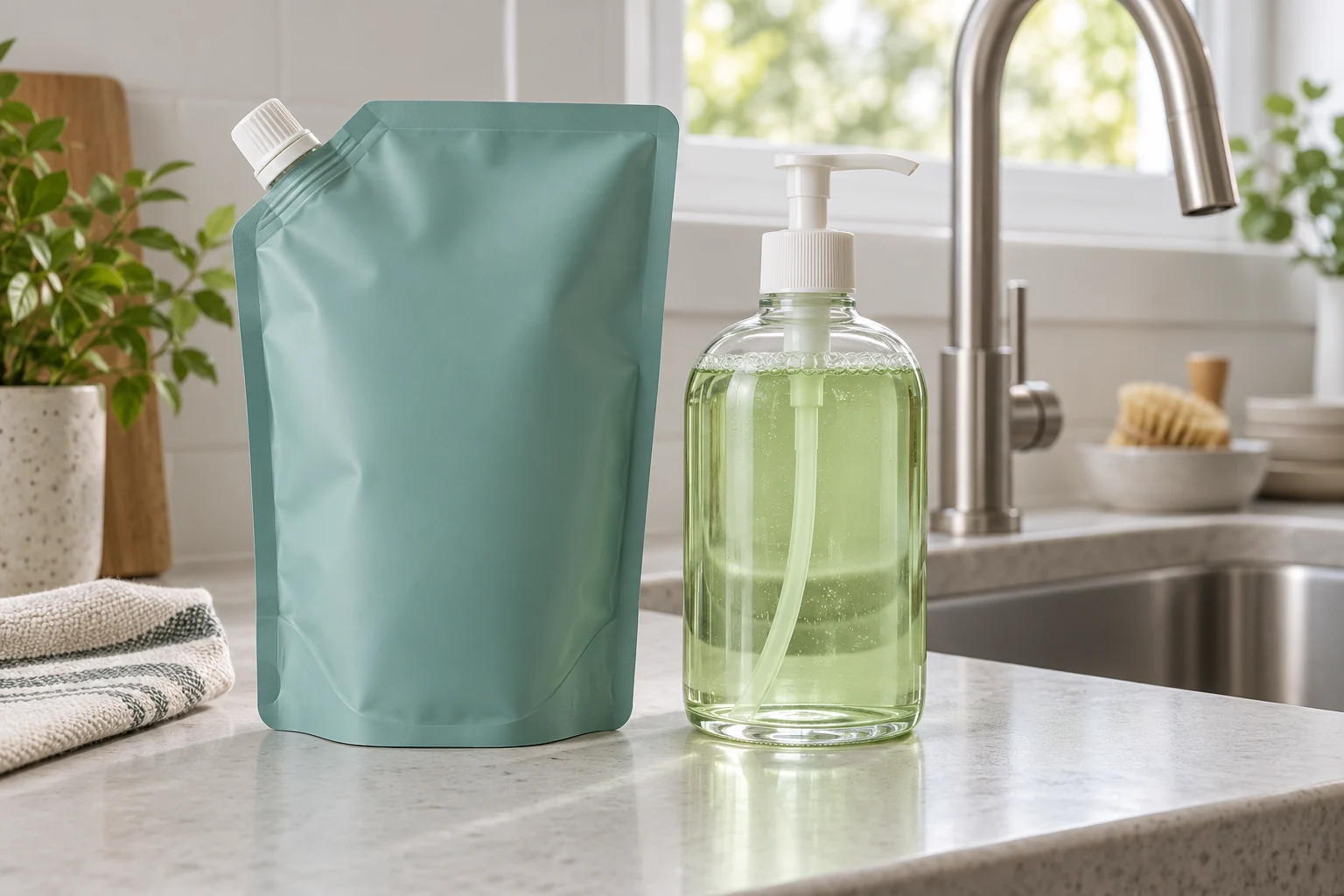
A dish soap refill can fit the shelf yet spill around the pump bottle. The pouch, formula and receiving opening need to work together.
I test dish soap refill pouches with the actual formula, receiving bottle and closure system. I review material compatibility, controlled pouring, leakage and handling, then confirm the approved sample and written specification before asking for a quote.
At Unique Packaging, I start with the refill action at the sink. This guide concerns liquid hand-dishwashing detergent, with product safety and labeling reviewed by the responsible brand team.
How Should a Dish Soap Refill Reach the Pump Bottle?
A larger refill may be difficult to hold over a narrow bottle neck. A generous spout alone does not settle control or cleanup.
I test the complete transfer using the intended pump bottle, formula and fill range. I observe grip, flow, stopping, residue and recapping before choosing the spout.
I ask the brand which bottle the customer will refill. I bring that bottle, its removable pump and the proposed pouch to the review. I record the receiving opening, available clearance and the normal place where refilling happens. A countertop pump bottle and a built-in sink reservoir are different tasks. I do not approve one by testing only the other.
A March 2026 Reddit discussion about dish-soap dispensers includes a user's account of first transferring detergent from a large jug into a smaller bottle for refilling.1 I treat this as an individual workaround for handling an awkward refill. It does not prove a pouch would solve the problem. It tells me to observe the receiving opening and the user's grip instead of judging the refill only by its nominal capacity.
Compare the start and end of the pour
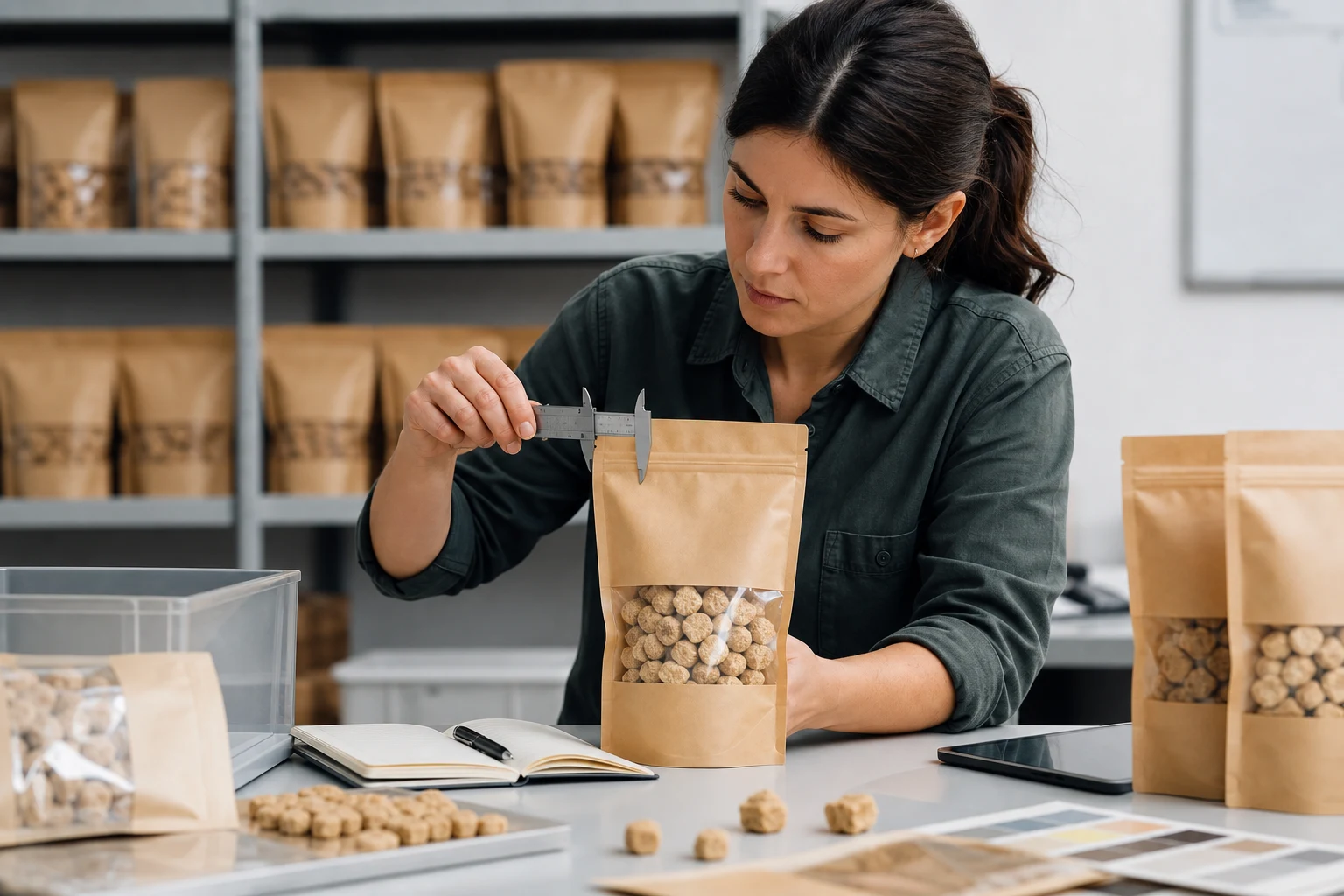
I ask users to remove the pump, open the pouch and transfer the intended amount without coaching them through a preferred technique. I observe the initial flow and whether they can stop before overflowing. I check a full pack and a partly emptied pack. I record how the pouch is supported, where it bends and whether the cap can be replaced without leaving residue on the threads.
| Receiving system | Question I test | Observation to record |
|---|---|---|
| Countertop pump bottle | Can the user see the receiving level? | Grip, stopping point and cleanup |
| Built-in reservoir | Is access suitable for this refill? | Visibility and clearance at the opening |
| Repeated partial refills | Can the remaining product be stored securely? | Recapping and pouch condition |
Ecover describes home refill products in bag-in-box format and includes washing-up liquid among its refill products.2 I use that as a concrete example that a refill system includes dispensing choices. It does not make a spout pouch equivalent to a tap-equipped box. The spout pouch guide helps frame that distinction before I request samples.
I keep label instructions tied to the intended detergent and bottle system. I ask the brand to approve cleaning, reuse and product-handling directions rather than inventing them as the packaging supplier. If the refill task needs a funnel or other accessory, I include that in the actual usability comparison and the customer instructions review.
How Do I Check Formula Compatibility With the Pouch?
A pouch described as suitable for liquids may have no evidence for the planned detergent. The film, fitment and cap need a formula-specific review.
I request material and component identities, then ask the technical team to define compatibility checks with the exact formula, contact time, temperature and relevant stressed parts.
I ask the formulator to identify the exact product revision and provide the information the converter needs for a compatibility review. I keep fragrance variants and concentrated versions separate until the responsible technical team confirms the scope. The same product family name does not show that every variant has identical packaging requirements. I record the intended fill conditions and storage route with the formula reference.
ASTM D543 describes practices for evaluating plastics against chemical reagents and emphasizes the importance of exposure conditions and their similarity to actual use.3 I ask a qualified laboratory whether that approach fits the proposed components. The lab should define reagent or actual formula, concentration, contact duration, temperature, stress condition, controls and properties to inspect. I do not prescribe a universal pass limit or claim that a short coupon exposure validates the entire package.
Keep each contact surface identifiable
I request the pouch layer sequence, thicknesses and sealant, plus the fitment resin, cap reference and any liner or gasket. I ask which surfaces contact product during storage and pouring. I retain component drawings and physical samples. If the supplier changes a cap or sealant, the technical owner can then identify which part of the approval needs revisiting.
I agree which changes to record before testing begins. Those may include visible appearance, dimensions, mass, closure behavior or other properties selected by the lab. I keep the initial condition and reference samples. If a result changes, I ask for an investigation rather than diagnosing a particular chemical mechanism from a photograph. The aim is a traceable decision about this construction and formula.
I compare material options only after defining those needs. The film-material guide can explain common names, but it cannot select a detergent contact layer by itself. I ask for evidence rather than choosing on a broad recyclable, high-barrier or chemical-resistant label. Any disposal claim also needs evidence for the finished construction and intended market.
The product brand should review the destination's classification and label requirements for its own formula. I do not transfer another detergent's warning panel, ingredient claims or certification to the new pack. I leave room on the drawing for the approved instructions, required information and traceable lot code, then check their readability on a filled sample.
What Must the Filled-Pouch Trial and Quote Include?
An approved film does not establish the performance of a cap or fitment joint. A useful purchase decision needs the assembled pack and its actual handling.
I trial the assembled pouch with the intended fill process, inspect closure and fitment behavior, repeat the refill action after handling, and quote only against the approved specification.
I arrange representative filled samples using the intended detergent and the proposed equipment. I record fill orientation, product condition, fill range and the actual sealing or capping settings. I ask the converter and packer to define the operating window for their components. I do not copy a cap torque or sealing temperature from a different spout system.
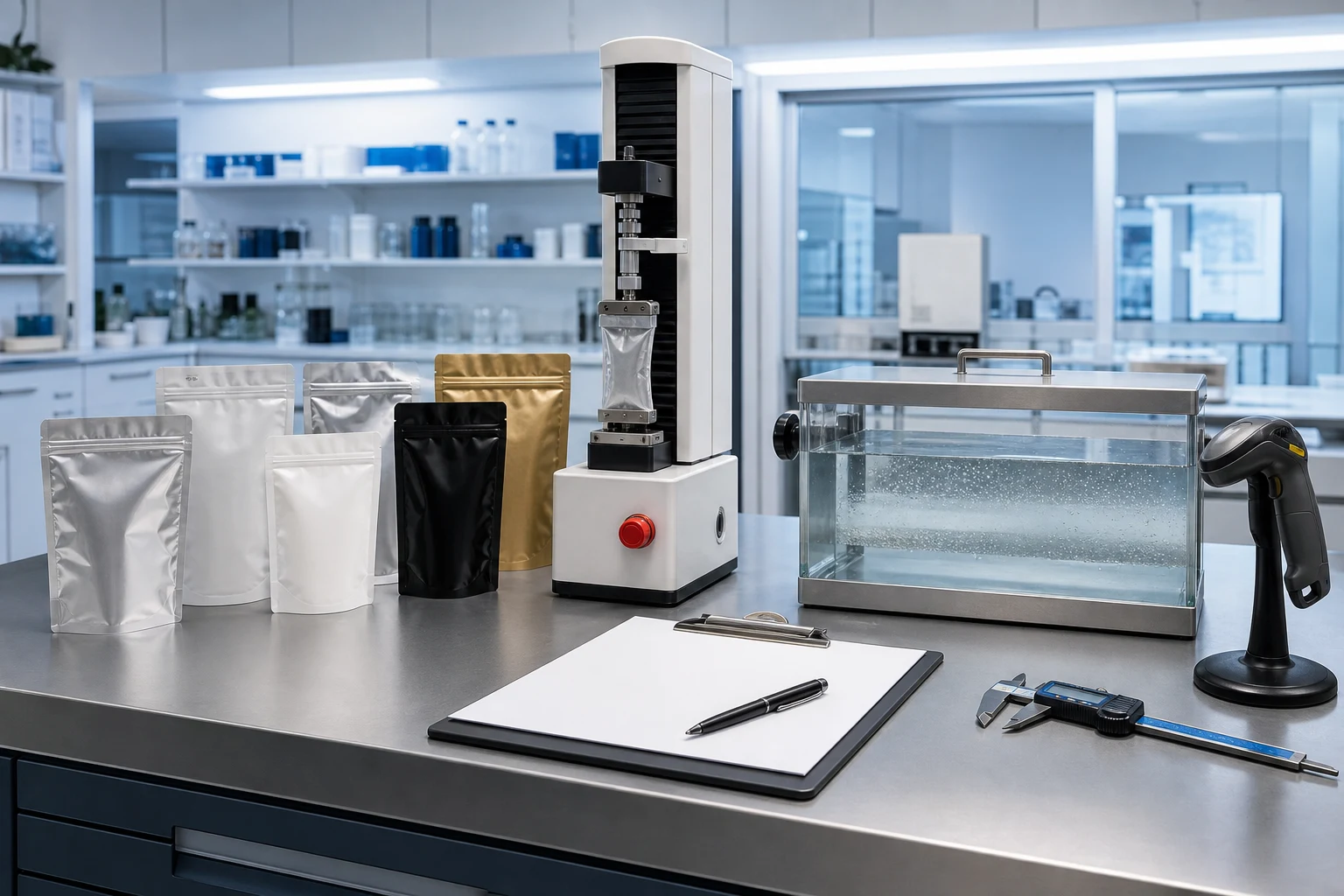
I inspect the pouch perimeter, fitment attachment and cap interface as separate areas. I ask the technical team to define appropriate finished-pack leakage checks and acceptance criteria. I include upright and side storage orientations when they belong to the intended route. I record the observation times, sample identifiers and any residue found, with photographs where useful. The trial plan should identify what a satisfactory result means before testing begins.
Keep strength, compatibility and use as separate evidence
ASTM F88/F88M addresses seal-strength measurement for flexible barrier materials.4 When applicable, I ask the lab to state the edition, specimen, conditioning, holding technique and failure mode. I keep the result with the relevant seal reference. It does not replace a cap check, formula-compatibility review or assessment of the completed pack under the intended handling conditions.
I put filled samples into the proposed carton arrangement and use the agreed handling sequence. I inspect them again before repeating the refill action with the receiving bottle. I look for altered grip, cap access, pouring control and visible pouch changes. A short bench review is a development check. I do not present it as certified distribution performance or a validated storage life.
The quality test guide helps organize the evidence. My purchase checklist names formula revision, net fill, finished dimensions, layer sequence, sealant, fitment, cap and any liner. It includes equipment references, artwork, receiving bottle, carton plan, compatibility conditions, acceptance criteria and the approved filled sample. I identify material, formula and component substitutions that require review.
I send that record with a dish soap refill sample and specification-based quote request. I state quantity per design and destination. Supplier responses can then address a defined assembly and project. I compare those responses without inventing MOQ, production timing, price or environmental savings, and I return proposed changes to the appropriate technical check before approving an order.
Conclusion
I approve dish soap refill pouches around the actual formula, bottle and closure trial. A controlled sample and written specification should guide the order.
Sources and Further Reading
Need a pouch specification?
I can review your product, size, quantity, artwork, and target market.