Dried fruit can reach a customer soft, sticky, or inconsistent when product condition, moisture exposure, pouch structure, and handling are not evaluated together.
I package dried fruit by first defining the approved product condition and route, then comparing the exact pouch construction with representative filled-pack checks and a written release specification.
I treat the pouch as a complete system. I confirm the product, material, filling, handling, and customer experience before I approve production.
What Must I Know About the Dried Fruit Before I Choose a Pouch?
A pouch choice becomes guesswork when the team has not established the fruit’s condition, intended route, texture goal, or quality-release controls.
I begin with the approved product condition, target market, pack size, storage route, and release checks, then ask what packaging question remains for that specific product.
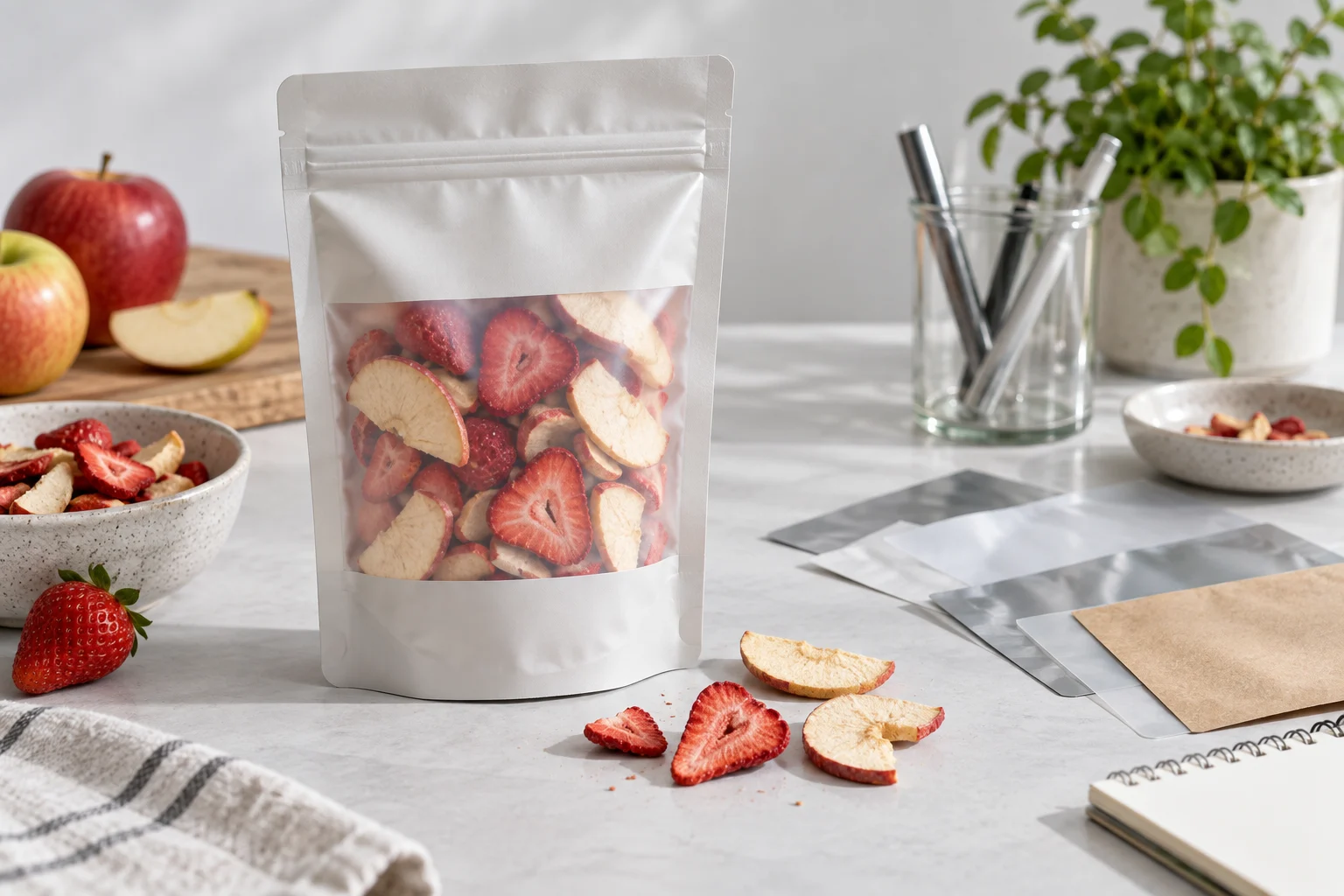
I identify whether the product is dried or freeze-dried, its cut size, inclusions, coating, oil exposure, fill condition, intended storage, and desired customer experience. I do not turn a generic dried-fruit discussion into a moisture limit. The Reddit thread is useful because it explains a real observation of surface moisture and condensation after sealing, but it does not set a specification for a different fruit or process.2 I use that insight to require product-condition evidence before the pouch is approved. I record the incoming product condition and the question a package trial must answer, rather than asking film alone to compensate for a product outside its release window.
How I make this decision specific
For “What Must I Know About the Dried Fruit Before I Choose a Pouch?” in this how do i package dried fruit to manage moisture and texture review, I define the actual product, pouch configuration, intended use, and decision owner before I ask a supplier or tester for evidence. I keep the selected structure, component details, sample condition, and any stated test method together, then compare the result with the buyer’s actual route rather than a catalogue promise. That record lets me use the best barrier film for food packaging guide as a decision aid and retain a specification that another team member can check.
For How Do I Package Dried Fruit to Manage Moisture and Texture, I state what is known, the condition it applies to, and what must still be checked with the actual product. I do not transfer a number, a test result, or a feature choice from another product simply because its pouch looks similar. The result of “What Must I Know About the Dried Fruit Before I Choose a Pouch?” should give the buyer a clear next check, the supplier a precise request, and the project owner a record of the remaining uncertainty.
For How Do I Package Dried Fruit to Manage Moisture and Texture, I request the exact pouch structure, component specification, and test conditions from the supplier. A broad material name or catalogue claim is not a production specification. The right next step is a representative filled sample, where relevant, with observations recorded before production is approved.
Which Film Data and Pouch Features Matter?
A supplier’s broad “high barrier” description cannot explain the actual film, test condition, closure, and finished pouch behavior a buyer needs to compare.
I ask for the selected structure, intended use, named transmission-test method and conditions, closure arrangement, and physical samples before I make a construction decision.
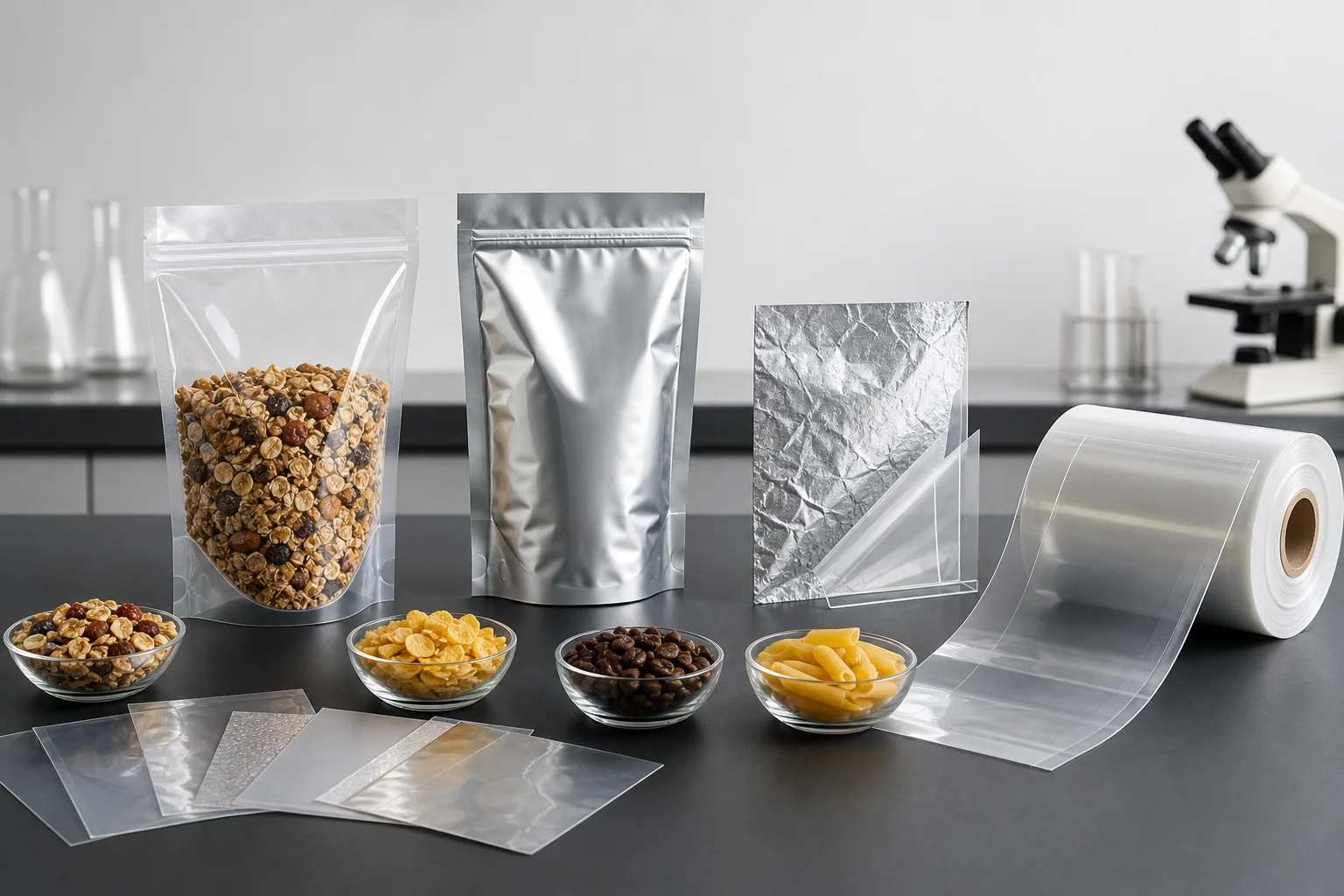
I compare the material proposal against the product and route. ASTM F1249 describes water-vapor transmission testing using a modulated infrared sensor and notes that transmission can be related to product stability.1 That tells me to ask for the exact structure, sample, method, and conditions; it does not supply a universal target. I also consider oxygen exposure only if the product risk and project evidence justify it. The barrier-film guide keeps the discussion connected to structure and test data. I inspect the zipper, tear feature, seal zones, and window choice as part of the same finished pouch, because a useful barrier value does not prove consumer opening or reclosure performance.
How I make this decision specific
For “Which Film Data and Pouch Features Matter?” in this how do i package dried fruit to manage moisture and texture review, I define the actual product, pouch configuration, intended use, and decision owner before I ask a supplier or tester for evidence. I keep the selected structure, component details, sample condition, and any stated test method together, then compare the result with the buyer’s actual route rather than a catalogue promise. That record gives the buyer a decision aid and a specification that another team member can check.
For How Do I Package Dried Fruit to Manage Moisture and Texture, I state what is known, the condition it applies to, and what must still be checked with the actual product. I do not transfer a number, a test result, or a feature choice from another product simply because its pouch looks similar. The result of “Which Film Data and Pouch Features Matter?” should give the buyer a clear next check, the supplier a precise request, and the project owner a record of the remaining uncertainty.
How Do I Test Filled Pouches and Packed Cases?
An empty pouch may look correct while a filled pack reveals sealing, headspace, zipper, carton-contact, or texture risks that a material sample did not show.
I examine representative filled, sealed, cartoned, handled, opened, and reclosed samples under stated project conditions, documenting observations rather than claiming a universal route result.
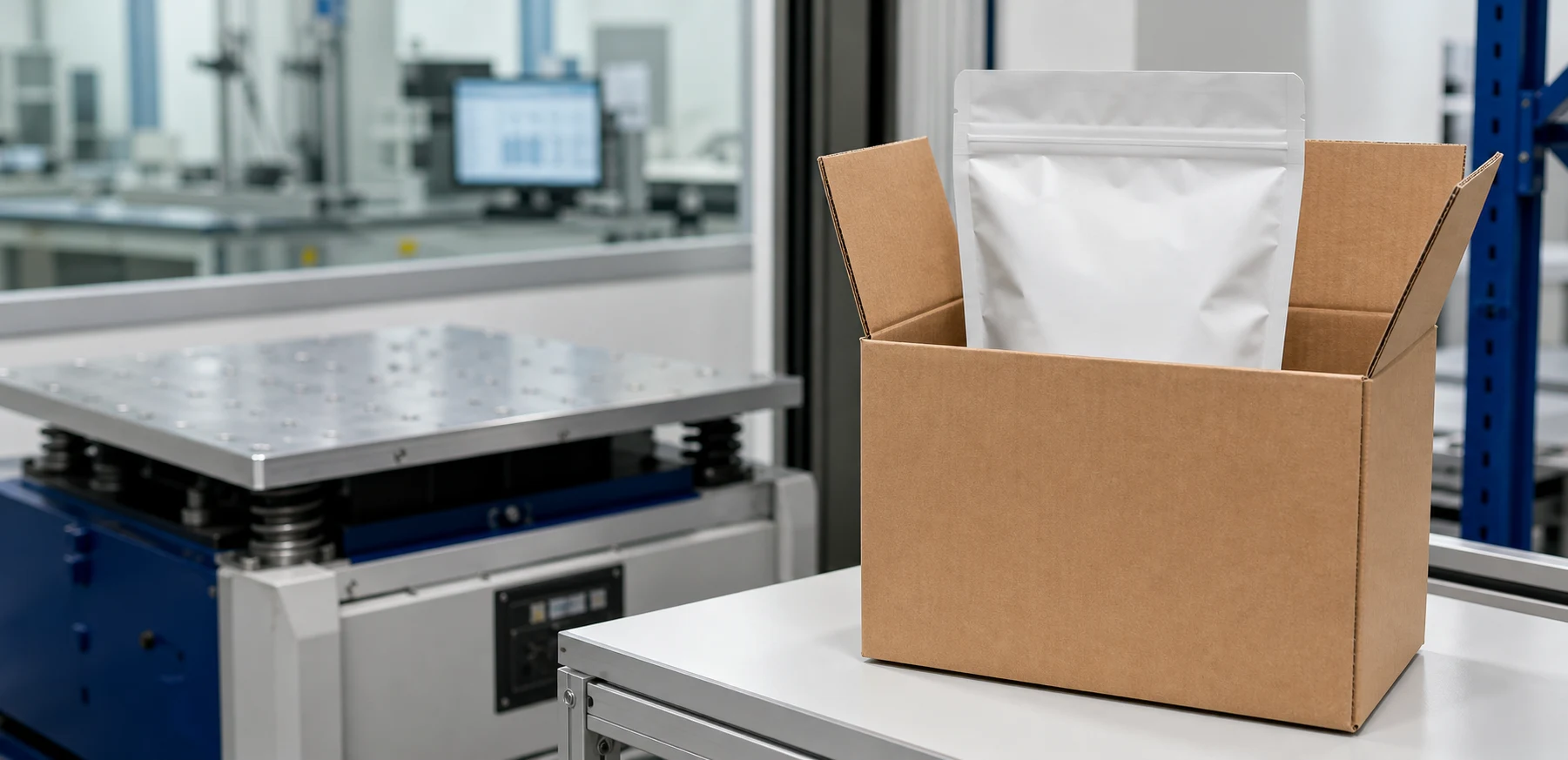
I make representative samples at the intended fill and inspect seals, product distribution, headspace, pouch standing, zipper use, tear path, carton orientation, and visible package changes. If a route comparison is needed, I choose a method that fits the decision and record what it represents. ISTA distinguishes its screening procedures from more specific simulation procedures, so I do not present a simple handling check as complete distribution proof.3 I retain the actual samples and note their product condition and test conditions. The filled-pouch distribution guide supplies a practical route from an initial screen to a better-defined test plan.
How I make this decision specific
For “How Do I Test Filled Pouches and Packed Cases?” in this how do i package dried fruit to manage moisture and texture review, I define the actual product, pouch configuration, intended use, and decision owner before I ask a supplier or tester for evidence. I keep the selected structure, component details, sample condition, and any stated test method together, then compare the result with the buyer’s actual route rather than a catalogue promise. That record gives the buyer a decision aid and a specification that another team member can check.
For How Do I Package Dried Fruit to Manage Moisture and Texture, I state what is known, the condition it applies to, and what must still be checked with the actual product. I do not transfer a number, a test result, or a feature choice from another product simply because its pouch looks similar. The result of “How Do I Test Filled Pouches and Packed Cases?” should give the buyer a clear next check, the supplier a precise request, and the project owner a record of the remaining uncertainty.
For How Do I Package Dried Fruit to Manage Moisture and Texture, I treat the filled pack as a separate check from the material data. I record the fill condition, seal area, opening or closure behavior, carton arrangement, handling observations, and limits of the comparison. That prevents a favourable bench result from becoming an unsupported claim about shelf life, transport, or every product route.
What Should a Dried-Fruit Pouch Specification Include?
A material choice cannot survive a reorder when the documented brief omits the product condition, test basis, pouch features, filled sample, carton plan, and release decision.
I specify the approved product condition, format, dimensions, construction, feature placement, named material evidence, filled-pack observations, carton arrangement, acceptance decision, and change triggers.
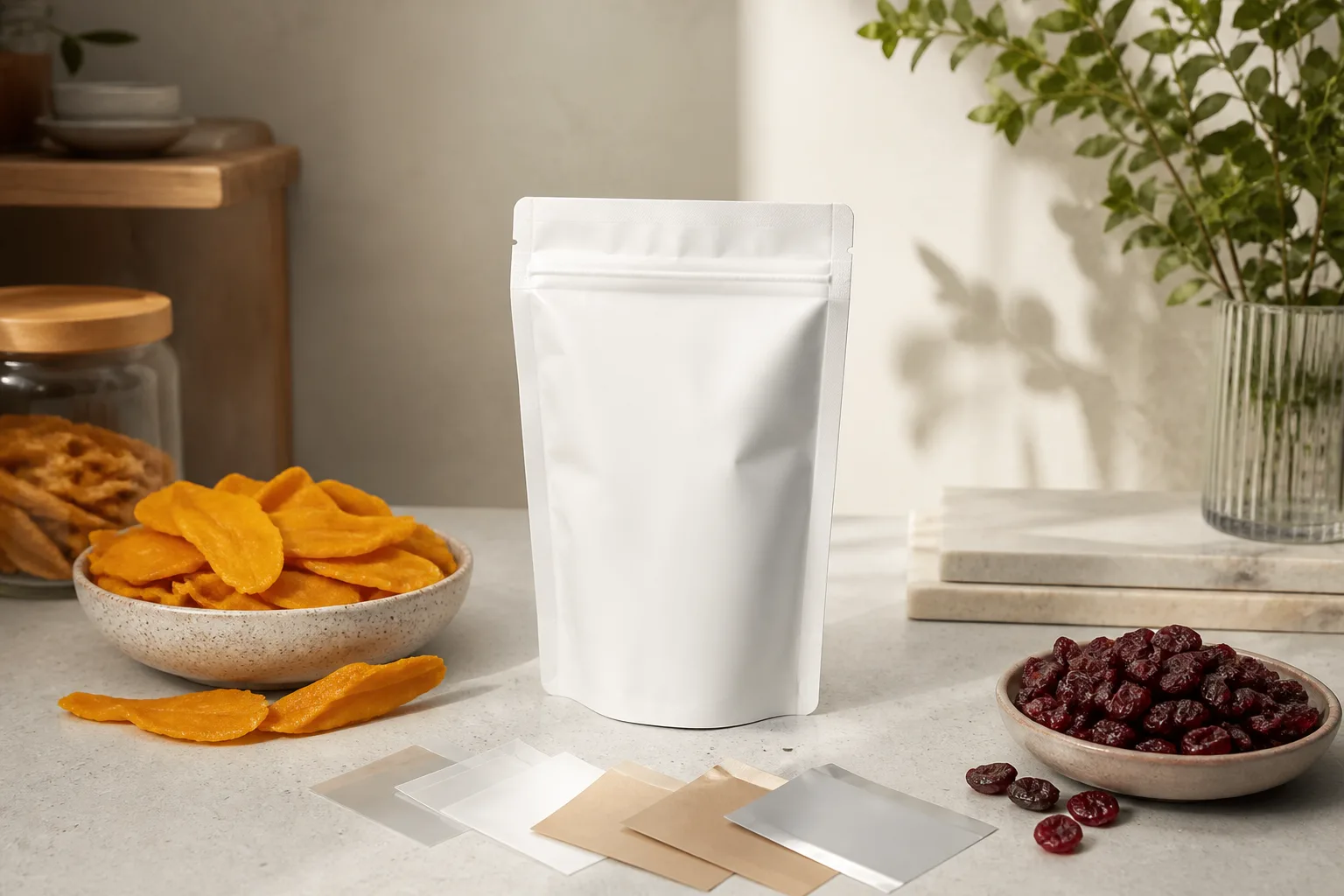
I write the specification so a buyer and supplier can discuss one concrete project. It includes product description and approved condition, pack size and fill, pouch format and dimensions, construction, food-contact market, requested transmission evidence and conditions, zipper or tear feature, print revision, sample condition, carton plan, acceptance observations, retained reference, and limits. I list reapproval triggers such as product change, material or sealant change, feature movement, fill change, artwork change, carton change, or route change. Then I assess the material, run a representative filled-pack trial, confirm the written brief, and request the quote on those facts. The specification-sheet guide keeps the record usable on the next purchase.
How I make this decision specific
| Check | What I document | Why it matters |
|---|---|---|
| Product condition | Approved product and fill context. | Keeps package trials representative. |
| Material evidence | Structure, method, and stated conditions. | Makes comparisons meaningful. |
| Filled-pack review | Seals, opening, carton, and observations. | Finds risks an empty pouch hides. |
| Release controls | Reference, limits, and change triggers. | Supports a repeatable quote. |
For “What Should a Dried-Fruit Pouch Specification Include?” in this how do i package dried fruit to manage moisture and texture review, I define the actual product, pouch configuration, intended use, and decision owner before I ask a supplier or tester for evidence. I keep the selected structure, component details, sample condition, and any stated test method together, then compare the result with the buyer’s actual route rather than a catalogue promise. That record gives the buyer a decision aid and a specification that another team member can check.
For How Do I Package Dried Fruit to Manage Moisture and Texture, I state what is known, the condition it applies to, and what must still be checked with the actual product. I do not transfer a number, a test result, or a feature choice from another product simply because its pouch looks similar. The result of “What Should a Dried-Fruit Pouch Specification Include?” should give the buyer a clear next check, the supplier a precise request, and the project owner a record of the remaining uncertainty.
For How Do I Package Dried Fruit to Manage Moisture and Texture, I preserve the final decision in a written brief that names the approved sample, conditions, observations, open risks, and change triggers. I then use the packaging specification-sheet guide to keep the quotation tied to the evidence rather than to a remembered sample or a generic product name.
Conclusion
I choose packaging through evidence, filled-pack testing, and clear specifications. That process protects the product, the launch, and the customer experience.
Sources and Further Reading
- ASTM F1249, Water Vapor Transmission Rate Through Plastic Film and Sheeting.
- Reddit r/foodscience, dried-fruit conditioning and condensation community discussion.
- ISTA, packaged-product test procedure categories.
- FDA, Food Packaging and Other Substances that Come in Contact with Food.
- Unique Packaging barrier-film guide.
- Unique Packaging specification-sheet guide.
Need a pouch specification?
I can review your product, size, quantity, artwork, and target market.