A label can look right at application and still lift, wrinkle, scuff, or hide required information after ordinary filling, storage, and handling.
I choose a stock-pouch label by matching its face material and adhesive to the pouch surface, product conditions, application method, storage, handling, and the exact approved label layout.
I treat the pouch as a complete system. I confirm the product, material, filling, handling, and customer experience before I approve production.
Which Product and Handling Conditions Matter First?
A label choice becomes fragile when the buyer knows only the pouch size and not the surface, temperature, moisture, oil, scuffing, or application conditions.
I define the pouch surface, product type, storage temperature, condensation or moisture exposure, oil contact, handling, label application method, and expected life before I compare materials.
I inspect the actual pouch surface. Matte, gloss, kraft-look, metallized, textured, and coated pouches can behave differently under the same label. I also define the realistic condition: a dry snack on a shelf is not the same as a refrigerated product, an oily food, a humid route, or a pouch rubbed inside a carton. A label supplier can only make a useful recommendation when those conditions are clear. I use the final pouch sample, not a generic flat film swatch, for the first adhesion review.
How I make this decision specific
For “Which Product and Handling Conditions Matter First?” in this how do i choose label material and adhesive for stock pouches review, I define the actual product, pouch configuration, intended use, and decision owner before I ask a supplier or tester for evidence. I keep the selected structure, component details, sample condition, and any stated test method together, then compare the result with the buyer’s actual route rather than a catalogue promise. That record lets me use the custom pouch dieline guide as a decision aid and retain a specification that another team member can check.
For How Do I Choose Label Material and Adhesive for Stock Pouches, I state what is known, the condition it applies to, and what must still be checked with the actual product. I do not transfer a number, a test result, or a feature choice from another product simply because its pouch looks similar. The result of “Which Product and Handling Conditions Matter First?” should give the buyer a clear next check, the supplier a precise request, and the project owner a record of the remaining uncertainty.
For How Do I Choose Label Material and Adhesive for Stock Pouches, I request the exact pouch structure, component specification, and test conditions from the supplier. A broad material name or catalogue claim is not a production specification. The right next step is a representative filled sample, where relevant, with observations recorded before production is approved.
How Do Face Material and Adhesive Work Together?
It is easy to select a face material for appearance and forget that the adhesive, label size, pouch flex, and application geometry decide whether it stays useful.
I select face material for appearance and handling, then select adhesive for the actual pouch surface and exposure, and I test both together on the finished pouch.
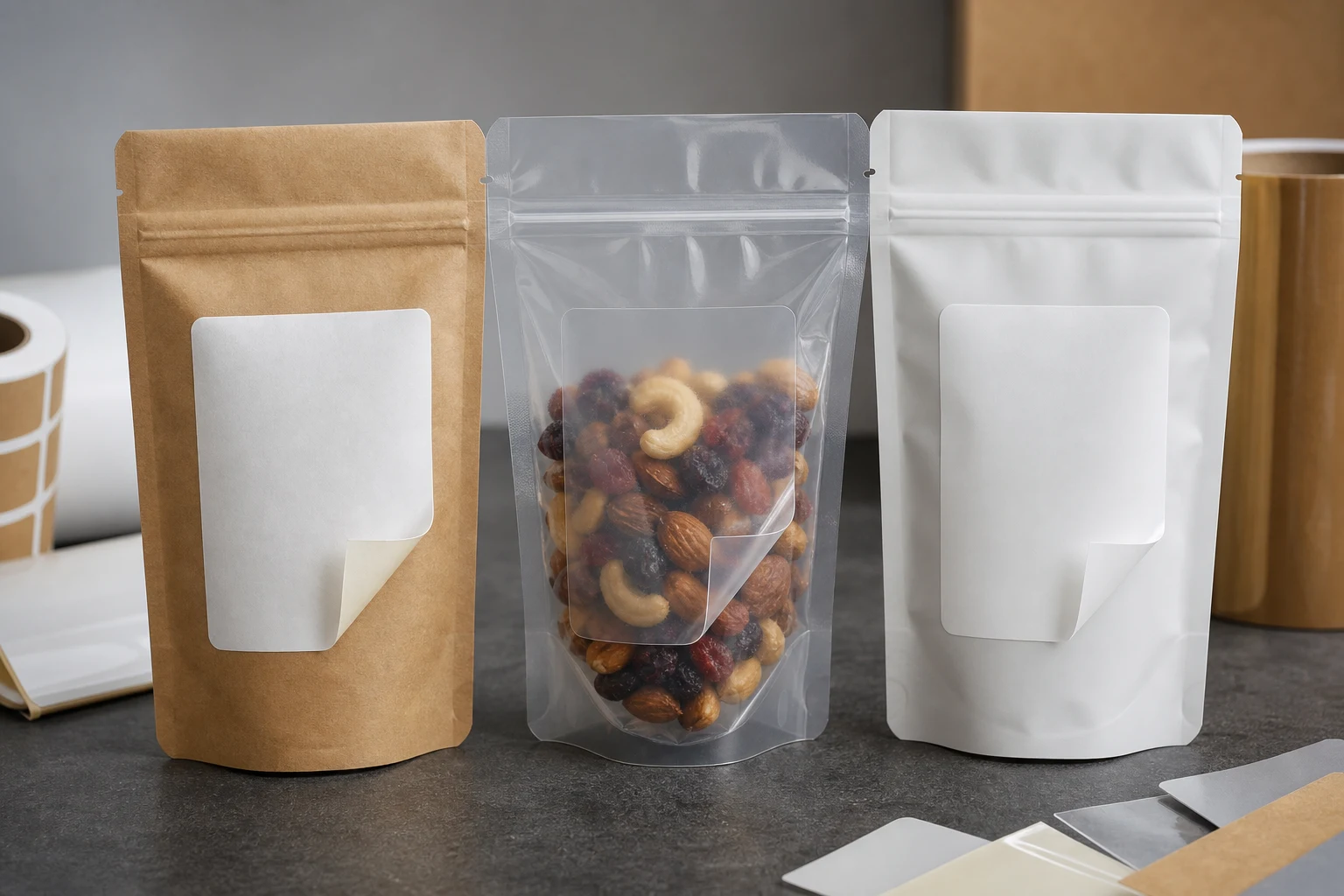
Paper, white film, and clear film can each suit a different visual and operational need. Paper can support a tactile look but may be less suitable where moisture and abrasion are central risks. Film can offer a different resistance profile and can conform differently to flexible surfaces. Clear film can preserve a pouch design but can make edges, bubbles, or trapped contamination more visible. I do not name one as best. I request a recommended system from the label supplier and test it on the selected pouch, with the selected artwork and label coverage.
How I make this decision specific
| Question | What I verify |
|---|---|
| Pouch surface | Actual finish, texture, coating, and flex of the supplied pouch. |
| Label appearance | Opacity, gloss or matte choice, edge visibility, and readable contrast. |
| Adhesive fit | Initial tack and adhesion after the expected storage and handling conditions. |
| Application | Manual or automatic placement, pressure, dwell time, and repeatability. |
For “How Do Face Material and Adhesive Work Together?” in this how do i choose label material and adhesive for stock pouches review, I define the actual product, pouch configuration, intended use, and decision owner before I ask a supplier or tester for evidence. I keep the selected structure, component details, sample condition, and any stated test method together, then compare the result with the buyer’s actual route rather than a catalogue promise. That record lets me use the custom pouch dieline guide as a decision aid and retain a specification that another team member can check.
For How Do I Choose Label Material and Adhesive for Stock Pouches, I state what is known, the condition it applies to, and what must still be checked with the actual product. I do not transfer a number, a test result, or a feature choice from another product simply because its pouch looks similar. The result of “How Do Face Material and Adhesive Work Together?” should give the buyer a clear next check, the supplier a precise request, and the project owner a record of the remaining uncertainty.
How Should I Size and Place a Label on a Pouch?
A label can adhere well in the center and still crease, lift, or cover an opening cue when its safe area ignores pouch folds, seals, and flex.
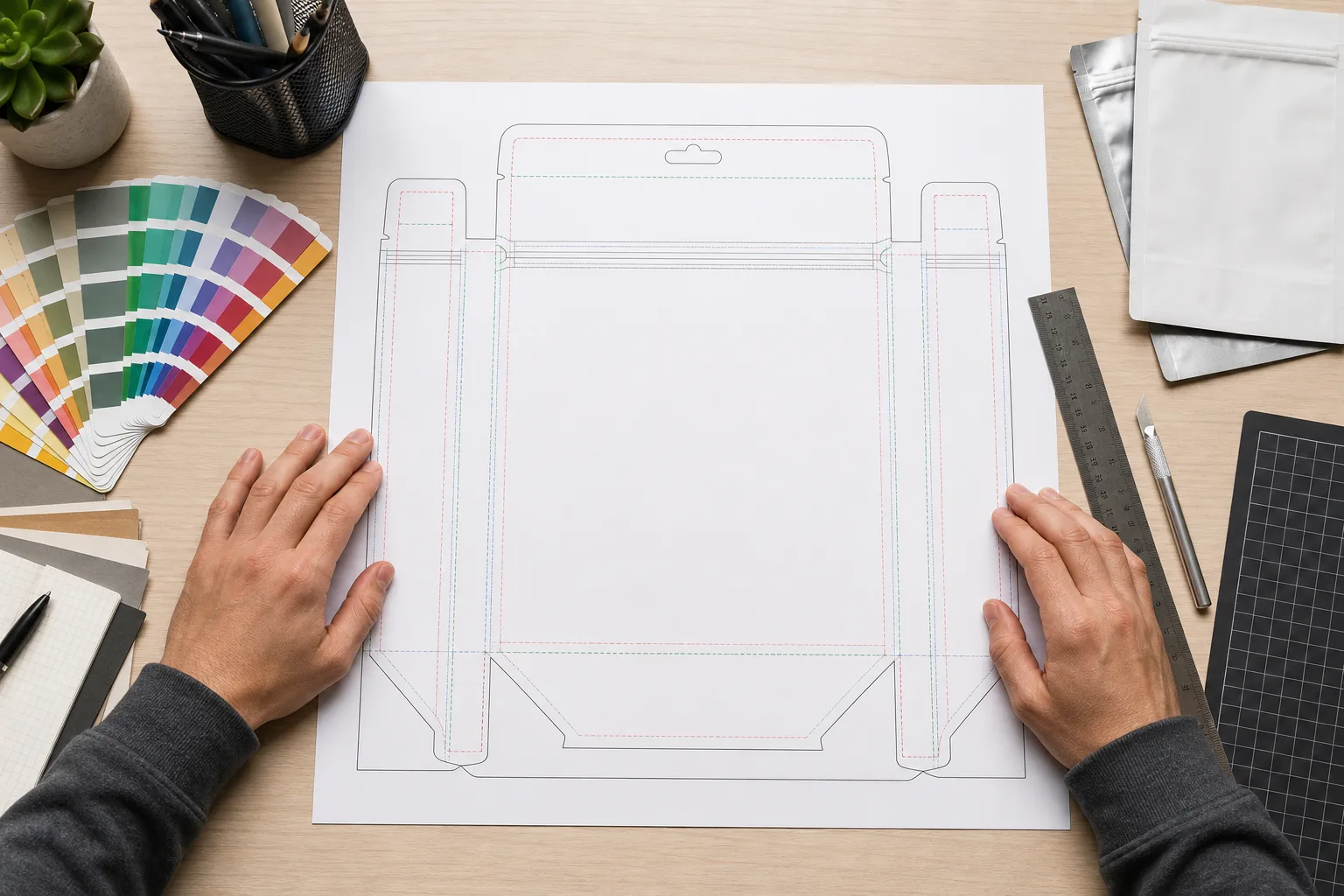
I place the approved label on the current pouch dieline, leaving safe clearance from seals, zipper zones, tear features, folds, barcode quiet areas, and variable-data locations.
I start with the converter’s current pouch dimensions and a filled sample. I locate the top seal, side seals, bottom gusset, zipper, notch, and any panel fold before a designer finalizes label size. I also protect barcode clearance and lot-code space. The label should not create a false opening cue or bridge a bend where it will immediately wrinkle. I use the barcode placement guide as a separate operational check because a visually good label can still cause scanning trouble.
How I make this decision specific
For “How Should I Size and Place a Label on a Pouch?” in this how do i choose label material and adhesive for stock pouches review, I define the actual product, pouch configuration, intended use, and decision owner before I ask a supplier or tester for evidence. I keep the selected structure, component details, sample condition, and any stated test method together, then compare the result with the buyer’s actual route rather than a catalogue promise. That record lets me use the custom pouch dieline guide as a decision aid and retain a specification that another team member can check.
For How Do I Choose Label Material and Adhesive for Stock Pouches, I state what is known, the condition it applies to, and what must still be checked with the actual product. I do not transfer a number, a test result, or a feature choice from another product simply because its pouch looks similar. The result of “How Should I Size and Place a Label on a Pouch?” should give the buyer a clear next check, the supplier a precise request, and the project owner a record of the remaining uncertainty.
For How Do I Choose Label Material and Adhesive for Stock Pouches, I treat the filled pack as a separate check from the material data. I record the fill condition, seal area, opening or closure behavior, carton arrangement, handling observations, and limits of the comparison. That prevents a favourable bench result from becoming an unsupported claim about shelf life, transport, or every product route.
What Should I Test Before Releasing Labeled Stock Pouches?
A single desk-applied label does not show how an entire batch will look after application, storage, carton contact, opening, and ordinary customer handling.
I test representative labeled pouches through application, dwell, storage, packing, scuffing, opening, and label-readability checks, then retain the approved pouch and label specification.
I run enough samples to see variation in placement and pressure. I inspect the edges after the planned dwell time. I place samples in the intended carton or tote and check rub marks, lifting, and wrinkles. I repeat the review after representative cold, warm, or humid exposure only when it matches the product route. I record the pouch lot, label material, adhesive description, artwork revision, placement method, and acceptance decision. This is not a claim that a label will work in every condition; it is an evidence-based release for the defined one.
How I make this decision specific
For “What Should I Test Before Releasing Labeled Stock Pouches?” in this how do i choose label material and adhesive for stock pouches review, I define the actual product, pouch configuration, intended use, and decision owner before I ask a supplier or tester for evidence. I keep the selected structure, component details, sample condition, and any stated test method together, then compare the result with the buyer’s actual route rather than a catalogue promise. That record lets me use the custom pouch dieline guide as a decision aid and retain a specification that another team member can check.
For How Do I Choose Label Material and Adhesive for Stock Pouches, I state what is known, the condition it applies to, and what must still be checked with the actual product. I do not transfer a number, a test result, or a feature choice from another product simply because its pouch looks similar. The result of “What Should I Test Before Releasing Labeled Stock Pouches?” should give the buyer a clear next check, the supplier a precise request, and the project owner a record of the remaining uncertainty.
For How Do I Choose Label Material and Adhesive for Stock Pouches, I preserve the final decision in a written brief that names the approved sample, conditions, observations, open risks, and change triggers. I then use the barcode placement guide to keep the quotation tied to the evidence rather than to a remembered sample or a generic product name.
Conclusion
I choose packaging through evidence, filled-pack testing, and clear specifications. That process protects the product, the launch, and the customer experience.
Sources and Further Reading
Need a pouch specification?
I can review your product, size, quantity, artwork, and target market.