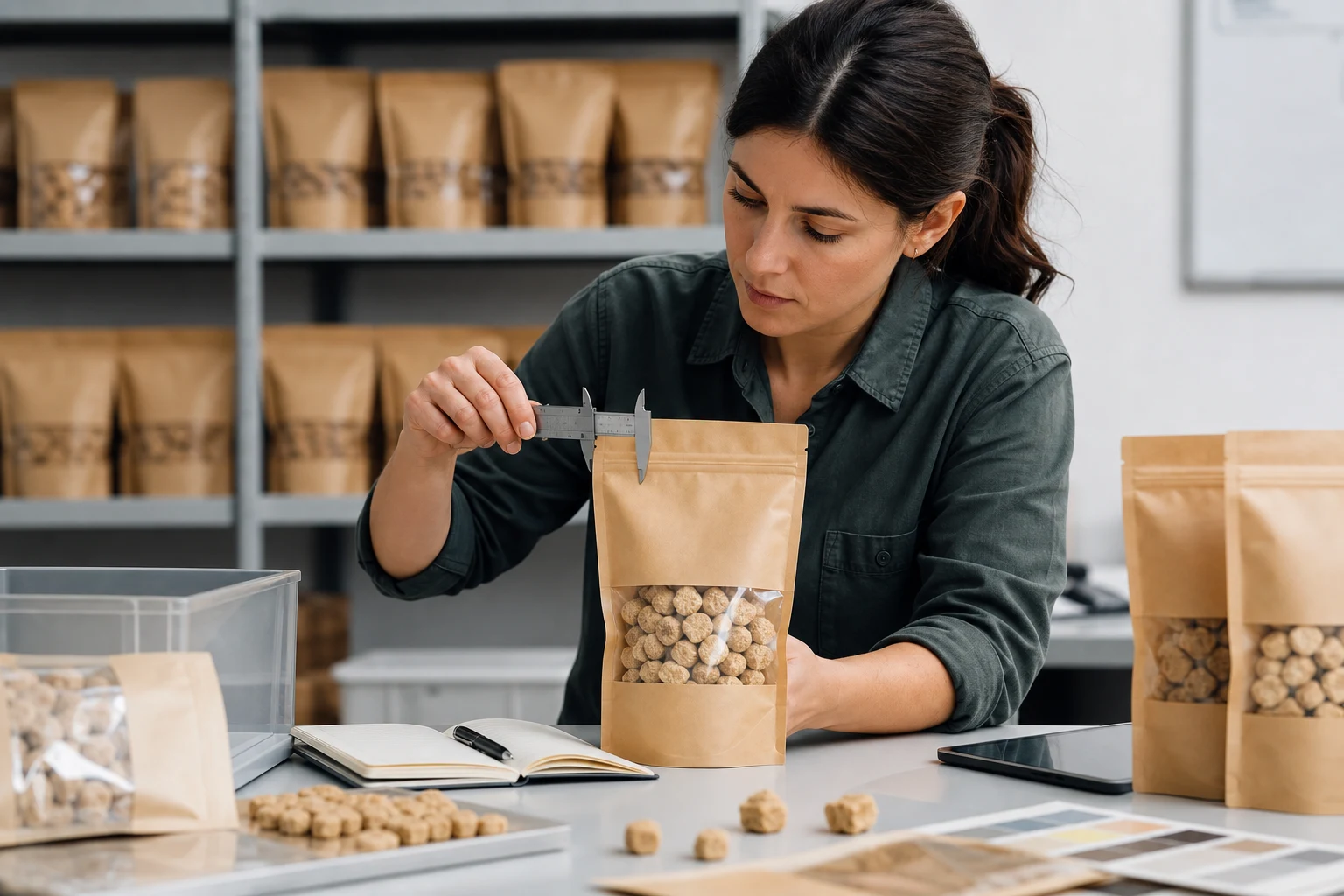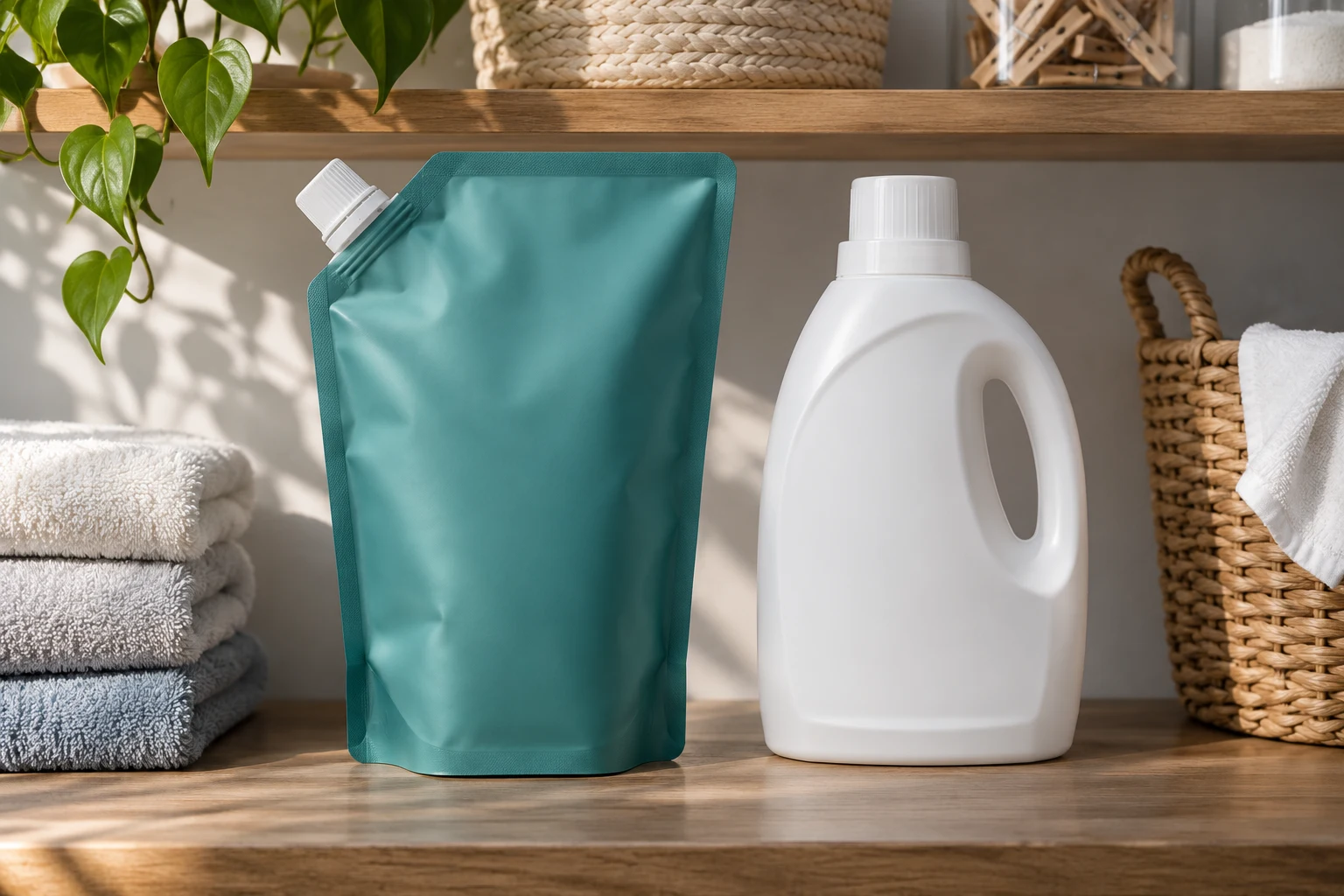
A laundry refill pouch may look easy to pour until the bottle neck is narrow, the liquid surges and the cap threads collect residue.
I specify a liquid laundry detergent refill pouch with the intended formula and original receiving bottle. I compare transfer, cap closure, formula contact and filled shipping performance, then lock both packaging components and the consumer instructions.
At Unique Packaging, I use the refill task to decide what the pack has to do before, during and after the pour.
How Do I Match the Pouch Spout to the Original Bottle?
A spout can empty fast into a beaker and still spill at the bottle neck. That makes a bench pour a poor standalone approval.
I compare spouts on the intended bottle using the actual formula at agreed temperatures. I measure transfer time, spill mass and product left in the pouch separately.
I put the production bottle on the bench first. I measure the clear opening with its cap or pump removed as directed by the brand. I check the usable fill space against the quantity the pouch is intended to deliver. If one pouch supports several refills, I check how a user can stop and reclose it while keeping the bottle steady. If the pouch is designed for one transfer, I test whether its full contents fit without obscuring the bottle's fill reference or interfering with reassembly.
A commenter in an r/laundry packaging discussion described preferring a concentrated product with a small pump bottle and buying bags to refill it.1 I read that as a reason to test the bottle the buyer wants to keep. Puracy also lists laundry detergent refills in its own range.2 I use this example to define the scope of the comparison. My test is for a brand-approved refill and its designated bottle, with the correct product identification and instructions. The American Cleaning Institute advises keeping laundry products in original labeled containers, closing them promptly and securing them away from children and pets.3
| Prototype | Use I would compare | Observation |
|---|---|---|
| Narrow corner spout | Small receiving opening | Aiming, air return and time at low fill |
| Wider corner spout | Wide, stable matching bottle | Surge at first tilt and stopping control |
| Boxed refill with tap | Fixed shelf position for the refill | Valve access and drips after closing |
I use the spout pouch selection guide to select prototypes. During the trial I weigh the pouch, bottle and catch tray before and after each transfer. I log any pause, awkward grip or drip during recapping. A fast pour loses value if it takes longer to clean up.
How Do I Isolate Leaks From the Cap, Spout and Seams?
A wet patch on the case can travel away from the leak. Replacing the cap blindly can send the same defect back into production.
I separate cap, fitment weld and pouch seams during inspection. I record closure application and repeat filled trials in the approved shipping configuration and planned orientations.
I identify the cap, fitment and film lot before filling. I check the cap application setting the supplier recommends for the specific thread and liner system. For trials I record applied torque where relevant, removal effort, conditioning temperature and the number of opening and closing cycles. I inspect the neck, fitment joint, top seal, side seals and gusset individually. If I see liquid on an absorbent pad, I keep a photo and note the first wet location observed without assigning the root cause before examination.
I separate factory-sealed packs from packs that have been opened and recapped during a simulated refill. I test each group in orientations the product team defines, at agreed temperatures, for a recorded duration. If I need a film-seal strength comparison, I ask the lab about ASTM F88/F88M and specify sample location, strip width, fixture setup and conditioning.4 The result goes into the seal record. The complete pouch, fitment and closed cap still need their own filled test. I use the packaging quality tests guide to keep those records distinct.
For the case trial I include the intended dividers, orientation and filled pouch count. I look for scuffs near caps, pressure at fold lines and movement between packs. If the corner spout rubs the case lid, I reproduce the fault with the same case and pouch revision. I use the filled-pack distribution testing guide to document the shipping configuration alongside the material trial. That makes it possible to compare a packaging adjustment without changing the test at the same time.
What Should I Lock Before Quoting the Refill Pouch?
A quotation can look complete while leaving out a cap liner or assuming a different detergent. Those changes can invalidate the approval.
I lock the formula revision, contact materials, closure and original bottle. I approve the filled samples and label handling instructions before requesting commercial terms against that drawing.
I ask the formula owner for the product revision and any storage or transport constraints relevant to the project. I send the supplier the proposed volume and the planned filling process. For the material review I request identification of the film contact layer, fitment, cap and liner where one is used. I ask the product team to assess the actual formula in the assembled package. I track observations such as odor change, panel distortion, wetness near the fitment or cap residue against retained controls. The formula team sets the protocol and decides which observations warrant further investigation.
What belongs in the approval packet?
- Formula revision, fill quantity and designated original receiving bottle.
- Film construction and the fitment, cap and liner drawing revisions.
- Factory closure settings and approved end-user closure instructions.
- Filled transfer and shipping results with time, temperature and orientation.
- Label version, case configuration and the procedure for approving substitutions.
I use the packaging specification sheet to match the approved pouch to the drawing and label revision. I also have the brand owner check that the refill and bottle remain easy to identify during use and storage. ACI's laundry guidance keeps original labels and secure storage central to that review.3 I ask for a representative run on the intended filler before agreeing the purchase specification. I then send my quote request with the approved drawing, quantities per design and shipping destination. If a converter proposes a different neck or liner, I can compare it as a documented alternative and repeat the affected filled tests.
What would send the design back to trial?
A cap that looks seated but needs two hands to turn deserves a second look. I ask a new tester to open and reclose it while the pouch holds the expected remainder. I record whether the tester has to put down the bottle, wipe the thread or grip the pouch hard enough to force detergent up the spout. If that sequence causes a spill, I mark the relevant drawing revision and ask for a revised fitment or grip area before approving tooling.
Conclusion
I approve the refill only when the formula, matching bottle, closure, instructions and transit results agree with the signed pouch specification.
Sources and Further Reading
Need a pouch specification?
I can review your product, size, quantity, artwork, and target market.