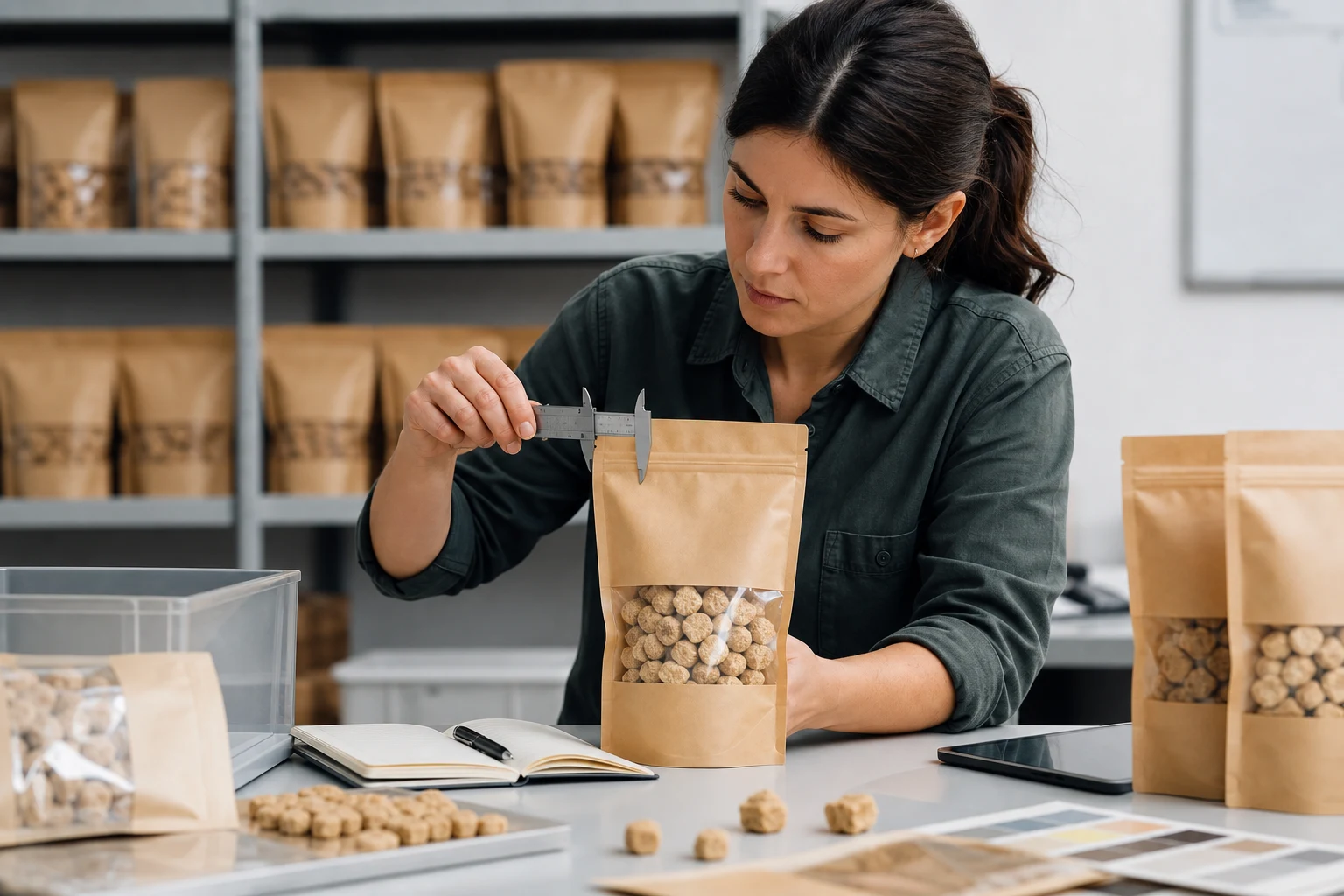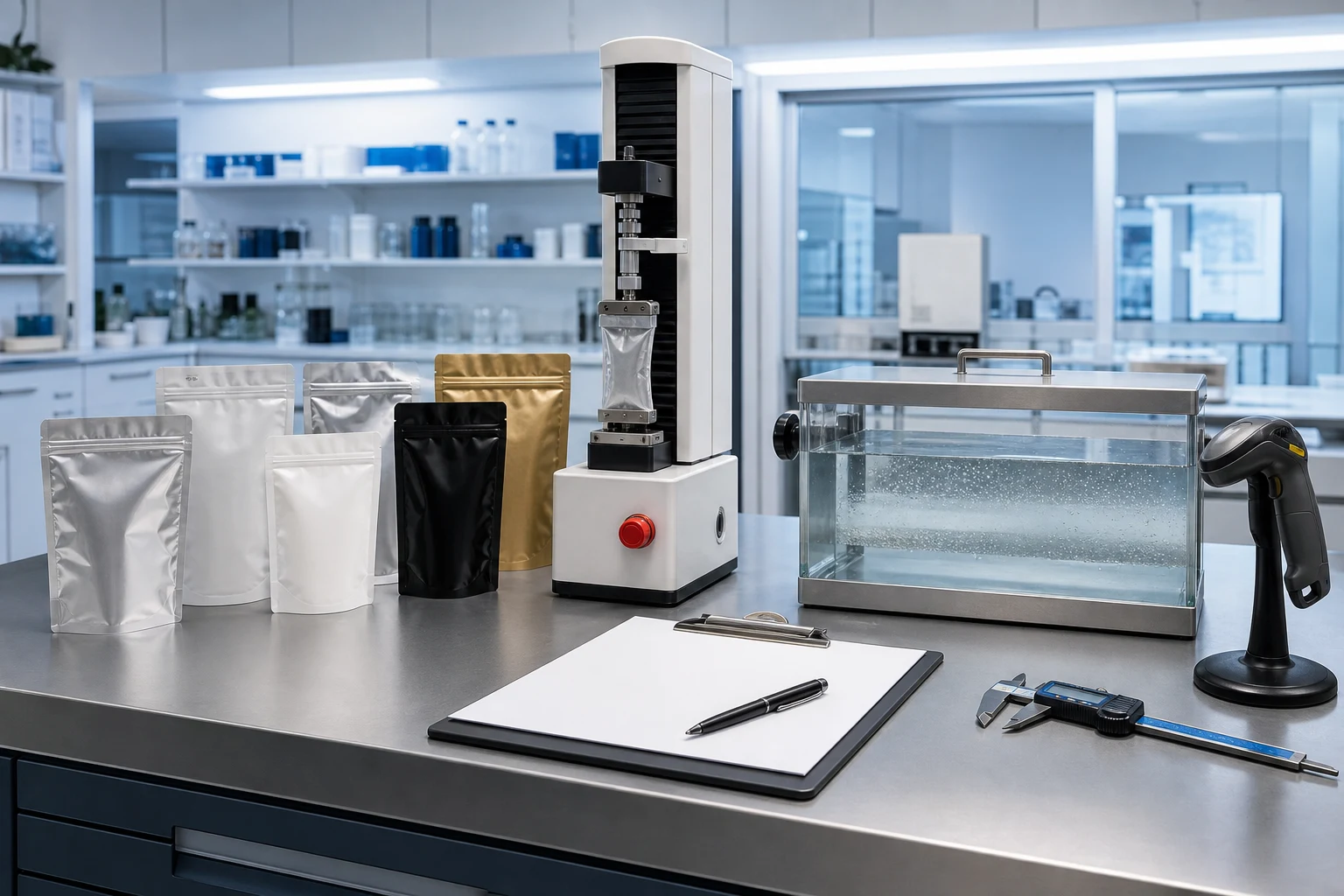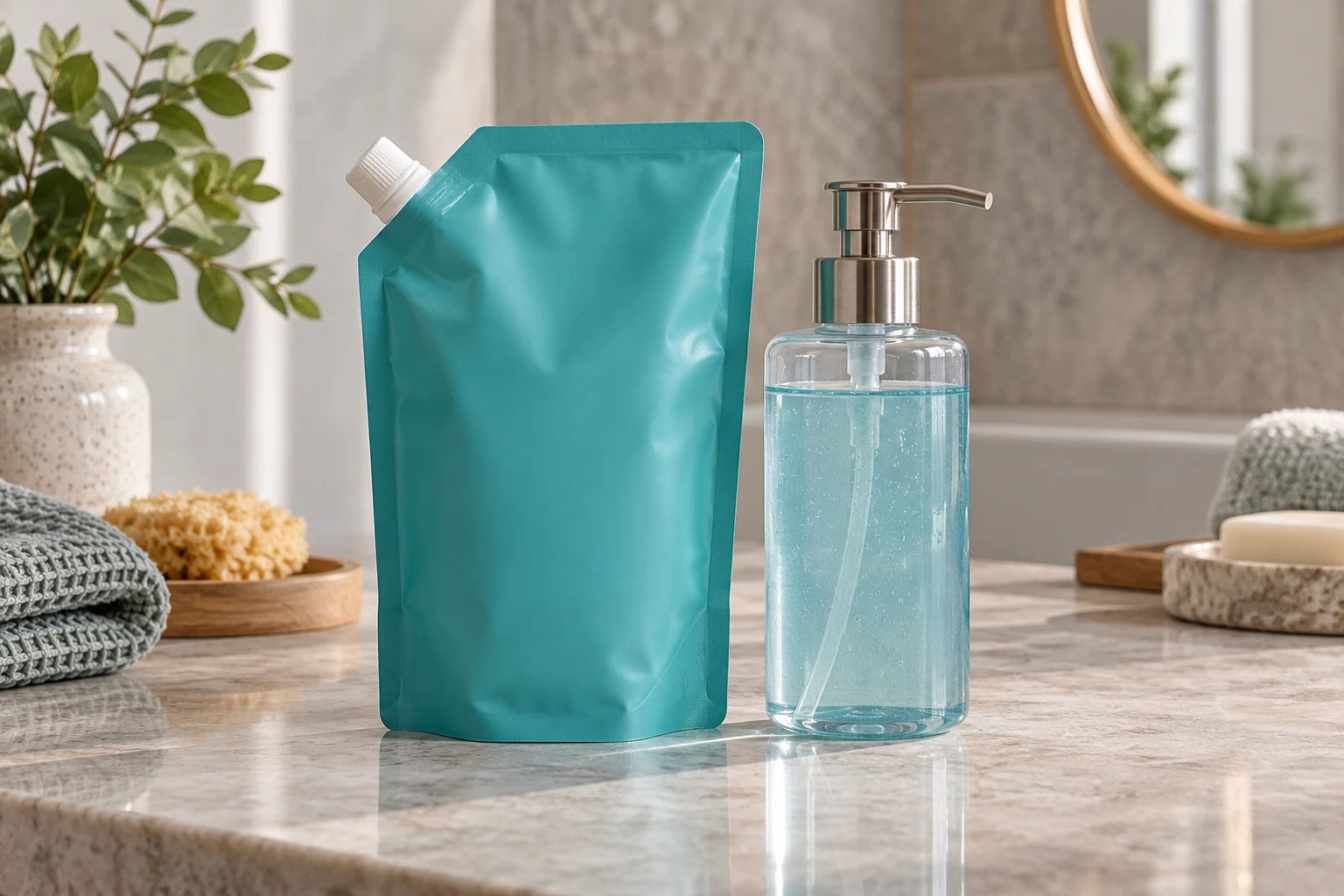
A shower gel refill can create spills, leftover product, and doubtful storage when the outlet and bottle are approved separately.
I test shower gel refill spout pouches as a formula, pouch, cap, and receiving-bottle system. I compare transfer control, closure integrity, storage orientation, compatibility, and approved handling before buying.
At Unique Packaging, I keep transfer usability, package integrity, and cosmetic-product assessment visible as separate parts of the same approval.
How Should I Compare the Spout and Receiving Bottle?
A fast pour is a weak success measure if the user cannot stop before the bottle overfills.
I compare the complete transfer sequence with the actual gel, intended bottle and supported fill amount. I measure delivery and spills separately, and inspect the nearly empty stage.
I define whether the pouch refills one bottle completely or supports several partial transfers. That choice affects stopping, closure handling, and storage of the remainder. I use the approved shower gel formula, not water. The formulator selects relevant sample conditioning, because I cannot assume one bench demonstration represents every storage condition. I keep the bottle opening, pump arrangement, fill capacity, and refill instructions with the pouch drawing from the start.
The operator opens the cap, removes the receiving bottle’s pump if instructed, positions the outlet, transfers the intended amount, stops, and replaces the closures. I record whether the bottle stays stable and whether a second person or a funnel is needed. I observe the spout position as the pouch folds. A wider outlet may change both speed and control, so I compare it through the same task rather than assuming that bigger always means easier.
What belongs in the transfer record
| Observation | How I keep it comparable | Why I record it |
|---|---|---|
| Delivered gel | Same bottle and agreed endpoint | Separates useful transfer from loss |
| Spill or drip | Collect and identify it separately | Avoids counting a spill as recovery |
| Product remaining | Same emptying sequence | Compares the near-empty experience |
| Stopping control | Same target fill and operator instructions | Tests partial refill usability |
I weigh samples where the protocol calls for it and retain the starting, delivered, spilled, and remaining quantities separately. I document any tools or extra squeezing actions. These are proposed measurements, not published performance numbers for our pouches. I avoid a universal recovery percentage or a pass time that the project has not justified. The brand and product team must decide acceptable outcomes before comparing supplier samples.
The spout-pouch selection guide helps identify component and geometry questions. I also use the pouch-size guide to organize fill range and drawing dimensions. The accepted combination must still complete the real transfer. If the brand wants customers to refill a particular bottle, I record that bottle revision explicitly. I do not suggest compatibility with any household container based on one successful trial. A bottle or pump change then becomes a review trigger instead of an unnoticed purchasing substitution.
What Should I Check About Cap Closure and Side Storage?
A refill that stays upright on a display may be laid sideways in a drawer after its first use.
I inspect the cap, spout weld, pouch seals, and filled storage orientations under a written protocol. I keep an observed leak location separate from any unproven cause.
A May 2025 r/LushCosmetics discussion gives a specific reminder to ask about storage. The original poster reported shower gel bottle leakage, then explained that limited dorm storage meant keeping bottles on their side. Another commenter described transferring product to a pump bottle after a cap broke.1 Those are bottle experiences, not proof of a pouch failure rate. I use them to include orientation and receiving-container choices in the brief, without attributing a technical root cause to the forum.
I ask where the unused refill and any remainder are intended to sit. A bathroom cabinet, delivery carton, and shower caddy create different handling tasks. I test the orientations that the approved use and shipping plan require, including a justified side-storage condition where relevant. The protocol states sample fill, cap application method, conditioning temperature, hold duration, inspection interval, and acceptance criteria. I do not invent a universal storage time or closure torque for every spout.
How I keep the failure investigation useful
I inspect the flat heat seals, spout-to-film junction, cap seating, and outlet separately. I identify the location of any wetting before wiping the sample. Photographs and sample codes help the converter reproduce the observation. If product appears on the outside after pouring, I distinguish transfer residue from a leak that developed during the hold. An absorbent sheet can make an observation easier to see, but the protocol still needs to define what a stain means and how it is investigated.
ASTM F88/F88M covers seal-strength measurement.5 I use a relevant seal test with its specimen and method details, while asking for separate evidence for the spout weld and cap system. A strong flat seal does not establish every other interface. The packaging quality-tests guide helps the team choose checks around actual failure modes instead of presenting one laboratory result as approval of the whole pack.
I also inspect samples after the selected packed handling trial. I record carton position, pouch orientation, cushioning, and any contact between components. The accepted arrangement travels with the purchasing specification. If the cap, spout, film, or carton count changes, I review the affected evidence before approval. This keeps the side-storage question connected to a traceable configuration. I do not call the pouch leakproof, child-resistant, or transport-certified unless a project-specific assessment supports the precise claim.
Which Formula and Hygiene Decisions Need Written Approval?
A convenient transfer does not establish microbial protection or compatibility between the gel and every packaging component.
I ask the responsible cosmetic team to approve compatibility, preservation, storage and refill instructions. I lock the component list and test configuration before requesting commercial terms.
I request the full product-contact system: film, contact layer, adhesive where relevant, spout, cap, and receiving bottle. I provide finished packs filled with the intended shower gel for the product team’s assessment. FDA identifies inadequate packaging, preservation problems, storage, and consumer handling among possible routes to microbial contamination.2 That supports reviewing the whole system. It does not mean a converter’s leak check or one successful refill can establish microbiological safety.
The cosmetic team sets the compatibility and stability plan. I ask which observations and laboratory work apply to this formula, and which sample conditions the conclusion covers. FDA explains that cosmetic shelf life varies with product type, use, and storage, including effects from moisture and temperature exposure.3 I therefore do not transfer the original bottle’s shelf life automatically to the new refill pouch. I also avoid assigning a generic accelerated-test duration or claiming that a particular laminate is universally compatible.
What I ask the brand to decide
The instructions must identify the supported bottle, preparation steps, transfer sequence, closure of any remainder, and storage location. I do not tell every customer to rinse a bottle, top up old gel, dilute the formula, or use any available container. Those decisions belong in the validated refill system. FDA advises against adding water to cosmetics and notes storage and container cleanliness concerns.2 I ask the team to resolve the user task before launch imagery or copy implies an unsupported routine.
FDA’s cosmetic GMP checklist includes primary-packaging handling and preservation assessment under foreseeable storage and consumer-use conditions.4 I ask how the refill lot remains traceable after transfer and which retained samples support a complaint review. The record distinguishes the original pouch lot from the receiving bottle. If the formula, fragrance, contact layer, cap, or bottle changes, the product team and converter decide which approvals must be repeated.
- Formula revision, intended markets and supported receiving bottle.
- Film, spout and cap codes with controlled component revisions.
- Fill range, drawing, transfer protocol and observed recovery record.
- Closure application, seal checks and storage-orientation criteria.
- Compatibility evidence, approved instructions and retained samples.
I bring these records into the written packaging specification. The buying path is material assessment, representative samples, a filled-pack trial, and written confirmation before a quote against the approved specification. I leave MOQ, delivery promises, environmental comparisons, certification, price, and shelf-life claims out unless the current project supports them. The final approval then describes what was assessed and who accepted it, rather than using a successful pour as evidence for everything.
Conclusion
I approve the complete refill task, closure and formula-package system before locking the shower gel pouch drawing and requesting a specification-based quote.
Sources and Further Reading
Need a pouch specification?
I can review your product, size, quantity, artwork, and target market.