A new product can lose cash and time when its package looks finished before the demand, artwork, and reorder plan are ready.
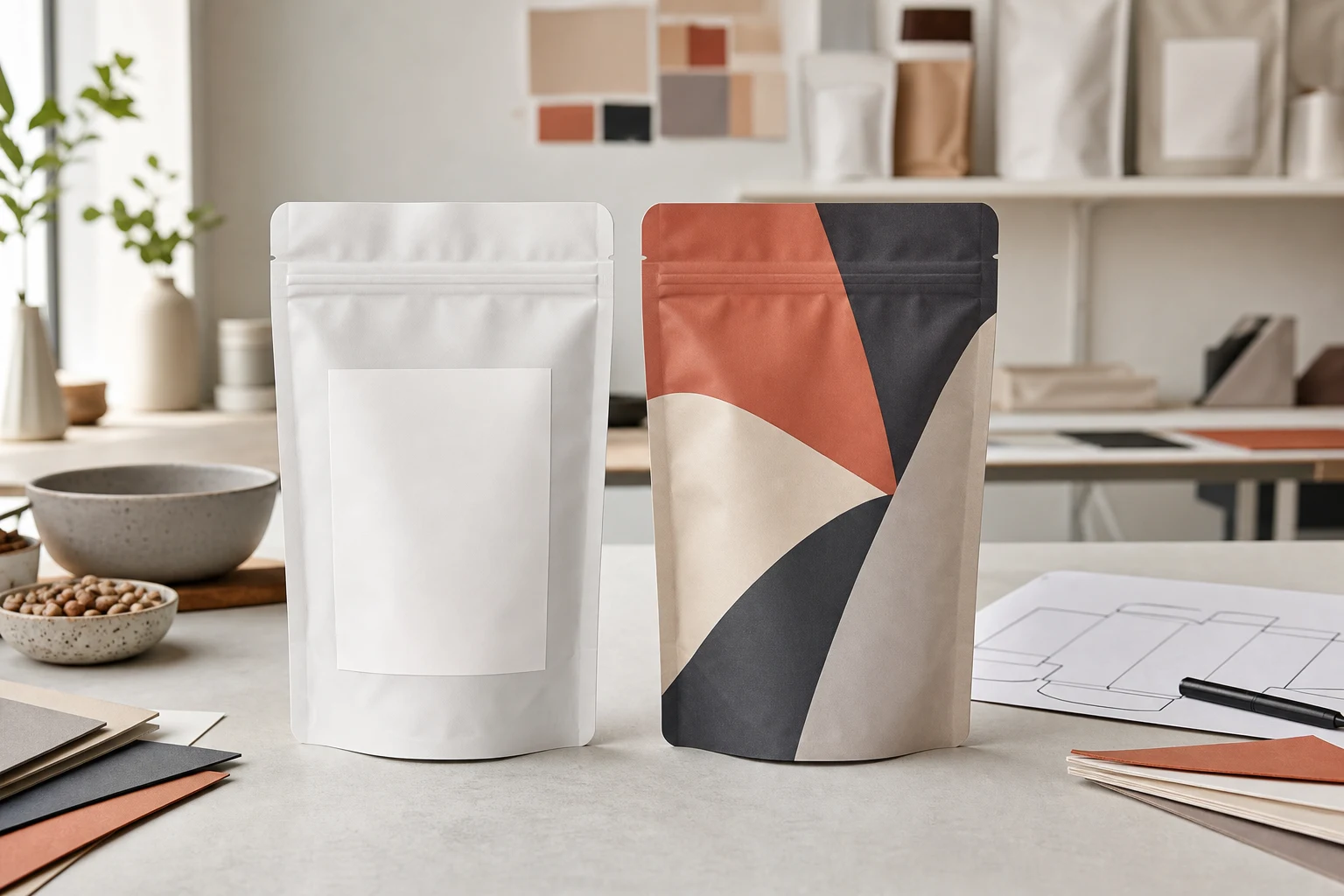
I use stock pouches with labels to test a product or manage changing artwork, and custom printing when the validated volume, design, and shelf role justify a committed production run.
I treat the pouch as a complete system. I confirm the product, material, filling, handling, and customer experience before I approve production.
What Decision Should I Make Before Choosing the Print Route?
A print route becomes expensive when a team chooses it before confirming the product, artwork, sales channel, and change risk.
I first define the product condition, required information, target launch date, sales forecast, artwork maturity, expected changes, and the amount of packaging inventory the brand can safely hold.
I start with what can still change. A new food product can change flavour names, net quantity, allergen statements, barcode placement, claims review, artwork hierarchy, or retail channel. A stock pouch and label approach can leave more room for those changes, while a custom-printed pouch can consolidate graphics onto the package once the information and demand plan are stable. I also confirm whether labels are merely decorative or whether the project needs a specific food-contact, temperature, moisture, or handling review.
How I make this decision specific
For “What Decision Should I Make Before Choosing the Print Route?” in this should i use stock pouches with labels or custom-printed pouches review, I define the actual product, pouch configuration, intended use, and decision owner before I ask a supplier or tester for evidence. I keep the selected structure, component details, sample condition, and any stated test method together, then compare the result with the buyer’s actual route rather than a catalogue promise. That record lets me use the custom packaging MOQ and cost guide as a decision aid and retain a specification that another team member can check.
For Should I Use Stock Pouches with Labels or Custom-Printed Pouches, I state what is known, the condition it applies to, and what must still be checked with the actual product. I do not transfer a number, a test result, or a feature choice from another product simply because its pouch looks similar. The result of “What Decision Should I Make Before Choosing the Print Route?” should give the buyer a clear next check, the supplier a precise request, and the project owner a record of the remaining uncertainty.
For Should I Use Stock Pouches with Labels or Custom-Printed Pouches, I request the exact pouch structure, component specification, and test conditions from the supplier. A broad material name or catalogue claim is not a production specification. The right next step is a representative filled sample, where relevant, with observations recorded before production is approved.
How Do Cash Commitment and Unit Cost Change the Choice?
A lower quoted unit cost can hide a larger cash commitment, storage burden, and obsolete inventory risk for an unproven SKU.
I compare total committed cash, setup and artwork costs, usable yield, storage, relabel work, write-off risk, and reorder timing instead of selecting by unit price alone.
I use a simple comparison before I approve volume. The stock route can add label purchasing and application time, but it may let the brand buy fewer finished units while it learns. The custom route can make a finished pouch feel more integrated and can simplify packing at scale, but it can tie the brand to approved artwork and a larger inventory position. I do not promise that either route is cheaper. The useful answer comes from the real quantity, process, and cost-to-change.
How I make this decision specific
| Decision factor | Stock pouch plus label | Custom-printed pouch |
|---|---|---|
| Artwork change | Label can be revised with a new approved run. | Printed inventory may need to be used or written off. |
| Launch test | Useful for controlled early quantities. | Useful after the format and graphics are stable. |
| Packing step | Needs consistent label application and inspection. | Graphics arrive on the converted pouch. |
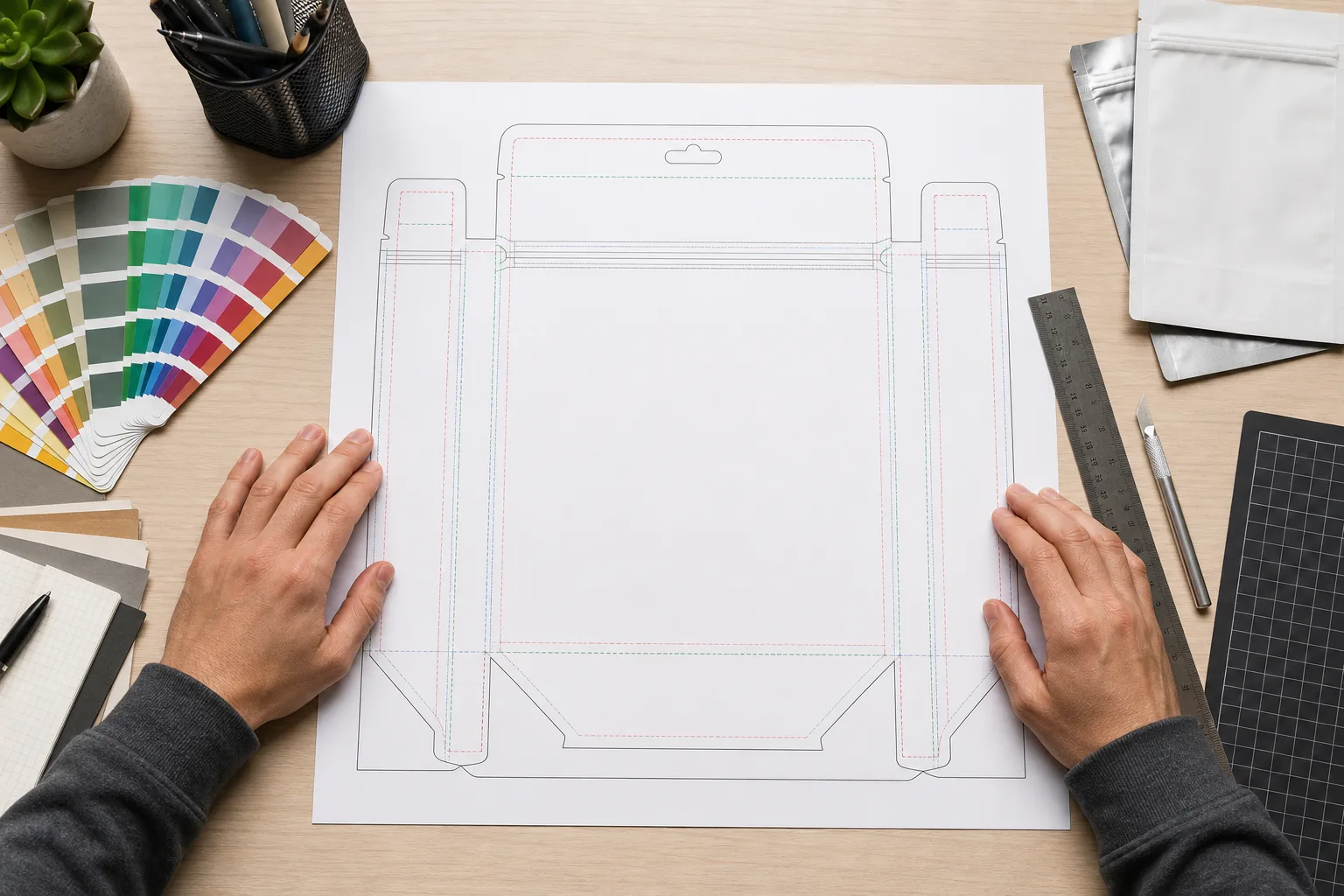
| Approval focus | Label fit, adhesion, and readable placement. | Dieline, print proof, pouch construction, and retained sample. |
For “How Do Cash Commitment and Unit Cost Change the Choice?” in this should i use stock pouches with labels or custom-printed pouches review, I define the actual product, pouch configuration, intended use, and decision owner before I ask a supplier or tester for evidence. I keep the selected structure, component details, sample condition, and any stated test method together, then compare the result with the buyer’s actual route rather than a catalogue promise. That record lets me use the custom packaging MOQ and cost guide as a decision aid and retain a specification that another team member can check.
For Should I Use Stock Pouches with Labels or Custom-Printed Pouches, I state what is known, the condition it applies to, and what must still be checked with the actual product. I do not transfer a number, a test result, or a feature choice from another product simply because its pouch looks similar. The result of “How Do Cash Commitment and Unit Cost Change the Choice?” should give the buyer a clear next check, the supplier a precise request, and the project owner a record of the remaining uncertainty.
When Does Shelf Presentation Favor Custom Printing?
A package can look strong in a render yet disappear on a shelf when the panel hierarchy, finish, or product range is not tested in context.
I favor custom printing when the validated brand system needs integrated panels, repeatable variant recognition, and a consistent retail presence that a tested label system cannot deliver.
I compare filled samples where customers will actually see them. I check the product name, variant cue, net quantity, opening direction, barcode zone, and required information at the expected viewing distance. A well-designed label can be clear and effective for a focused launch. A custom-printed pouch can offer more continuous design control across front, back, gusset, and finish. Neither outcome is automatic. I ask whether the decision improves recognition and operations enough to justify the commitment.
How I make this decision specific
For “When Does Shelf Presentation Favor Custom Printing?” in this should i use stock pouches with labels or custom-printed pouches review, I define the actual product, pouch configuration, intended use, and decision owner before I ask a supplier or tester for evidence. I keep the selected structure, component details, sample condition, and any stated test method together, then compare the result with the buyer’s actual route rather than a catalogue promise. That record lets me use the custom packaging MOQ and cost guide as a decision aid and retain a specification that another team member can check.
For Should I Use Stock Pouches with Labels or Custom-Printed Pouches, I state what is known, the condition it applies to, and what must still be checked with the actual product. I do not transfer a number, a test result, or a feature choice from another product simply because its pouch looks similar. The result of “When Does Shelf Presentation Favor Custom Printing?” should give the buyer a clear next check, the supplier a precise request, and the project owner a record of the remaining uncertainty.
For Should I Use Stock Pouches with Labels or Custom-Printed Pouches, I treat the filled pack as a separate check from the material data. I record the fill condition, seal area, opening or closure behavior, carton arrangement, handling observations, and limits of the comparison. That prevents a favourable bench result from becoming an unsupported claim about shelf life, transport, or every product route.
How Do I Approve Either Route Before Buying Volume?
A polished empty sample can still fail when the label shifts, the pouch seal changes, the product fills differently, or a carton scuffs the surface.
I approve a filled sample, the current artwork, the pouch specification, the label or print proof, packing method, acceptance checks, and retained references before I release volume.
I make the release record specific. For a labeled stock pouch, I record the exact pouch, label material, adhesive, label size, placement fixture, application method, and inspection sample. For custom printing, I record the final dieline, color proof, material structure, finish, dimensions, seal zones, and artwork file. I then test the filled product through the expected packing and handling path. A related seal-leak guide helps keep mechanical approval separate from graphic approval. If a material, artwork, fill, or distribution condition changes, I repeat the relevant review rather than assuming the former approval transfers.
How I make this decision specific
For “How Do I Approve Either Route Before Buying Volume?” in this should i use stock pouches with labels or custom-printed pouches review, I define the actual product, pouch configuration, intended use, and decision owner before I ask a supplier or tester for evidence. I keep the selected structure, component details, sample condition, and any stated test method together, then compare the result with the buyer’s actual route rather than a catalogue promise. That record lets me use the custom packaging MOQ and cost guide as a decision aid and retain a specification that another team member can check.
For Should I Use Stock Pouches with Labels or Custom-Printed Pouches, I state what is known, the condition it applies to, and what must still be checked with the actual product. I do not transfer a number, a test result, or a feature choice from another product simply because its pouch looks similar. The result of “How Do I Approve Either Route Before Buying Volume?” should give the buyer a clear next check, the supplier a precise request, and the project owner a record of the remaining uncertainty.
For Should I Use Stock Pouches with Labels or Custom-Printed Pouches, I preserve the final decision in a written brief that names the approved sample, conditions, observations, open risks, and change triggers. I then use the custom pouch dieline guide to keep the quotation tied to the evidence rather than to a remembered sample or a generic product name.
Conclusion
I choose packaging through evidence, filled-pack testing, and clear specifications. That process protects the product, the launch, and the customer experience.
Sources and Further Reading
Need a pouch specification?
I can review your product, size, quantity, artwork, and target market.