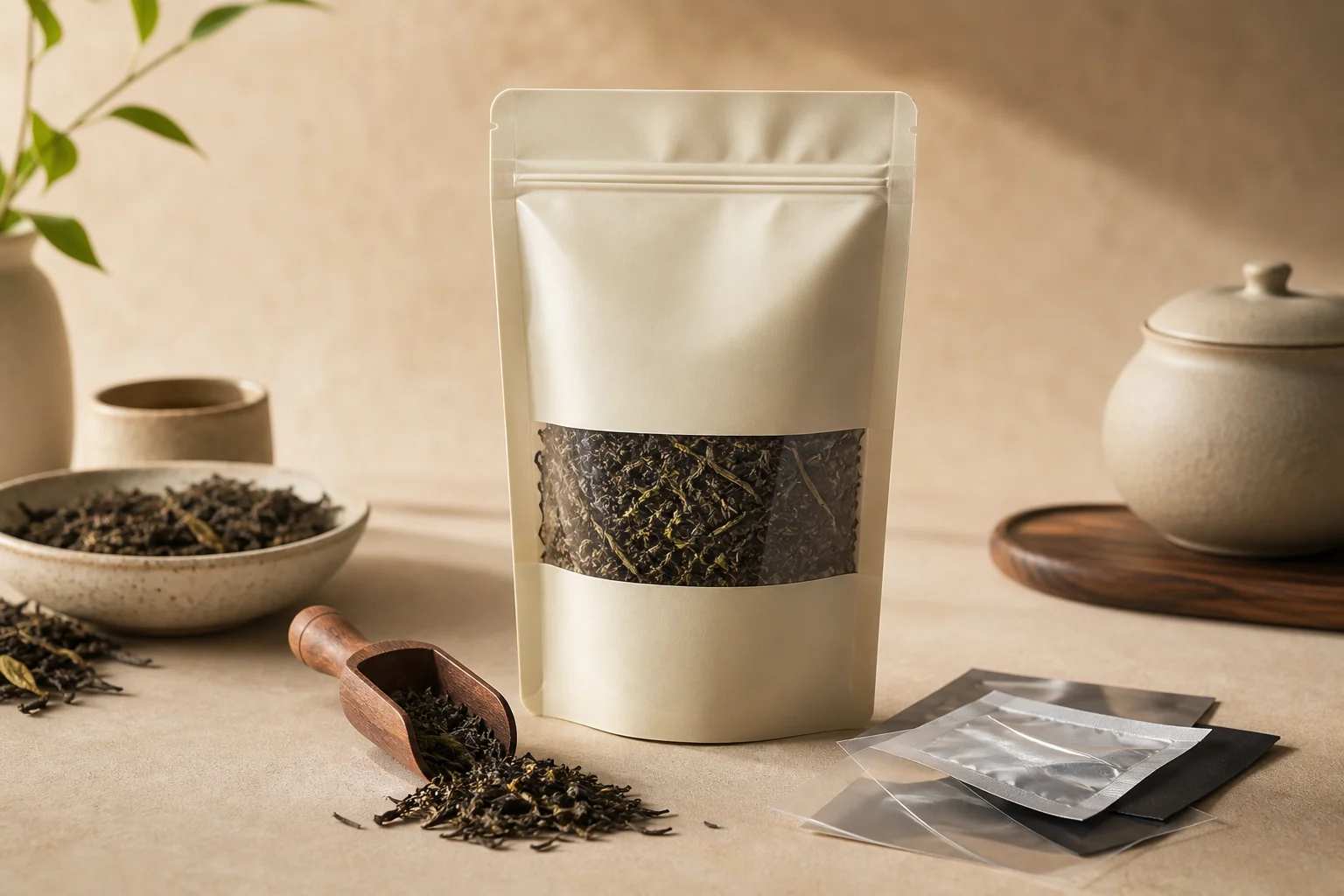
A tea pouch can look premium, then lose aroma or become frustrating when moisture, light, surrounding odors, a poor reclose, or leaf breakage were ignored.
I choose tea packaging by defining the tea format, storage target, moisture and aroma risks, light exposure, filling method, opening use, pouch geometry, and filled-pack validation plan.
I treat the pouch as a complete system. I confirm the product, material, filling, handling, and customer experience before I approve production.
What Does the Tea Need the Package to Protect?
A material choice is weak when it starts with a catalogue finish instead of whether the product is loose leaf, bagged, powdered, aromatic, fragile, or sold through a humid route.
I first define the tea type, particle size, fill weight, aroma sensitivity, moisture target where available, light exposure, storage time, destination, and how the customer will use the pack.
I separate loose leaf, tea bags, matcha-like powders, herbal blends, and aged teas because they are not the same packaging problem. The Asian Productivity Organization notes that material selection depends on end use and storage time and lists different formats for tea and herbal teas. It also identifies moisture, odor, light, and oxygen as key considerations for typical tea packaging. I do not turn that overview into a promise that one foil, paper, or polymer structure will deliver a particular shelf life. I request data and validate the actual tea, pouch, fill, and market route.
How I make this decision specific
For “What Does the Tea Need the Package to Protect?” in this how do i choose packaging for tea and herbal blends review, I define the actual product, pouch configuration, intended use, and decision owner before I ask a supplier or tester for evidence. I keep the selected structure, component details, sample condition, and any stated test method together, then compare the result with the buyer’s actual route rather than a catalogue promise. That record lets me use the food packaging barrier-film guide as a decision aid and retain a specification that another team member can check.
For How Do I Choose Packaging for Tea and Herbal Blends, I state what is known, the condition it applies to, and what must still be checked with the actual product. I do not transfer a number, a test result, or a feature choice from another product simply because its pouch looks similar. The result of “What Does the Tea Need the Package to Protect?” should give the buyer a clear next check, the supplier a precise request, and the project owner a record of the remaining uncertainty.
For How Do I Choose Packaging for Tea and Herbal Blends, I request the exact pouch structure, component specification, and test conditions from the supplier. A broad material name or catalogue claim is not a production specification. The right next step is a representative filled sample, where relevant, with observations recorded before production is approved.
Which Pouch Features Improve Daily Tea Use?
A pouch may protect tea before opening but still disappoint if leaves spill, the zipper traps product, or customers cannot close it between brews.
I choose the pouch format, opening feature, zipper position, fill height, and display shape by testing how a customer opens, scoops, pours, re-closes, and stores the actual tea.
I place the first-open feature above a zipper only when there is enough top-seal room and a clear path for the user. I then test with whole leaves or the real blend, not substitute pellets. The cited tea-community discussion includes a specific experience of aroma carryover in a reused container. That is not a packaging-performance test, but it usefully reminds me to include odor and reclosure experience in consumer checks. I ask testers whether they can avoid crushing leaves, whether a scoop fits, whether the pouch stands after opening, and whether the closure remains usable after ordinary tea dust reaches it.
How I make this decision specific
| Use moment | Question I ask | Sample check |
|---|---|---|
| First opening | Can the tear start cleanly? | Multiple filled pouches. |
| Scooping | Do leaves spill or crush? | Actual blend and scoop. |
| Reclosure | Does the zipper remain usable? | Repeated open-close test. |
For “Which Pouch Features Improve Daily Tea Use?” in this how do i choose packaging for tea and herbal blends review, I define the actual product, pouch configuration, intended use, and decision owner before I ask a supplier or tester for evidence. I keep the selected structure, component details, sample condition, and any stated test method together, then compare the result with the buyer’s actual route rather than a catalogue promise. That record lets me use the food packaging barrier-film guide as a decision aid and retain a specification that another team member can check.
For How Do I Choose Packaging for Tea and Herbal Blends, I state what is known, the condition it applies to, and what must still be checked with the actual product. I do not transfer a number, a test result, or a feature choice from another product simply because its pouch looks similar. The result of “Which Pouch Features Improve Daily Tea Use?” should give the buyer a clear next check, the supplier a precise request, and the project owner a record of the remaining uncertainty.
How Do I Validate a Tea Pouch Before Release?
A tea pouch can pass a clean tabletop review and still lose its shape or usable closure after filling, carton pressure, retail handling, and a customer’s first week of use.
I validate filled samples against the product, storage route, carton pack, opening routine, finished appearance, and the evidence needed for the target market before I approve production.
I use a controlled sample plan. I check the real fill weight and bulk volume, inspect the top seal and zipper clearance, observe the pouch after packing and handling, and retain the approved pouch as a reference. I compare material documentation with the intended food contact and market rather than relying on general claims. The tea packaging reference makes clear that packaging should match product characteristics and storage time; it also distinguishes tea formats. I keep the decision narrow: a finding for one tea, structure, fill, and route is not automatically transferable to a different blend or a new destination.
How I make this decision specific
For “How Do I Validate a Tea Pouch Before Release?” in this how do i choose packaging for tea and herbal blends review, I define the actual product, pouch configuration, intended use, and decision owner before I ask a supplier or tester for evidence. I keep the selected structure, component details, sample condition, and any stated test method together, then compare the result with the buyer’s actual route rather than a catalogue promise. That record lets me use the food packaging barrier-film guide as a decision aid and retain a specification that another team member can check.
For How Do I Choose Packaging for Tea and Herbal Blends, I state what is known, the condition it applies to, and what must still be checked with the actual product. I do not transfer a number, a test result, or a feature choice from another product simply because its pouch looks similar. The result of “How Do I Validate a Tea Pouch Before Release?” should give the buyer a clear next check, the supplier a precise request, and the project owner a record of the remaining uncertainty.
For How Do I Choose Packaging for Tea and Herbal Blends, I treat the filled pack as a separate check from the material data. I record the fill condition, seal area, opening or closure behavior, carton arrangement, handling observations, and limits of the comparison. That prevents a favourable bench result from becoming an unsupported claim about shelf life, transport, or every product route.
Conclusion
I choose packaging through evidence, filled-pack testing, and clear specifications. That process protects the product, the launch, and the customer experience.
Sources and Further Reading
- Asian Productivity Organization, Minimum-Packaging Technology: tea and herbal-tea packaging materials.
- Reddit r/tea, tea odor and humidity storage community discussion.
- FAO, tea storage, moisture, and pack protection discussion.
- FDA, food-contact substances and intended use.
- Unique Packaging barrier-film guide.
- Unique Packaging pouch-size guide.
Need a pouch specification?
I can review your product, size, quantity, artwork, and target market.