A baking-mix pouch can cake, leak powder into the top seal, tear badly, or confuse a launch when product, material, line, and label space were never reviewed together.
I package dry baking mixes by defining the formula and filling conditions, comparing the exact pouch construction and opening, checking representative filled packs, and confirming a written specification before quotation.
I treat the pouch as a complete system. I confirm the product, material, filling, handling, and customer experience before I approve production.
What Baking-Mix Conditions Should I Define First?
A dry-mix request remains vague when it omits formula form, target fill, powder flow, dust, fat-containing ingredients, market, storage route, and the actual packing routine.
I define the baking-mix formula form, fill range, powder flow and dust, product-contact market, storage and distribution route, carton plan, opening routine, and acceptance checks before I compare pouches.
I identify whether the mix is flour-forward, contains cocoa, sugar, inclusions, fats, leavening, spices, or a blend that can separate or create dust. I record the target fill and fill range, expected settling, product-contact market, storage route, carton configuration, and how a customer will open and use the pack. USDA FSIS includes baking mixes among dry goods and says that airtight bags or boxes can still mold if exposed to dampness.1 That is a storage-quality consideration, not a claim about any particular pouch. The cited Reddit founder gives a concrete small-launch perspective on mixing and packaging a dry product.2
How I make what baking-mix conditions should i define first project-specific
For what baking-mix conditions should i define first in this how do i package dry baking mixes in a flexible pouch review, I define the actual product, pouch configuration, intended use, and decision owner before I ask a supplier or tester for evidence. I retain the selected construction, component details, sample condition, and stated test method together. That lets me use the food barrier-film guide as a decision aid instead of treating it as a product promise.
In what baking-mix conditions should i define first for how do i package dry baking mixes in a flexible pouch, I state what is known, the condition it applies to, and what still needs a check with the finished pack. I do not transfer a material number, a seal result, or a closure choice from a different product just because the pouch shape looks similar. A representative filled sample gives the buyer a clear next check and gives the supplier a precise request.
I close what baking-mix conditions should i define first for how do i package dry baking mixes in a flexible pouch with a written record: the approved sample, conditions, observations, open risks, and change triggers. I connect material assessment, a filled-pack trial, written confirmation, and a specification-based quotation.
Which Pouch Construction and Seal Details Should I Compare?
A broad request for a moisture barrier does not specify the layer sequence, sealant, opening feature, food-contact scope, or test conditions a supplier must review.
I compare the actual format, dimensions, layer sequence, sealant, seal zones, opening feature, food-contact documentation, and filled usability rather than a generic barrier label.
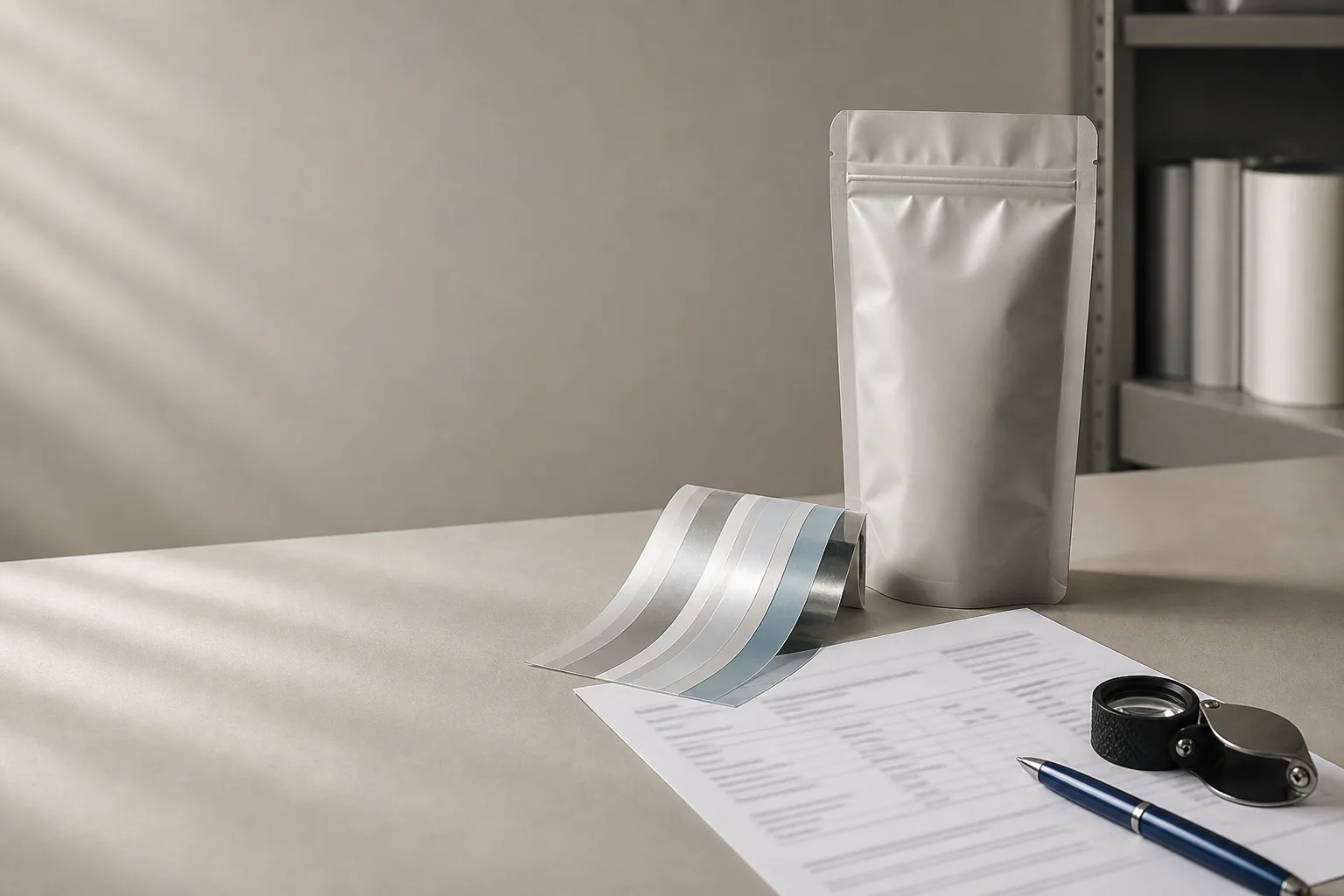
I ask for a written construction description with a physical blank. I inspect pouch dimensions, seal zones, tear path, optional reclosure, and the product fit without forcing powder toward the top seal. FDA treats packaging components as food-contact substances and evaluates intended use, so I request documents that match the selected material, food, market, and use condition.3 I use the barrier-film guide to frame oxygen and moisture questions, but I do not treat a nominal material name as a shelf-life conclusion. A full product, pouch, and process review remains necessary.
How I make which pouch construction and seal details should i compare project-specific
For which pouch construction and seal details should i compare in this how do i package dry baking mixes in a flexible pouch review, I define the actual product, pouch configuration, intended use, and decision owner before I ask a supplier or tester for evidence. I retain the selected construction, component details, sample condition, and stated test method together. That gives me a decision aid without treating a related product as a promise for this one.
In which pouch construction and seal details should i compare for how do i package dry baking mixes in a flexible pouch, I state what is known, the condition it applies to, and what still needs a check with the finished pack. I do not transfer a material number, a seal result, or a closure choice from a different product just because the pouch shape looks similar. A representative filled sample gives the buyer a clear next check and gives the supplier a precise request.
I close which pouch construction and seal details should i compare for how do i package dry baking mixes in a flexible pouch with a written record: the approved sample, conditions, observations, open risks, and change triggers. I connect material assessment, a filled-pack trial, written confirmation, and a specification-based quotation.
How Do I Check Filled Baking-Mix Pouches Before Production?
An empty pouch cannot show powder near the seal, panel distortion, poor tear control, difficult dispensing, carton rub, or how reclosure works after a real customer opens it.
I inspect representative filled, sealed, cartoned, handled, opened, dispensed, and reclosed pouches under documented project conditions before I approve the construction or request a quote.
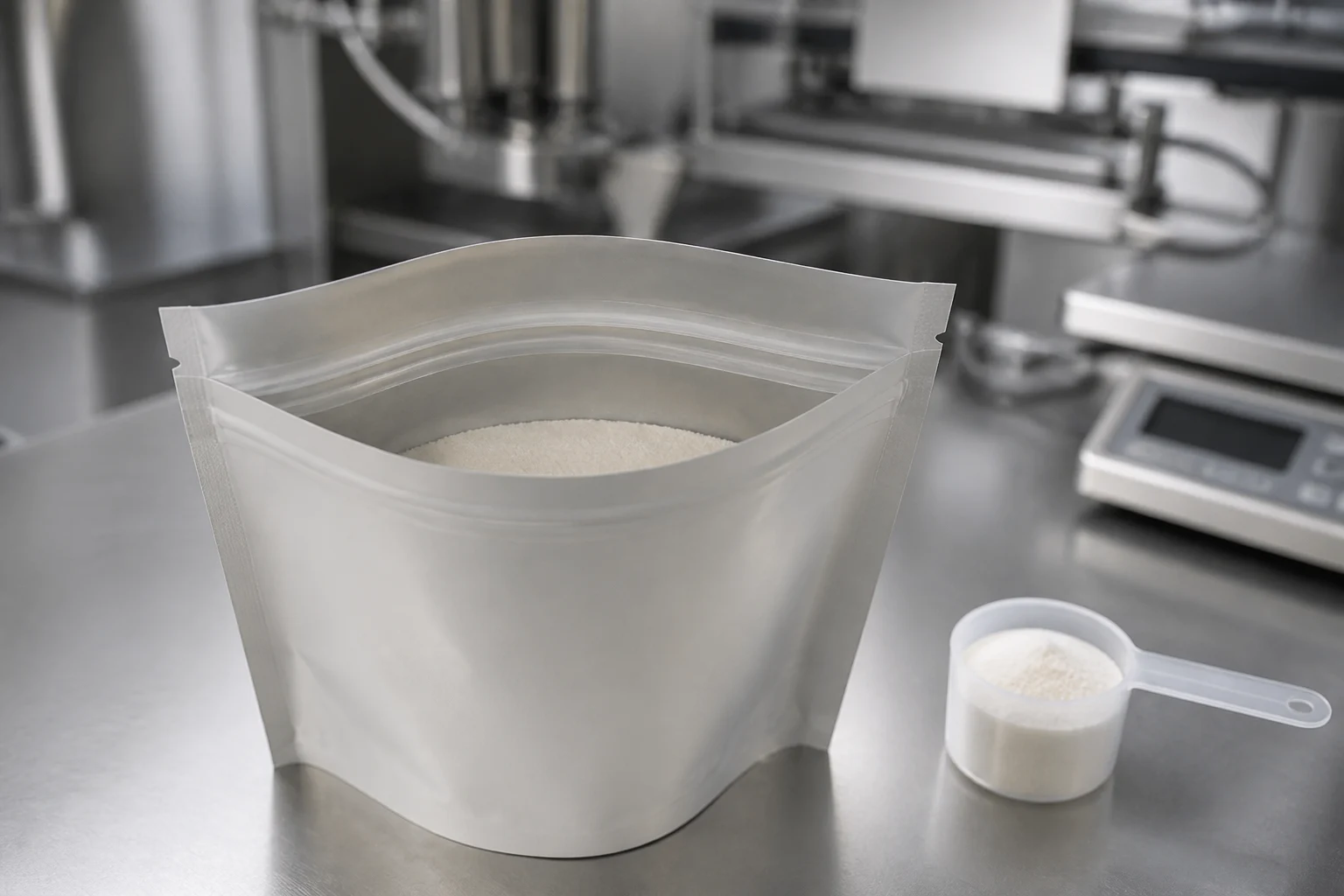
I fill samples with the actual product or a representative blend at the intended project weight. I inspect whether powder reaches the seal area, whether the pouch settles evenly, whether the top seal remains clean, and whether the consumer can open and dispense without losing product. ASTM F88/F88M describes a method for measuring flexible-barrier seal strength and identifying failure mode.4 I do not extend one seal result to a safety, freshness, or transport claim. The powder-seal contamination guide helps keep filling behavior and sealing geometry connected.
How I make how do i check filled baking-mix pouches before production project-specific
For how do i check filled baking-mix pouches before production in this how do i package dry baking mixes in a flexible pouch review, I define the actual product, pouch configuration, intended use, and decision owner before I ask a supplier or tester for evidence. I retain the selected construction, component details, sample condition, and stated test method together. That gives me a decision aid without treating a related product as a promise for this one.
In how do i check filled baking-mix pouches before production for how do i package dry baking mixes in a flexible pouch, I state what is known, the condition it applies to, and what still needs a check with the finished pack. I do not transfer a material number, a seal result, or a closure choice from a different product just because the pouch shape looks similar. A representative filled sample gives the buyer a clear next check and gives the supplier a precise request.
I close how do i check filled baking-mix pouches before production for how do i package dry baking mixes in a flexible pouch with a written record: the approved sample, conditions, observations, open risks, and change triggers. I connect material assessment, a filled-pack trial, written confirmation, and a specification-based quotation.
What Should a Baking-Mix Purchase Specification Include?
A suitable sample is difficult to repeat when the order names artwork and nominal weight but not powder condition, pouch construction, carton plan, trial evidence, and change triggers.
I specify the mix and fill, pouch construction and features, food-contact market, approved sample, carton plan, observations, acceptance criteria, and reapproval triggers in one brief.
I use a deliberate procurement sequence: assess material against the defined product and route, run a representative filled-pack trial, document the accepted configuration, and request a quote on that same basis. The brief identifies formula form, fill, dimensions, layer description, sealant, opening or closure feature, artwork revision, food-contact market, carton arrangement, sample condition, observed limits, and acceptance status. I list common failure modes: moisture-related caking, powder-contaminated seals, poor tear control, closure difficulty, carton abrasion, and a mismatch between material documents and intended use. I do not invent shelf life, MOQ, price, timing, certification, or performance results.
How I make what should a baking-mix purchase specification include project-specific
For what should a baking-mix purchase specification include in this how do i package dry baking mixes in a flexible pouch review, I define the actual product, pouch configuration, intended use, and decision owner before I ask a supplier or tester for evidence. I retain the selected construction, component details, sample condition, and stated test method together. That gives me a decision aid without treating a related product as a promise for this one.
In what should a baking-mix purchase specification include for how do i package dry baking mixes in a flexible pouch, I state what is known, the condition it applies to, and what still needs a check with the finished pack. I do not transfer a material number, a seal result, or a closure choice from a different product just because the pouch shape looks similar. A representative filled sample gives the buyer a clear next check and gives the supplier a precise request.
I close what should a baking-mix purchase specification include for how do i package dry baking mixes in a flexible pouch with a written record: the approved sample, conditions, observations, open risks, and change triggers. I then use the packaging specification-sheet guide to connect material assessment, a filled-pack trial, written confirmation, and a specification-based quotation.
| Specification item | Evidence I retain | Decision it supports |
|---|---|---|
| Mix and fill | Formula form, flow, dust, fill range and market. | Relevant pouch comparison. |
| Pouch construction | Dimensions, layer description, seal and feature details. | Comparable sample request. |
| Filled-pack trial | Product, carton, handling observations and limits. | Conditional approval. |
| Change control | Named product, material and route triggers. | Specification-based quote. |
Conclusion
I choose packaging through evidence, filled-pack testing, and clear specifications. That process protects the product, the launch, and the customer experience.
Sources and Further Reading
- USDA FSIS, How do I store dry goods?.
- Reddit r/Entrepreneur, baking-mix startup community discussion.
- FDA, Food Packaging and Other Substances that Come in Contact with Food.
- ASTM F88/F88M, Seal Strength of Flexible Barrier Materials.
- FDA, Food Types and Conditions of Use for Food Contact Substances.
- Unique Packaging barrier-film guide.
- Unique Packaging powder-seal guide.
Need a pouch specification?
I can review your product, size, quantity, artwork, and target market.