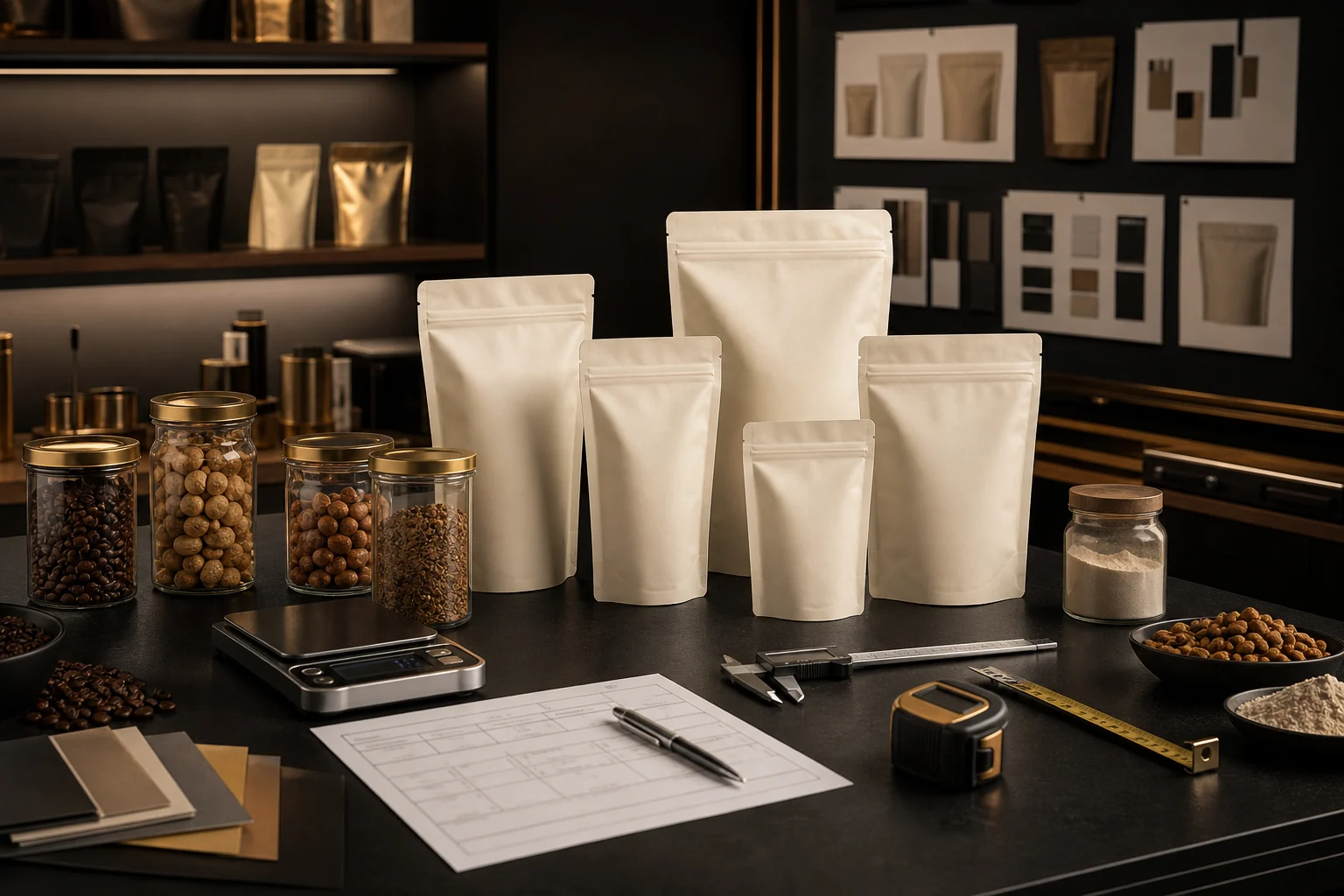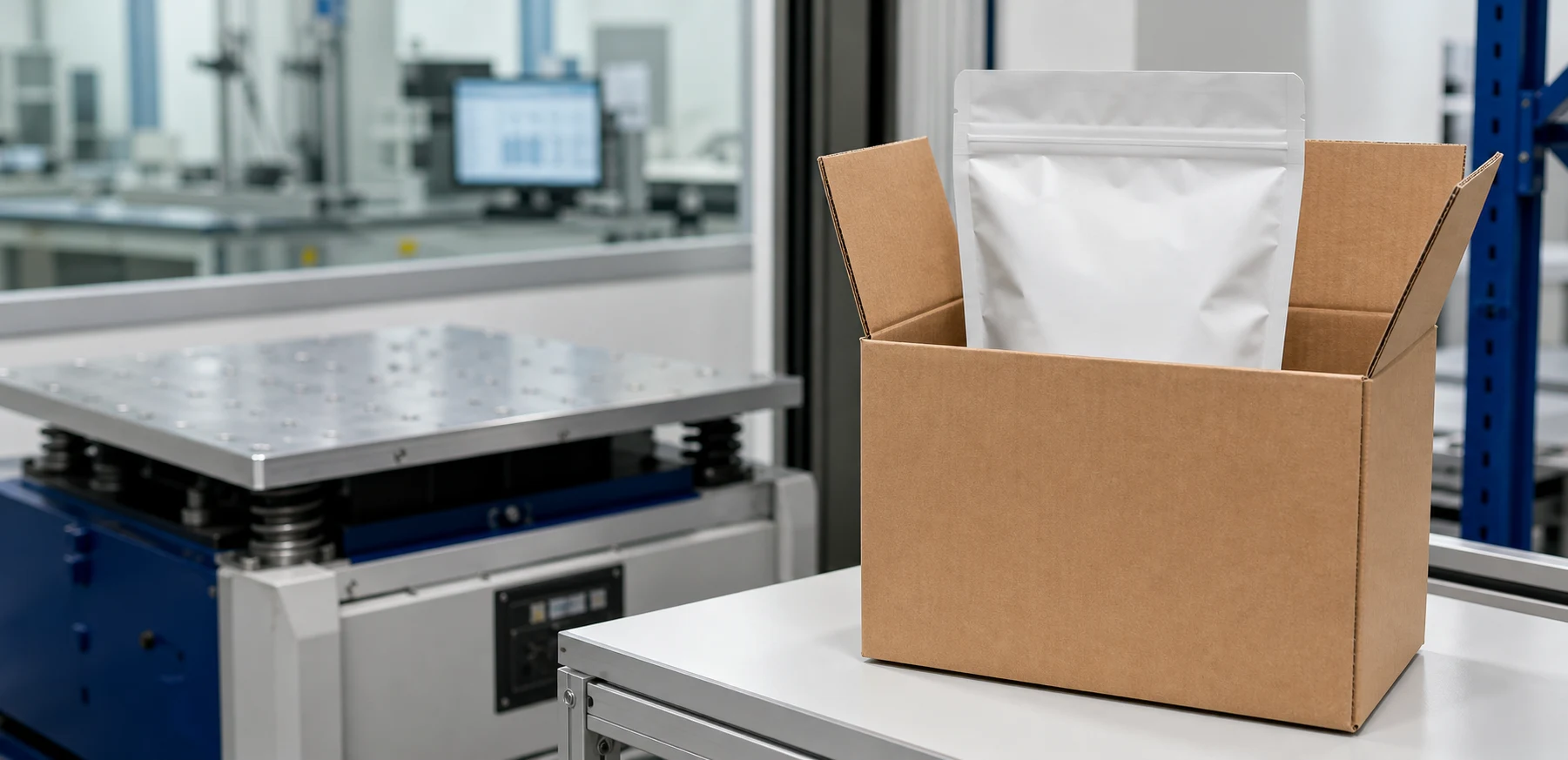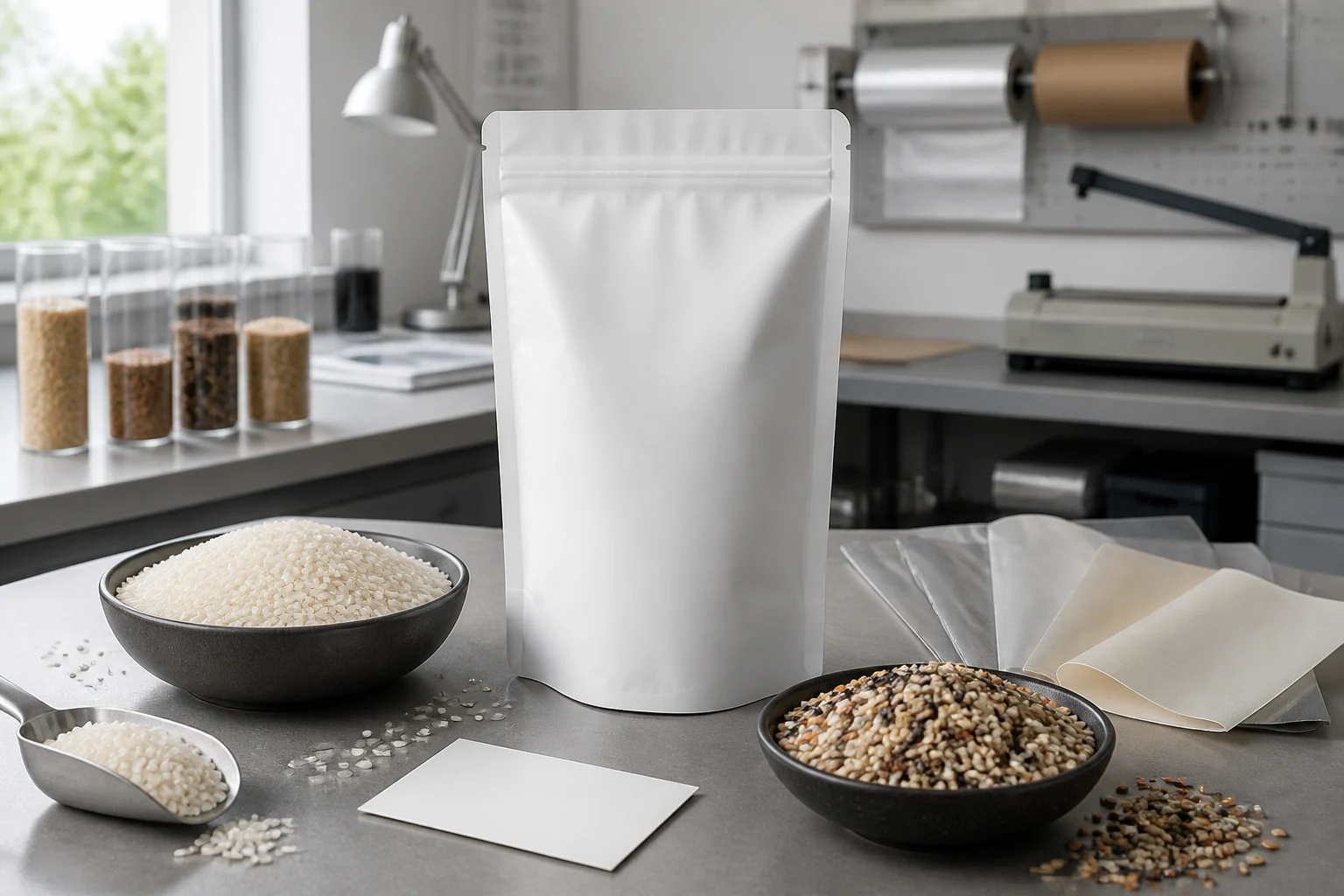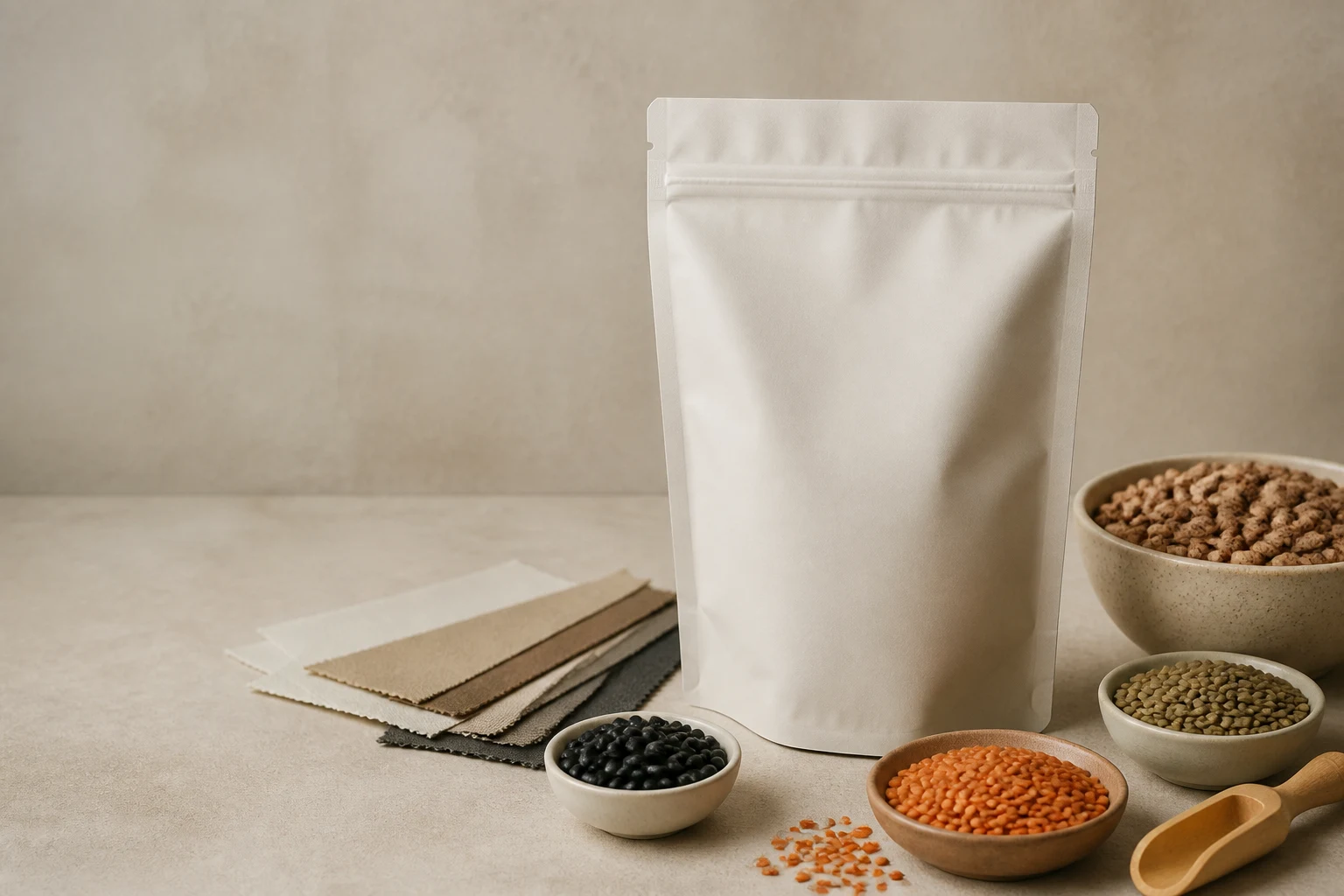
A bean or lentil pouch can split at a corner, leak after handling, pour poorly, or weaken a repeat order when product weight, structure, carton, and opening use are ignored.
I package dry beans and lentils by defining product condition and fill weight, comparing the exact pouch construction, checking representative filled packs, and confirming a written specification before quotation.
I treat the pouch as a complete system. I confirm the product, material, filling, handling, and customer experience before I approve production.
What Dry-Bean and Lentil Conditions Should I Define First?
A pulse-packaging request is incomplete when it omits the bean or lentil type, fill weight, dust, product edges, intended market, storage route, carton plan, and consumer opening routine.
I define the exact beans or lentils, product condition, fill range, product-contact market, storage and distribution route, carton plan, consumer use, and acceptance checks before I compare pouches.
I identify the product precisely. Black beans, chickpeas, split lentils, mixed pulses, and cracked products can differ in particle shape, dust, corner pressure, consumer use, and handling needs. I record fill weight, expected range, product-contact market, storage and distribution route, carton configuration, and whether the pouch needs to remain usable after opening. USDA’s procurement specification for dry edible beans, peas, and lentils includes a stated moisture range and packaging requirements for its covered purchases.1 I use that only as an example of how a written brief can name product condition; it is not a universal retail-pouch specification. The Reddit discussion is a narrow material-question insight.3
How I make what dry-bean and lentil conditions should i define first project-specific
For what dry-bean and lentil conditions should i define first in this how do i package dry beans and lentils in a flexible pouch review, I define the actual product, pouch configuration, intended use, and decision owner before I ask a supplier or tester for evidence. I retain the selected construction, component details, sample condition, and stated test method together. That lets me use the food barrier-film guide as a decision aid instead of treating it as a product promise.
In what dry-bean and lentil conditions should i define first for how do i package dry beans and lentils in a flexible pouch, I state what is known, the condition it applies to, and what still needs a check with the finished pack. I do not transfer a material number, a seal result, or a closure choice from a different product just because the pouch shape looks similar. A representative filled sample gives the buyer a clear next check and gives the supplier a precise request.
I close what dry-bean and lentil conditions should i define first for how do i package dry beans and lentils in a flexible pouch with a written record: the approved sample, conditions, observations, open risks, and change triggers. I connect material assessment, a filled-pack trial, written confirmation, and a specification-based quotation.
Which Pouch Construction and Opening Features Should I Compare?
A generic request for a “bean bag” cannot define the finished geometry, layer sequence, sealant, opening feature, food-contact scope, and test conditions a supplier must assess.
I compare the format, dimensions, layer sequence, sealant, seal zones, opening or reclosure feature, food-contact documentation, and filled sample instead of approving a broad product label.
I request the physical blank and a written construction description. I then inspect how pouch dimensions, stand-up base, seals, tear path, optional zipper, and possible carry feature relate to the actual fill weight. USDA FSIS advises checking dry-goods packages for holes that could let moisture or insects in.2 That guidance does not select a material. FDA food-contact tables distinguish dry solids and use conditions, so I request project-specific documents that match the construction, food, market, and route.4 I use the stand-up pouch-size guide to keep usable volume, headspace, and customer handling visible.
How I make which pouch construction and opening features should i compare project-specific
For which pouch construction and opening features should i compare in this how do i package dry beans and lentils in a flexible pouch review, I define the actual product, pouch configuration, intended use, and decision owner before I ask a supplier or tester for evidence. I retain the selected construction, component details, sample condition, and stated test method together. That gives me a decision aid without treating a related product as a promise for this one.
In which pouch construction and opening features should i compare for how do i package dry beans and lentils in a flexible pouch, I state what is known, the condition it applies to, and what still needs a check with the finished pack. I do not transfer a material number, a seal result, or a closure choice from a different product just because the pouch shape looks similar. A representative filled sample gives the buyer a clear next check and gives the supplier a precise request.
I close which pouch construction and opening features should i compare for how do i package dry beans and lentils in a flexible pouch with a written record: the approved sample, conditions, observations, open risks, and change triggers. I connect material assessment, a filled-pack trial, written confirmation, and a specification-based quotation.
How Do I Check Filled Bean and Lentil Pouches Before Production?
An empty pouch cannot show whether the target fill stresses corners, distorts seals, changes the footprint, rubs in a carton, tears poorly, or remains manageable after opening.
I inspect representative filled, sealed, cartoned, handled, opened, poured, and reclosed pouches under documented project conditions before I approve the construction or request a quote.
I fill samples at the actual project weight and inspect the pouch footprint, seal appearance, corners, panel distortion, carton orientation, opening action, pouring control, and reclosure where included. I check whether the filled weight changes how a customer grips or stores the pouch. ASTM F88/F88M describes a method for measuring flexible-barrier seal strength and identifying failure mode.5 I use it within a defined comparison; one test result does not prove a distribution outcome, food safety, or long-term storage performance. When a project needs route evidence, I connect it to the filled-pouch distribution-testing guide and retain the sample condition with its observations.
How I make how do i check filled bean and lentil pouches before production project-specific
For how do i check filled bean and lentil pouches before production in this how do i package dry beans and lentils in a flexible pouch review, I define the actual product, pouch configuration, intended use, and decision owner before I ask a supplier or tester for evidence. I retain the selected construction, component details, sample condition, and stated test method together. That gives me a decision aid without treating a related product as a promise for this one.
In how do i check filled bean and lentil pouches before production for how do i package dry beans and lentils in a flexible pouch, I state what is known, the condition it applies to, and what still needs a check with the finished pack. I do not transfer a material number, a seal result, or a closure choice from a different product just because the pouch shape looks similar. A representative filled sample gives the buyer a clear next check and gives the supplier a precise request.
I close how do i check filled bean and lentil pouches before production for how do i package dry beans and lentils in a flexible pouch with a written record: the approved sample, conditions, observations, open risks, and change triggers. I connect material assessment, a filled-pack trial, written confirmation, and a specification-based quotation.
What Should a Bean or Lentil Purchase Specification Include?
A purchase order becomes hard to control when the brief gives artwork and nominal capacity but not the real fill, pouch construction, carton plan, sample evidence, and change triggers.
I specify the pulse product and fill, pouch construction and features, food-contact market, approved sample, carton plan, observations, acceptance criteria, and reapproval triggers in one brief.
I use a deliberate procurement sequence: assess material against the defined product and route, run a representative filled-pack trial, document the accepted configuration, then request a quote on that same specification. The brief identifies the bean or lentil type, condition, target fill, dimensions, layer sequence, sealant, opening or closure feature, artwork revision, food-contact market, carton arrangement, sample condition, observations, limits, and acceptance status. I name realistic failure modes: seal stress from fill weight, corner damage, poor tear control, hard-to-manage pouring, carton abrasion, or a mismatch between material documents and intended use. I do not invent MOQ, price, timing, certification, shelf life, or material-performance results.
How I make what should a bean or lentil purchase specification include project-specific
For what should a bean or lentil purchase specification include in this how do i package dry beans and lentils in a flexible pouch review, I define the actual product, pouch configuration, intended use, and decision owner before I ask a supplier or tester for evidence. I retain the selected construction, component details, sample condition, and stated test method together. That gives me a decision aid without treating a related product as a promise for this one.
In what should a bean or lentil purchase specification include for how do i package dry beans and lentils in a flexible pouch, I state what is known, the condition it applies to, and what still needs a check with the finished pack. I do not transfer a material number, a seal result, or a closure choice from a different product just because the pouch shape looks similar. A representative filled sample gives the buyer a clear next check and gives the supplier a precise request.
I close what should a bean or lentil purchase specification include for how do i package dry beans and lentils in a flexible pouch with a written record: the approved sample, conditions, observations, open risks, and change triggers. I then use the packaging specification-sheet guide to connect material assessment, a filled-pack trial, written confirmation, and a specification-based quotation.
| Specification item | Evidence I retain | Decision it supports |
|---|---|---|
| Pulse and fill | Product type, condition, fill range and market. | Relevant pouch comparison. |
| Pouch construction | Dimensions, layer description, seal and feature details. | Comparable sample request. |
| Filled-pack review | Product, carton, handling observations and limits. | Conditional approval. |
| Change control | Named product, material and route triggers. | Specification-based quote. |
Conclusion
I choose packaging through evidence, filled-pack testing, and clear specifications. That process protects the product, the launch, and the customer experience.
Sources and Further Reading
- USDA AMS, Commodity Specification for Dry Edible Beans, Peas, and Lentils.
- USDA FSIS, How do I store dry goods?.
- Reddit r/foodscience, dry-food packaging material community discussion.
- FDA, Food Types and Conditions of Use for Food Contact Substances.
- ASTM F88/F88M, Seal Strength of Flexible Barrier Materials.
- Unique Packaging barrier-film guide.
- Unique Packaging specification-sheet guide.
Need a pouch specification?
I can review your product, size, quantity, artwork, and target market.