A pouch can look premium yet create risk when gummies are packed before their condition, moisture exposure, closure, and release checks are defined.
I choose a gummy-supplement pouch only after I define product condition, intended market, packaging controls, closure use, representative filled-pack checks, and the written specification for the exact configuration.
I treat the pouch as a complete system. I confirm the product, material, filling, handling, and customer experience before I approve production.
What Product Condition Must I Confirm Before Packaging?
A packaging decision starts too late when a gummy is already sweating, sticking, or changing texture before it enters the pouch.
I first confirm the product’s approved condition, handling window, intended market, and release controls, then evaluate the pouch as one part of that controlled system.
I ask the product team which formulation, coating, condition, fill temperature, hold time, intended storage, and release checks govern the actual gummies. I do not infer those controls from the word “gummy.” The FDA guide says packaging operations must ensure that supplements are packaged and labeled as specified in the master manufacturing record.1 I therefore start with the approved product and record what the pouch trial is intended to evaluate. The Reddit discussion is useful because it describes a real sticky-gummy troubleshooting problem, but it does not determine a production cure time for another formula.2 I use it to ask whether representative samples should be checked after their normal conditioning step.
How I make this decision specific
For “What Product Condition Must I Confirm Before Packaging?” in this how do i choose a pouch for gummy supplements review, I define the actual product, pouch configuration, intended use, and decision owner before I ask a supplier or tester for evidence. I keep the selected structure, component details, sample condition, and any stated test method together, then compare the result with the buyer’s actual route rather than a catalogue promise. That record lets me use the food-contact packaging-document guide as a decision aid and retain a specification that another team member can check.
For How Do I Choose a Pouch for Gummy Supplements, I state what is known, the condition it applies to, and what must still be checked with the actual product. I do not transfer a number, a test result, or a feature choice from another product simply because its pouch looks similar. The result of “What Product Condition Must I Confirm Before Packaging?” should give the buyer a clear next check, the supplier a precise request, and the project owner a record of the remaining uncertainty.
For How Do I Choose a Pouch for Gummy Supplements, I request the exact pouch structure, component specification, and test conditions from the supplier. A broad material name or catalogue claim is not a production specification. The right next step is a representative filled sample, where relevant, with observations recorded before production is approved.
Which Pouch Construction and Closure Should I Evaluate?
A material name or zipper label cannot show whether the exact pouch will suit the product, seal route, opening pattern, and intended market.
I evaluate the proposed construction and closure on the actual project, requesting food-contact documentation, a physical sample, and a written description of the structure and intended use.
I identify the pouch format, dimensions, outside web, sealant, zipper or opening feature, print route, fill condition, and product-contact market. FDA explains that packaging and its components can be food-contact substances, so I request documentation for the selected construction and intended use rather than treat an empty pouch as proof.3 I also inspect how the zipper sits below the top seal and whether the customer can find and use it after first opening. The document guide helps keep the supplier request specific. I avoid a generic barrier or shelf-life promise because the finished formulation, package, storage, and test conditions have not been established by a material name.
How I make this decision specific
For “Which Pouch Construction and Closure Should I Evaluate?” in this how do i choose a pouch for gummy supplements review, I define the actual product, pouch configuration, intended use, and decision owner before I ask a supplier or tester for evidence. I keep the selected structure, component details, sample condition, and any stated test method together, then compare the result with the buyer’s actual route rather than a catalogue promise. That record gives the buyer a decision aid and a specification that another team member can check.
For How Do I Choose a Pouch for Gummy Supplements, I state what is known, the condition it applies to, and what must still be checked with the actual product. I do not transfer a number, a test result, or a feature choice from another product simply because its pouch looks similar. The result of “Which Pouch Construction and Closure Should I Evaluate?” should give the buyer a clear next check, the supplier a precise request, and the project owner a record of the remaining uncertainty.
How Do I Check the Filled Pouch Rather Than an Empty Sample?
An empty pouch can hide crowding, coating transfer, seal interference, poor opening, and carton contact that appear only after real gummies are packed.
I check representative filled, sealed, packed, opened, and reclosed samples under defined project conditions, then document the observations and limits before I approve scale-up.
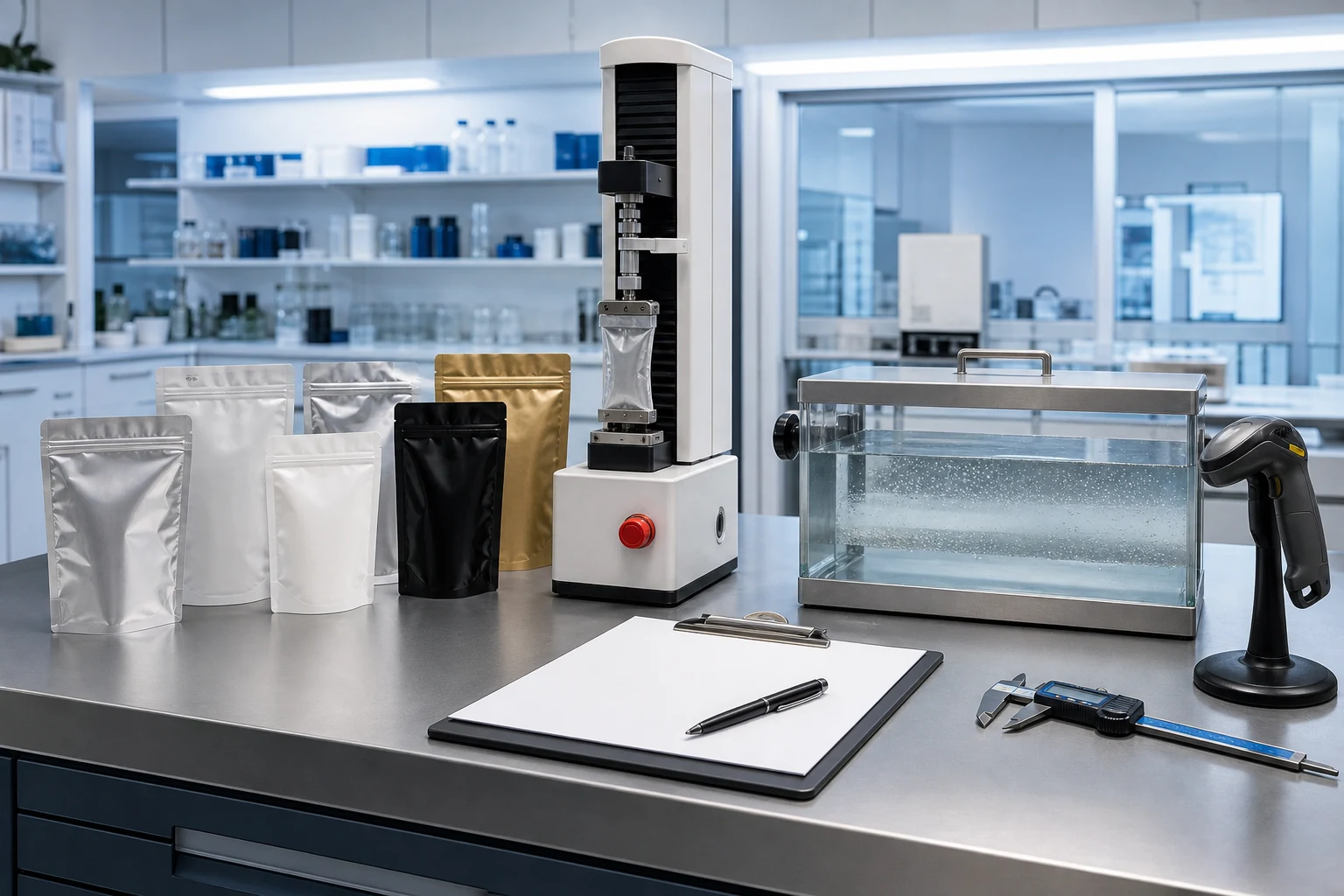
I fill samples using the approved product condition and intended fill range. I inspect product placement, top-seal cleanliness, zipper access, pouch appearance, seal continuity, carton orientation, and customer opening. If a comparative seal test is required, ASTM F88/F88M describes a method for measuring flexible-barrier seal strength and identifying failure mode.4 I do not convert that method into a claim that a pouch is leak-proof or suitable for every route. I retain the finished samples and record the actual configuration. The quality-test guide gives the review a useful evidence path, while the community insight remains clearly separate from test evidence.
How I make this decision specific
For “How Do I Check the Filled Pouch Rather Than an Empty Sample?” in this how do i choose a pouch for gummy supplements review, I define the actual product, pouch configuration, intended use, and decision owner before I ask a supplier or tester for evidence. I keep the selected structure, component details, sample condition, and any stated test method together, then compare the result with the buyer’s actual route rather than a catalogue promise. That record gives the buyer a decision aid and a specification that another team member can check.
For How Do I Choose a Pouch for Gummy Supplements, I state what is known, the condition it applies to, and what must still be checked with the actual product. I do not transfer a number, a test result, or a feature choice from another product simply because its pouch looks similar. The result of “How Do I Check the Filled Pouch Rather Than an Empty Sample?” should give the buyer a clear next check, the supplier a precise request, and the project owner a record of the remaining uncertainty.
For How Do I Choose a Pouch for Gummy Supplements, I treat the filled pack as a separate check from the material data. I record the fill condition, seal area, opening or closure behavior, carton arrangement, handling observations, and limits of the comparison. That prevents a favourable bench result from becoming an unsupported claim about shelf life, transport, or every product route.
What Should I Put in the Gummy-Pouch Release Specification?
A good sample cannot be repeated when the approval leaves out the product condition, structure, closure, filling context, sample evidence, and change triggers.
I release the project with its product condition, pouch configuration, market documentation, filled-sample observations, acceptance criteria, retained reference, and reapproval triggers written together.
My release record names the gummy configuration, approved handling condition, target fill, pouch format and dimensions, construction, opening feature, print revision, product-contact market, sample condition, carton arrangement, acceptance observations, and what the review did not establish. I state which changes require a new check: formulation, coating, product condition, fill, structure, sealant, zipper, dimensions, artwork, carton, or route. This connects material assessment, a representative filled-pack trial, written specification confirmation, and a quote on the same basis. I use the specification-sheet guide to retain the decision. That is more reliable than asking a supplier to reproduce an attractive but undocumented sample.
How I make this decision specific
| Specification item | Evidence I retain | Decision it supports |
|---|---|---|
| Product condition | Approved handling and release context. | Representative pouch trial. |
| Pouch and closure | Structure, dimensions, feature, and sample. | Supplier documentation and usability check. |
| Filled-pack review | Sample condition, observations, and limits. | Conditional release decision. |
| Change control | Named reapproval triggers. | Repeatable specification-based quote. |
For “What Should I Put in the Gummy-Pouch Release Specification?” in this how do i choose a pouch for gummy supplements review, I define the actual product, pouch configuration, intended use, and decision owner before I ask a supplier or tester for evidence. I keep the selected structure, component details, sample condition, and any stated test method together, then compare the result with the buyer’s actual route rather than a catalogue promise. That record gives the buyer a decision aid and a specification that another team member can check.
For How Do I Choose a Pouch for Gummy Supplements, I state what is known, the condition it applies to, and what must still be checked with the actual product. I do not transfer a number, a test result, or a feature choice from another product simply because its pouch looks similar. The result of “What Should I Put in the Gummy-Pouch Release Specification?” should give the buyer a clear next check, the supplier a precise request, and the project owner a record of the remaining uncertainty.
For How Do I Choose a Pouch for Gummy Supplements, I preserve the final decision in a written brief that names the approved sample, conditions, observations, open risks, and change triggers. I then use the packaging specification-sheet guide to keep the quotation tied to the evidence rather than to a remembered sample or a generic product name.
Conclusion
I choose packaging through evidence, filled-pack testing, and clear specifications. That process protects the product, the launch, and the customer experience.
Sources and Further Reading
- FDA, Dietary Supplement CGMP Small Entity Compliance Guide.
- Reddit r/foodscience, gummy curing and stickiness community discussion.
- FDA, Food Packaging and Other Substances that Come in Contact with Food.
- ASTM F88/F88M, Seal Strength of Flexible Barrier Materials.
- Unique Packaging food-contact document guide.
- Unique Packaging specification-sheet guide.
Need a pouch specification?
I can review your product, size, quantity, artwork, and target market.