Gummy candy can stick, deform, wrinkle a pouch, or arrive with a poor reclose when the product condition, pouch construction, seals, and carton route were never tested together.
I package gummy candy by defining the candy condition and route, comparing the complete pouch and closure, then checking representative filled packs and a written specification before quotation.
I treat the pouch as a complete system. I confirm the product, material, filling, handling, and customer experience before I approve production.
What Gummy-Candy Conditions Should I Define First?
A gummy-pouch brief remains vague when it omits gel type, coating, piece geometry, surface condition, fill, packing temperature, market, route, and repeat-use expectation.
I define the gummy type and coating, piece geometry, surface condition, fill range, packing temperature, target market, storage and distribution route, carton plan, and opening routine before comparing pouches.
I distinguish gelatin, pectin, starch-moulded, sugar-sanded, sour-coated, oil-finished, and filled gummies because their surfaces and handling can differ. I record piece size, product temperature at packing, fill range, product-contact market, storage route, carton arrangement, and whether the pouch is single-use or resealed. A candy-maker discussion describes surface stickiness as a practical production concern and mentions coating choices.1 That is community insight, not a formula, packaging, or regulatory conclusion. I ask the product owner for controlled product data and an approved packing condition. FDA’s food-contact guidance explains why the finished pouch and its components need to be reviewed for the actual intended use.2
How I make what gummy-candy conditions should i define first project-specific
For what gummy-candy conditions should i define first in this how do i package gummy candy in a flexible pouch review, I define the actual product, pouch configuration, intended use, and decision owner before I ask a supplier or tester for evidence. I retain the selected construction, component details, sample condition, and stated test method together. That lets me use the barrier-film guide as a decision aid instead of treating it as a product promise.
In what gummy-candy conditions should i define first for how do i package gummy candy in a flexible pouch, I state what is known, the condition it applies to, and what still needs a check with the finished pack. I do not transfer a material number, a seal result, or a closure choice from a different product just because the pouch shape looks similar. A representative filled sample gives the buyer a clear next check and gives the supplier a precise request.
I close what gummy-candy conditions should i define first for how do i package gummy candy in a flexible pouch with a written record: the approved sample, conditions, observations, open risks, and change triggers. I then use the packaging specification-sheet guide to connect material assessment, a filled-pack trial, written confirmation, and a specification-based quotation.
Which Pouch, Closure, and Seal Details Should I Compare?
A request for a clear, metallized, or resealable pouch does not identify the layer sequence, sealant, window area, closure, food-contact scope, or conditions for a useful comparison.
I compare the exact pouch format, layer sequence, sealant, seal zones, closure geometry, display area, physical samples, food-contact evidence, and stated test conditions instead of a generic pouch description.
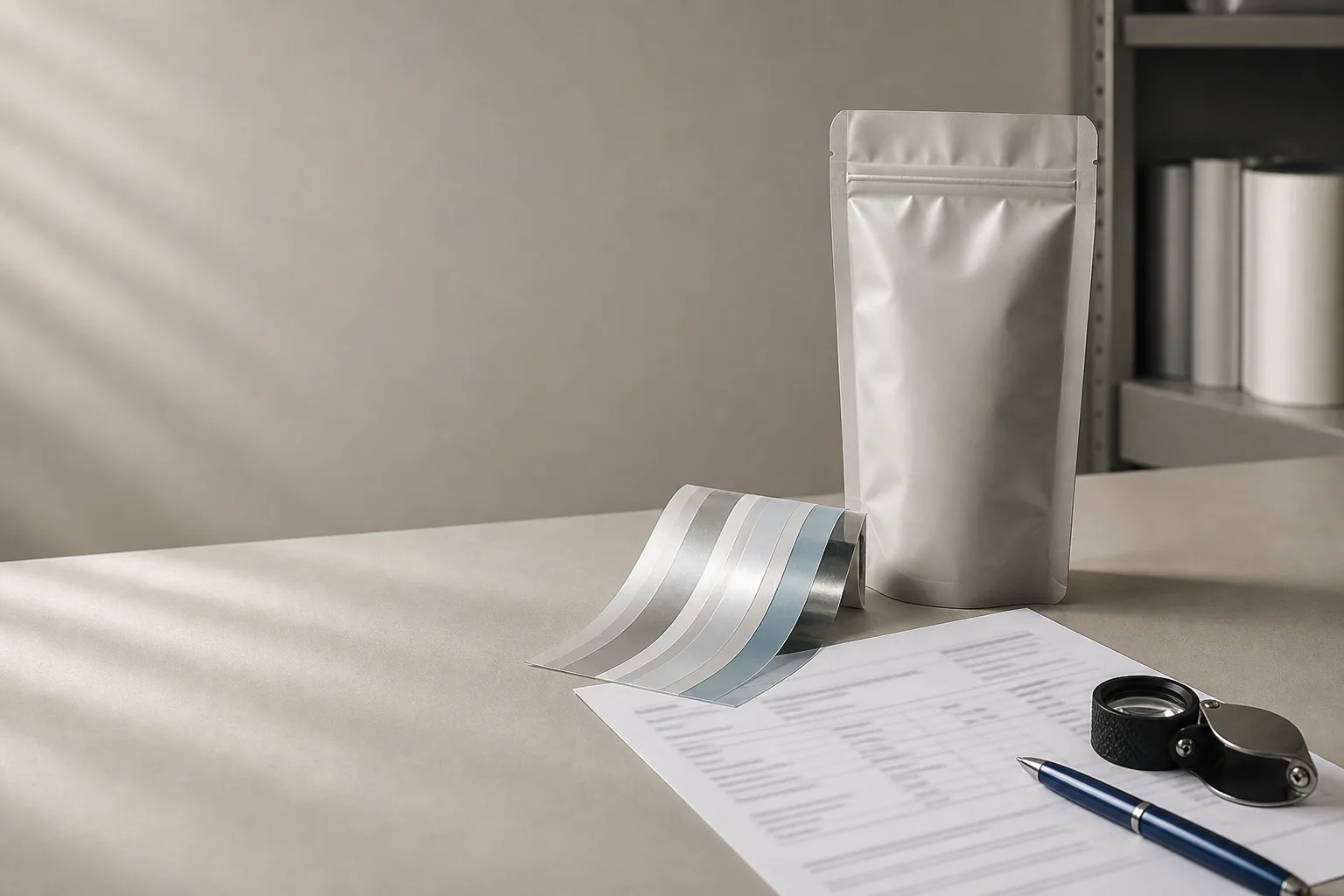
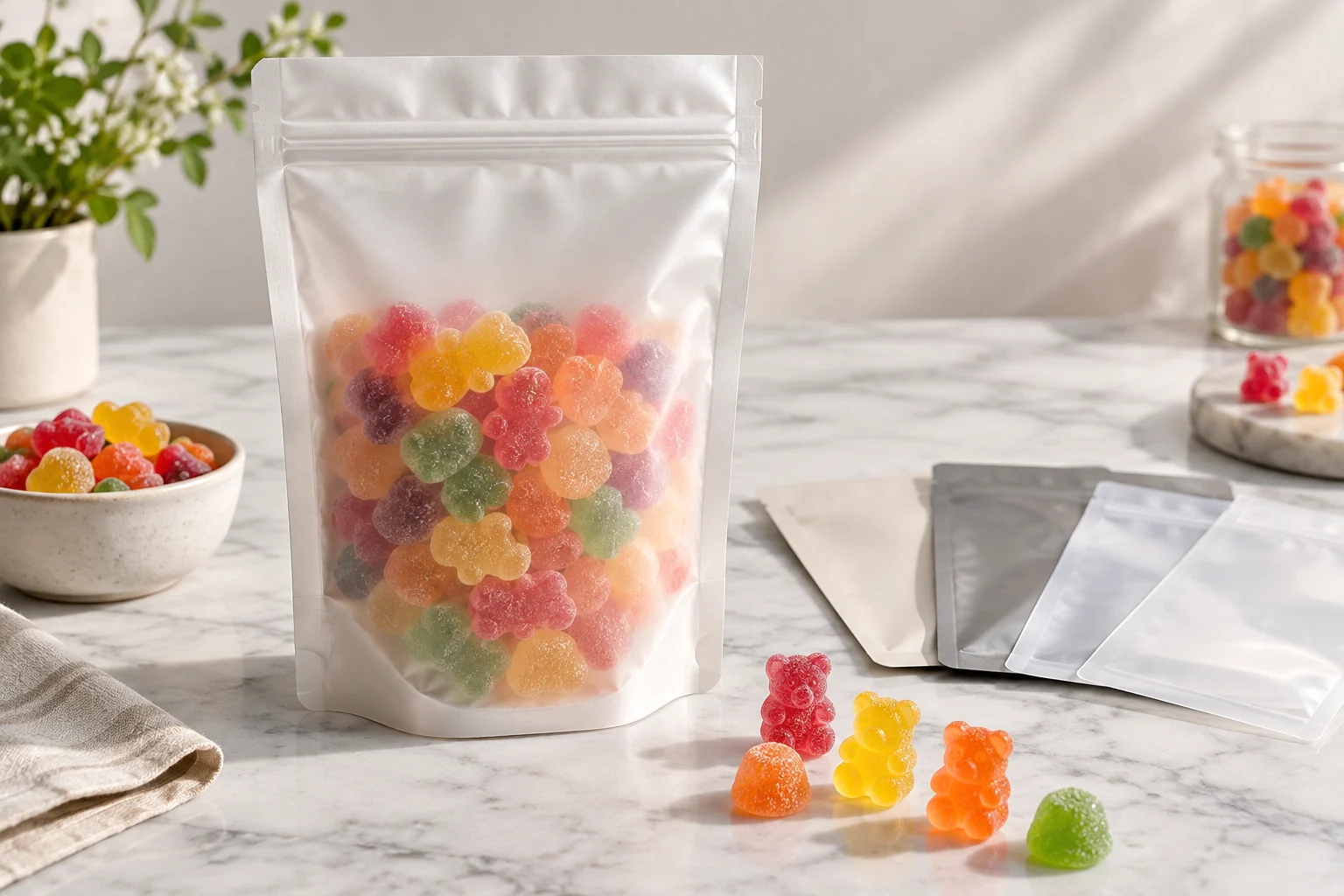
I obtain a written construction description and physical blanks. I inspect pouch dimensions, bottom geometry, top-seal room, zipper position, tear path, and any clear window with actual gummies. FDA identifies food-contact substances as including packaging and components such as adhesives and colorants, so I request evidence that matches the intended food and use condition.2 ASTM F1249 describes a method for determining water-vapor transmission through flexible barrier materials; I retain the material identity and stated test conditions when comparing samples.3 I use the barrier-film guide to request relevant material evidence without turning a nominal film or barrier result into a shelf-life statement.
How I make which pouch, closure, and seal details should i compare project-specific
For which pouch, closure, and seal details should i compare in this how do i package gummy candy in a flexible pouch review, I define the actual product, pouch configuration, intended use, and decision owner before I ask a supplier or tester for evidence. I retain the selected construction, component details, sample condition, and stated test method together. That lets me use the barrier-film guide as a decision aid instead of treating it as a product promise.
In which pouch, closure, and seal details should i compare for how do i package gummy candy in a flexible pouch, I state what is known, the condition it applies to, and what still needs a check with the finished pack. I do not transfer a material number, a seal result, or a closure choice from a different product just because the pouch shape looks similar. A representative filled sample gives the buyer a clear next check and gives the supplier a precise request.
I close which pouch, closure, and seal details should i compare for how do i package gummy candy in a flexible pouch with a written record: the approved sample, conditions, observations, open risks, and change triggers. I then use the packaging specification-sheet guide to connect material assessment, a filled-pack trial, written confirmation, and a specification-based quotation.
How Do I Review Filled Gummy Pouches Before Production?
An empty pouch cannot show product cling, sugar abrasion, seal contamination, pouch distortion, poor opening, zipper fouling, carton rubbing, or the way a pack looks after handling.
I inspect representative filled, sealed, cartoned, handled, opened, poured, and reclosed pouches under documented project conditions before approving the configuration or seeking a quote.
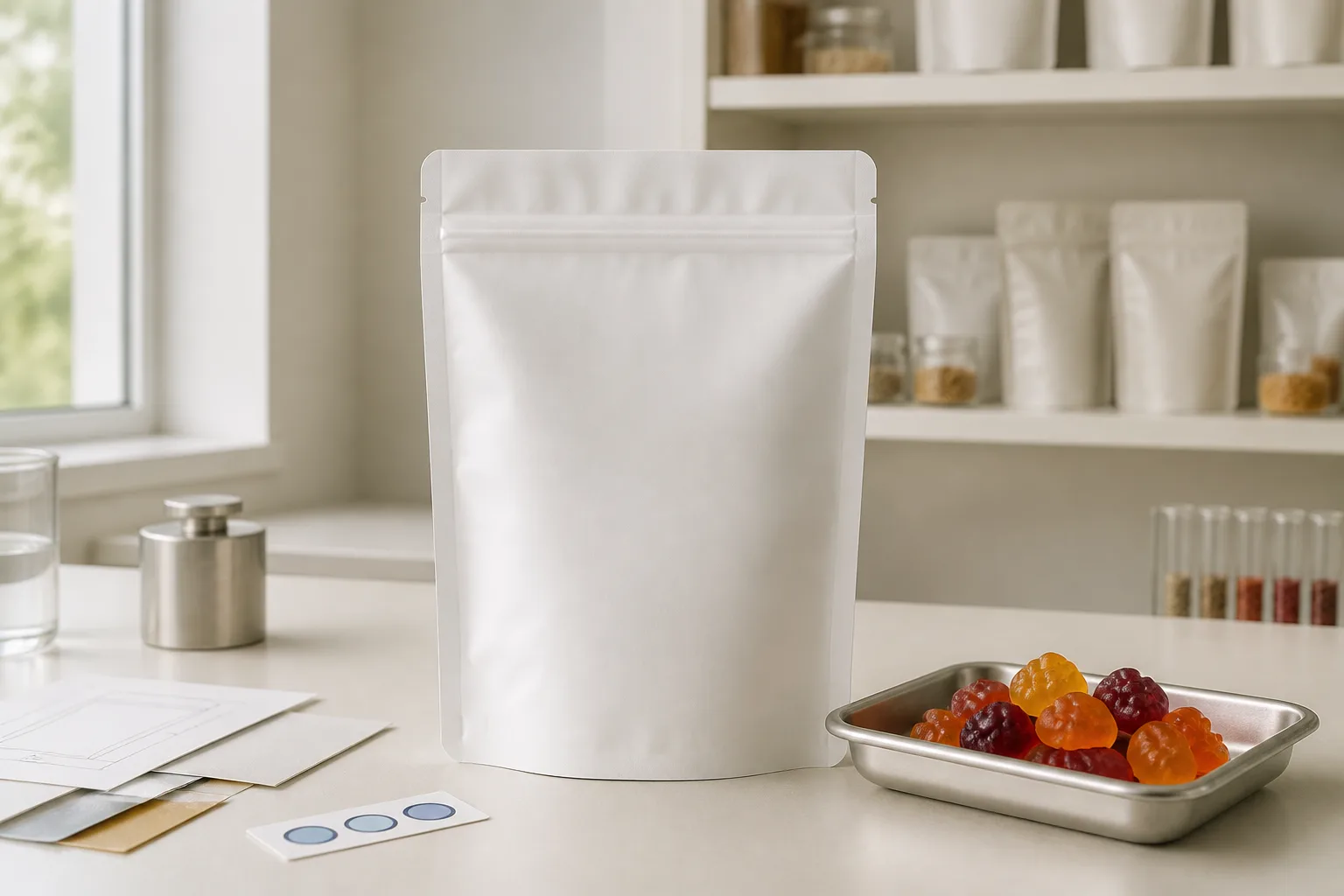
I fill pouches with the actual gummy at the planned range and observe pack shape, film contact, seal appearance, powder or sugar at the seal zone, zipper clearance, opening force, product release, carton orientation, and surface rub. I keep samples with their product condition, construction, carton plan, observations, and limits. ASTM F88/F88M supplies a defined method for measuring flexible-barrier seal strength and identifying failure mode when a project requires a controlled comparison.4 I do not use a single seal result to claim product safety, texture retention, shelf life, or transport performance. I connect unresolved route questions to the filled-pouch distribution-testing guide and keep material assessment, a representative trial, written confirmation, and a specification-based quote in sequence.
How I make how do i review filled gummy pouches before production project-specific
For how do i review filled gummy pouches before production in this how do i package gummy candy in a flexible pouch review, I define the actual product, pouch configuration, intended use, and decision owner before I ask a supplier or tester for evidence. I retain the selected construction, component details, sample condition, and stated test method together. That lets me use the barrier-film guide as a decision aid instead of treating it as a product promise.
In how do i review filled gummy pouches before production for how do i package gummy candy in a flexible pouch, I state what is known, the condition it applies to, and what still needs a check with the finished pack. I do not transfer a material number, a seal result, or a closure choice from a different product just because the pouch shape looks similar. A representative filled sample gives the buyer a clear next check and gives the supplier a precise request.
I close how do i review filled gummy pouches before production for how do i package gummy candy in a flexible pouch with a written record: the approved sample, conditions, observations, open risks, and change triggers. I then use the packaging specification-sheet guide to connect material assessment, a filled-pack trial, written confirmation, and a specification-based quotation.
| Specification item | Evidence I retain | Decision it supports |
|---|---|---|
| Candy and fill | Gel type, coating, condition, fill range and market. | Relevant pouch comparison. |
| Pouch and closure | Dimensions, layer description, seal and zipper details. | Comparable sample request. |
| Filled-pack review | Product, carton, handling observations and limits. | Conditional approval. |
| Change control | Named product, material and route triggers. | Specification-based quote. |
Conclusion
I choose packaging through evidence, filled-pack testing, and clear specifications. That process protects the product, the launch, and the customer experience.
Sources and Further Reading
- Reddit r/CandyMakers, gummy surface-stickiness discussion.
- FDA, Food Packaging and Other Substances that Come in Contact with Food.
- ASTM F1249, Water Vapor Transmission Rate Through Flexible Barrier Materials.
- ASTM F88/F88M, Seal Strength of Flexible Barrier Materials.
- ISTA, packaged-product test procedure categories.
- Unique Packaging barrier-film guide.
- Unique Packaging specification-sheet guide.
Need a pouch specification?
I can review your product, size, quantity, artwork, and target market.