A powder pouch can look tidy at launch, then become awkward to close as granules collect around its opening. Buyers need evidence beyond appearance.
I specify laundry powder refill pouches around the exact formula, dosing task, moisture exposure, closure and required label. I check filled samples and product stability separately, then approve a written construction and use plan before quotation.
I focus on loose laundry powder supplied in a branded original pack. Capsules, dissolvable unit doses and liquid detergent need separate assessments.
What Must the Laundry Powder Pouch Do After First Opening?
A large refill pack may stay open across many laundry days. Easy initial filling says little about reaching, dosing and closing the last powder.
I define whether the original pouch is the storage pack or part of a manufacturer-approved refill system. I test access and reclosure across the full fill range while preserving instructions and product identity.
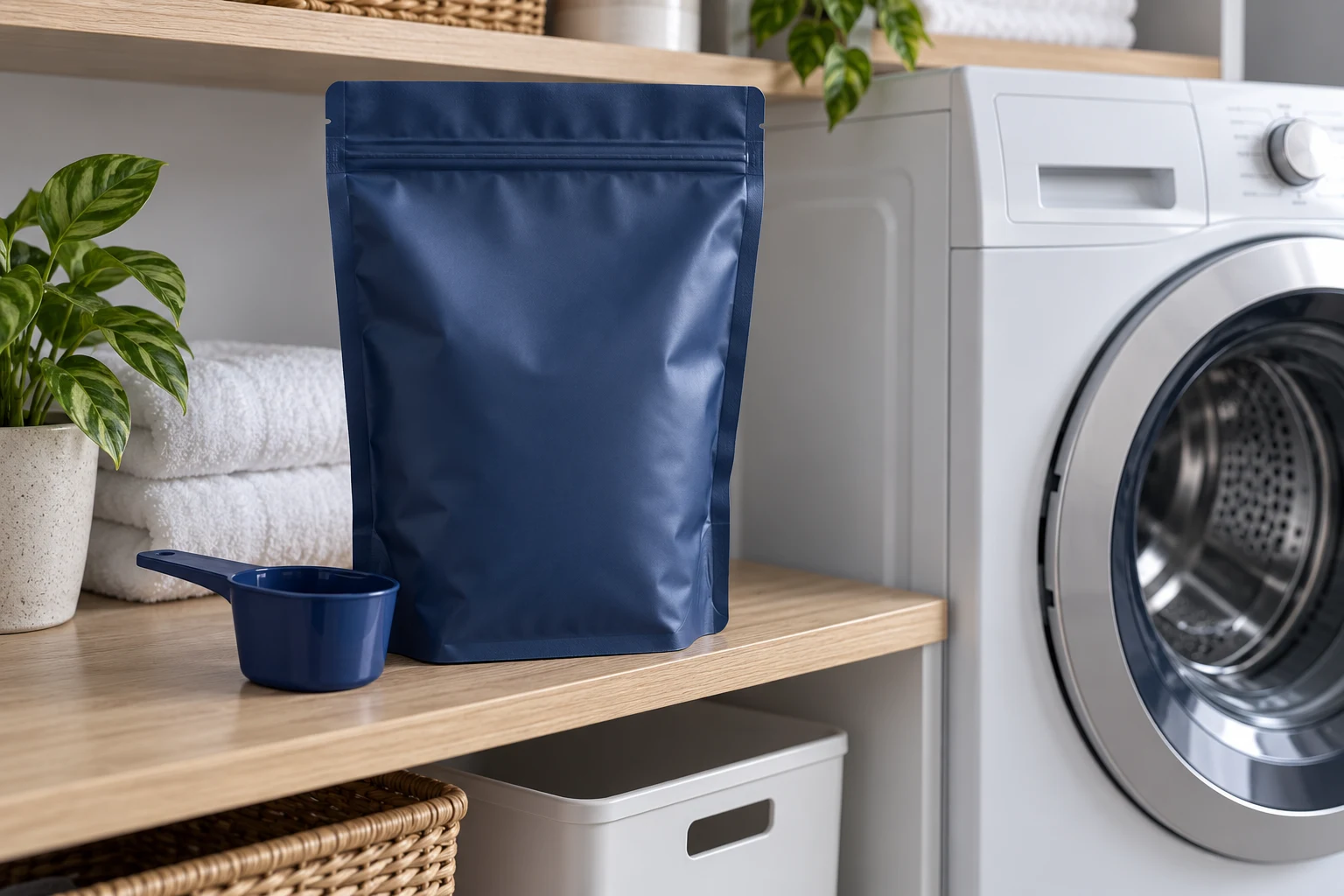
I start by asking how many separate opening events the design must support. The brand supplies its intended use pattern; I do not infer it from a load-count headline. I identify the dedicated scoop, its storage location, the opening width and the grip area. I also ask whether the pack must stand on a shelf while an adult doses powder. A consumer who needs to lift a heavy flexible pack with one hand may use it differently from the prototype reviewer.
In Reddit r/laundry, DiggerDriller described using powder slowly and finding the remaining material lumpy near the bottom of a box.1 I treat that as an individual use report. The discussion does not establish the cause, formula stability or whether cleaning performance changed. It gives me a reason to review the final part of a pack instead of checking only the first scoop.
I preserve the original pack and its information
Ariel's storage guidance advises keeping laundry products in their original labeled containers, closing them properly and storing them in a cool, dry place beyond children's reach and sight.2 I therefore do not turn community suggestions about kitchen jars into our instructions. If a new brand wants a refill system, its product owner must define the permitted receiving pack and instructions. An ordinary zipper must not be described as a tested child-resistant feature.
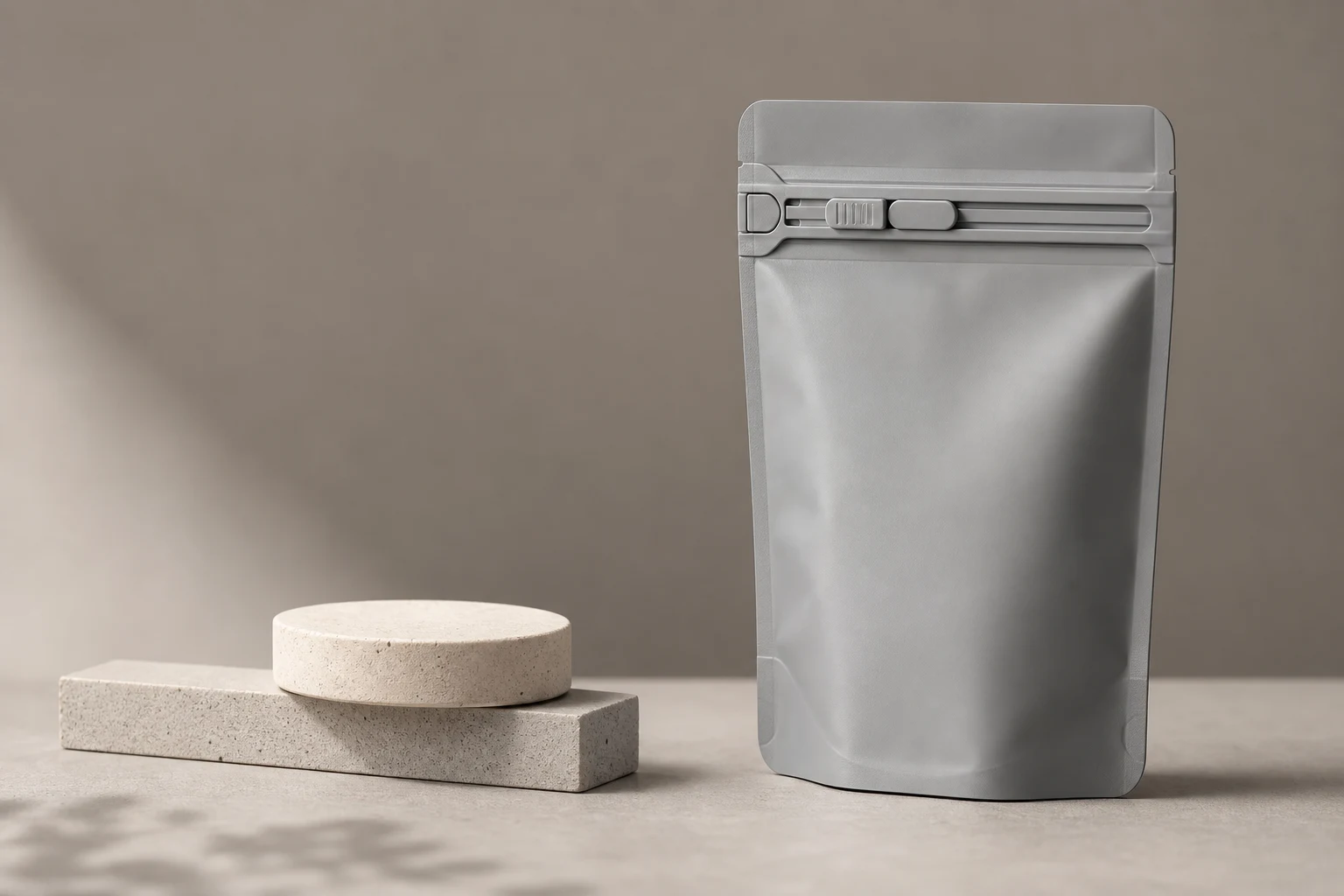
I compare a wide-mouth zipper pouch used as the original storage pack with a purpose-designed transfer pack. For direct dosing, I review scoop reach and the space needed to close the track. For a defined refill, I review control of the powder stream and retained labeling. I do not assume that the word refill means the user should decant into any convenient vessel. The stand-up pouch format page gives me candidate geometry, rather than evidence of suitability for detergent.
My opening review records what happens at full, half-full and low fill. I note trapped granules, powder on the outside, unstable standing and whether the user can tell that the closure is fully engaged. These observations form a prototype checklist. They are not a claim that a new pack has already passed consumer testing.
How Do I Compare Moisture Protection and Formula Compatibility?
A dry-looking powder and a familiar film name can conceal separate questions about humidity, fragrance, ingredients and contact with closures.
I compare film moisture data under named conditions and review the actual formula against every contact component. I keep laminate testing, formula stability, seal strength and closure usability as separate evidence items.
I ask the formulator for the product identity and revision, handling instructions and the information the packaging team needs to assess contact materials. I record whether the formula contains fragrance, enzymes, bleaching ingredients or other components that require specific review. I do not publish the recipe or treat all powders as chemically equivalent. Ecover's own powder-refill product page, for example, lists a specific ingredient blend and product warnings.3 That is an example of a defined product, not a recipe for another brand.
I compare candidate constructions by evidence
| Candidate | Potential reason to sample | Evidence before selection |
|---|---|---|
| PE-based zipper structure | Proposed material system for review | Exact layers, formula contact and moisture result |
| Multilayer opaque laminate | Alternative stiffness and protection design | Full construction, closure and seal evaluation |
| Paper-facing laminate | Brand presentation requirement | Actual inner barrier and contact layers, rather than appearance |
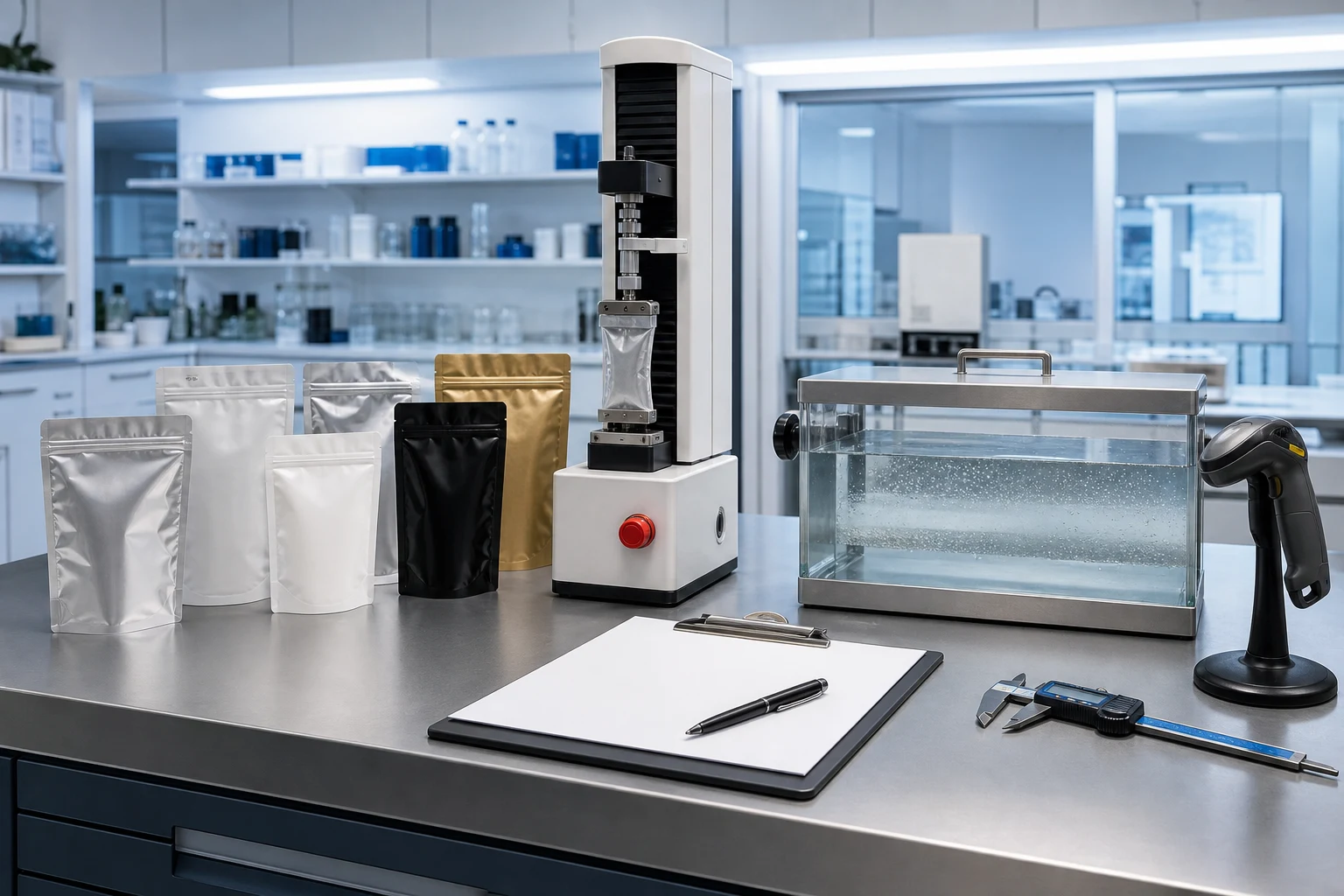
None of these names establishes a winner. I request ASTM F1249 water-vapor transmission data for the selected film.4 The report must state temperature, humidity gradient, thickness, orientation and units. I ask the product owner to set the required limit against its storage and stability work. I do not borrow a food pouch's acceptance threshold for a laundry product or convert a film result into a finished-pack lifetime. The packaging test guide helps separate the questions each method can answer.
For chemical resistance, I discuss ASTM D543 with the laboratory. Its public scope addresses plastic exposure to chemical reagents, and it explains why concentration, temperature, exposure duration and stress matter.5 The lab must select a suitable approach for the actual detergent and intended contact. A brief exposure to a simplified liquid is not automatically representative of long contact with a formulated powder. I request controls, the observed changes and the limits of interpretation.
I review the sealant, zipper, print protection and any adhesive as part of the selected system. I ask what changes trigger a repeat assessment: ingredient revision, fragrance change, contact layer, supplier or closure geometry. A written change rule prevents a purchasing substitution from silently invalidating the evidence I compared.
Which Filled-Pack Checks Belong in the Laundry Powder Buying Brief?
An empty bag cannot reveal powder in the closure or carton pressure on a heavy fill. Unclear acceptance criteria make supplier comparisons unreliable.
I retain representative filled packs and compare dosing, closure, seal and carton behavior under recorded conditions. I confirm the label and accepted construction, then request prices for that same specification.
I give the packer the intended formula, fill range and pouch revision. I ask it to record the actual filling method, seal settings and sample identity. I inspect powder clearance at the top seal and the zipper attachment before testing opening behavior. If the fill equipment creates visible dust, I ask the process owner to review it under the formula's handling instructions. I do not prescribe an unverified cleaning or dust-control method.
I request ASTM F88/F88M seal-strength evidence when a measured comparison is needed.6 The report should state specimen width, technique, test speed, conditioning and failure mode. I then keep the seal investigation guide beside the observations, because strength and integrity answer different questions. I do not release a detergent pack solely because one strip required a high force to separate.
I use a checklist with clear owners
My procurement checklist covers formula revision, fill range, finished dimensions, full material structure, closure position, top seal, artwork and required product information. It also identifies the dedicated dosing tool, expected opening routine, carton layout, approved sample, test reports and open issues. The product owner confirms storage and consumer instructions; the packaging team confirms construction; the packer confirms the equipment record. I use the specification-sheet guide to keep those decisions together.
For trial use, I observe an adult opening, taking the intended dose and closing the original pack. I repeat the observation with low fill and inspect corners and folds after the agreed carton handling. I record spills and closure problems against pre-agreed criteria. I keep product stability work separate, so a successful scoop test cannot become a claim that cleaning power or fragrance remains unchanged.
I reject a sample when its label cannot be retained as intended, its zipper is hard to engage after normal dosing, granules enter the seal, or the carton arrangement distorts the pack. I ask for the relevant change and repeat that check. Once the accepted sample and written brief match, I request a specification-based quotation. Quantity, destination, MOQ and timing belong in the supplier's actual response. I do not invent them to complete a comparison table.
Conclusion
I buy laundry powder pouches against a confirmed formula, usable closure, retained label and documented filled trial, with moisture and compatibility evidence reviewed separately.
Sources and Further Reading
Need a pouch specification?
I can review your product, size, quantity, artwork, and target market.