Sticky syrup in a carton or bag can ruin a useful pack. A spout needs evidence for filling, closure, handling, and the intended serving task.
I assess maple syrup spout pouches as a complete product, filling process, laminate, fitment, and cap system. I require documented use conditions and representative filled-pack checks before approving the specification or ordering production.
At Unique Packaging, I separate a convenient dispensing concept from a validated commercial process. A pouch sample and a public hot-fill guide cannot establish that a particular combination is ready for sale.
Which Material and Filling Conditions Must I Confirm?
A pouch described as suitable for liquids may not match the actual filling process. I need written evidence for every food-contact component and condition.
I confirm the syrup, filling route, temperature exposure, laminate, fitment, cap, and storage plan together. I require the producer and supplier to validate the proposed combination instead of copying a bottle procedure onto a flexible pouch.
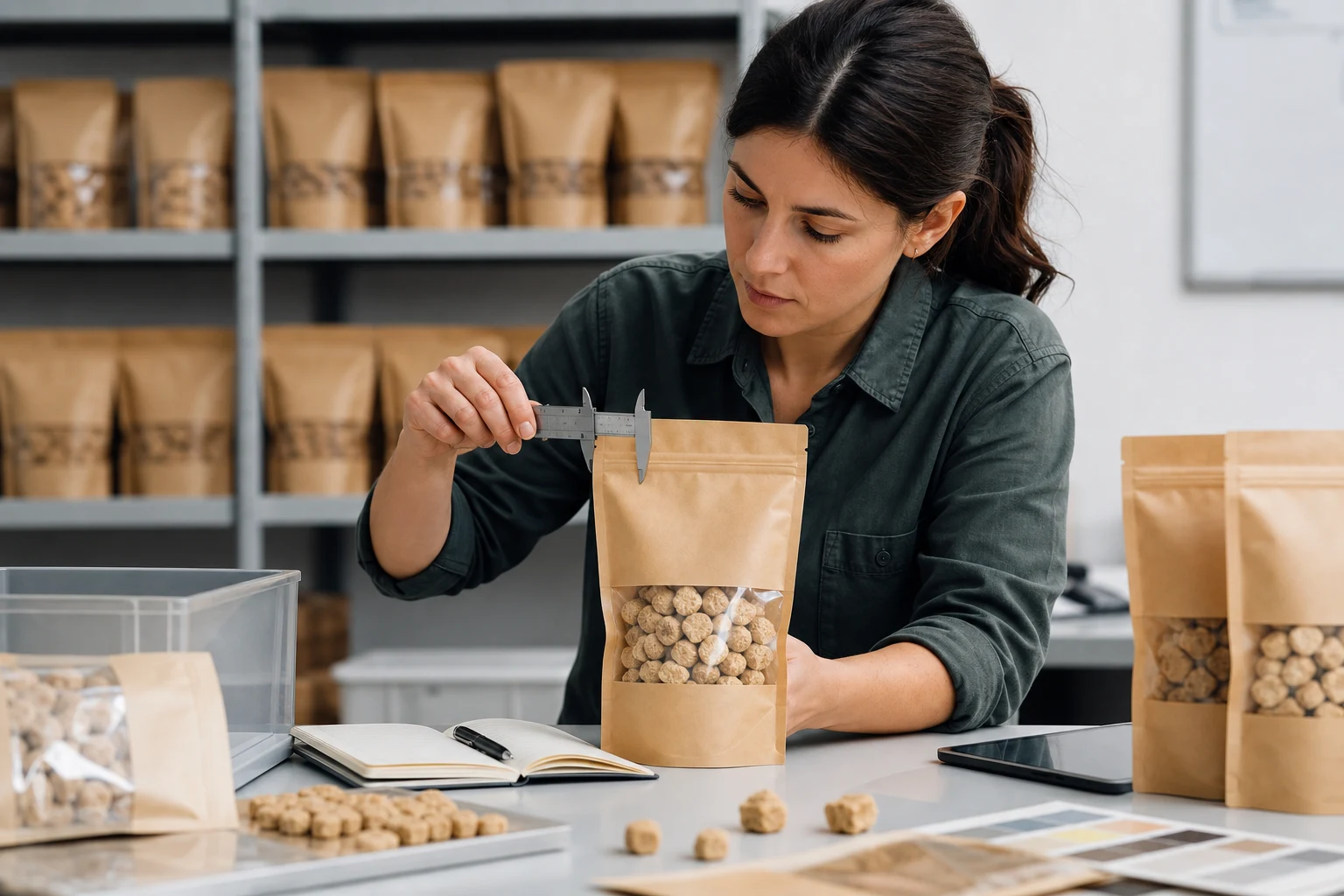
I first identify pure maple syrup versus a flavored syrup or another formulation. I record the product specification, filling equipment, fill volume, storage instructions, intended market, and whether the pack is for one serving or several. I ask the producer’s qualified food team to define the commercial process. I then ask the packaging supplier for the full laminate, sealant, fitment resin, cap system, and supporting documentation. A visually similar liquid pouch is not sufficient evidence for this product.
UVM Extension’s hot-fill protocol for syrup samples calls for new food-grade containers able to withstand hot filling and specifies heating syrup to at least 180°F (82°C) before packing.1 I cite that as published process context, not as a validated recipe for this proposed pouch. The full procedure has additional requirements. A producer must confirm an appropriate process for the actual pack, and the supplier must support its stated temperature exposure.
I compare systems rather than film names
| Candidate system | Reason to consider it | Evidence still required |
|---|---|---|
| Bottle or jug reference | An existing producer process may provide a baseline | Actual reference records and compatibility; no automatic transfer |
| Single-serving tear pouch | One portion without a screw cap | Opening, seal, filling, and product validation |
| Spout pouch with screw cap | Controlled dispensing or several uses | Fitment weld, cap, process compatibility, and opened-use instructions |
UVM’s research report explains that container size and material affect how quickly syrup cools.2 That is why I ask the producer to review the temperature history of the actual filled pouch instead of approving it from an inlet temperature alone. I record the proposed fill range and the time-temperature conditions that the qualified team needs to evaluate.
FDA lists food types separately from conditions such as room-temperature filling, hot filling, and refrigerated storage.3 I request documents whose scope matches the intended use for the laminate and components. I use the spout-pouch selection guide to organize the component questions. I do not publish a generic structure recommendation, a sterilization claim, or an ambient shelf-life promise.
How Should I Check Syrup Dispensing and Cap Leakage?
A cap can feel closed while the real carrying or serving routine still causes trouble. I need a filled demonstration with the intended user and pack.
I check dispensing, cutoff, cap handling, and the closed pack in agreed orientations. I record leakage separately at the cap, fitment weld, and body seals, then repeat the check after the planned handling sequence.
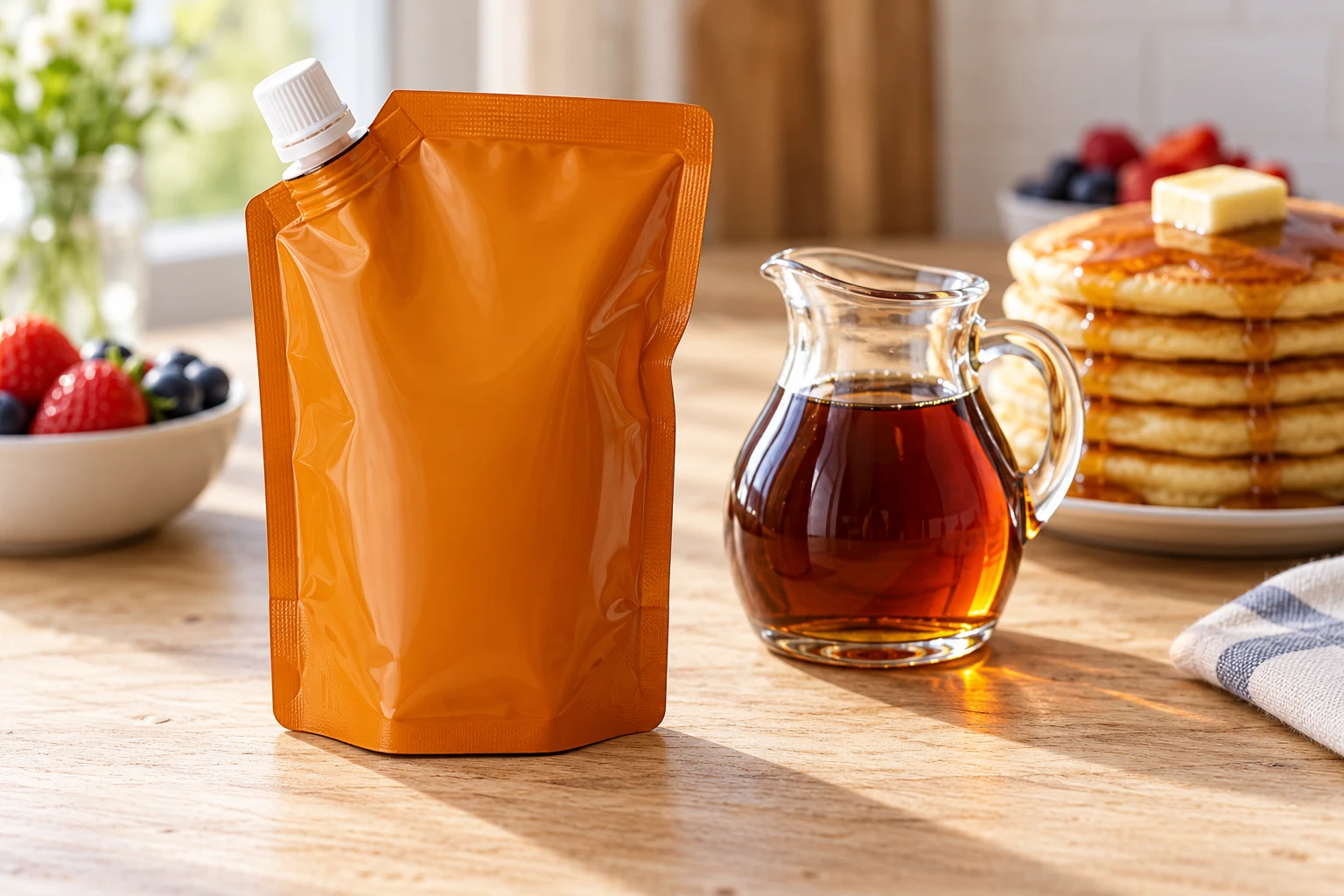
I define the serving situation before choosing the spout. A kitchen refill, café portion, picnic pack, and product carried in a bag are different tasks. I ask how much syrup the user dispenses, where they put the cap, and whether they reclose the pouch after one use. I use the actual syrup at the intended serving condition. I watch grip, flow, cutoff, residue around the neck, and the user’s ability to replace the cap without tools.
In an r/Vermontmtb thread, a rider reported syrup seeping through a reusable container’s cap when it was not upright. Another user reported a different experience with a similar type of container.5 This is community feedback about personal containers, not evidence against a commercial pouch. It gives me a concrete reason to include closed-pack orientation and carrying conditions in the proposed check. I do not adopt the thread’s recommendations as supplier validation.
I locate the leak before changing the design
I distinguish syrup at the cap from syrup at the fitment-to-film joint and at the pouch body seal. I label the sample and photograph the location. I record how the closure was applied, the fill condition, rest orientation, duration, and any handling before the observation. The supplier and test team should agree the closure application range and leak method for this specific system. I do not invent a universal cap torque or pressure test for every spout size.
I compare full and partly used packs because the grip and serving routine differ. For repeat use I check residue around the threads, how easily the user recognizes closure engagement, and the final portion left inside. I ask participants to work at a stable table rather than demonstrate opening during motion. The illustration shows a proposed serving scene, not a completed user study or proof of leak-free performance.
If repeated use is unnecessary, I compare the spout concept with a tear-open portion pack. The liquid and oily-food packaging guide provides related seal questions, although maple syrup is its own product. The format choice should follow the serving task and the producer’s validation, not an assumption that adding a cap makes the package better.
What Must a Maple Syrup Pouch Trial and Quote Include?
An approved empty sample cannot expose filling damage, slow leakage, or an unsuitable process. The purchasing record must connect the physical pack with the product evidence.
I retain the actual filled configuration, process records, seal and closure checks, handling observations, and product-team approval. I request a quotation only after the written specification identifies both accepted details and unresolved validation work.
I begin the trial with traceable components and a defined product lot. I record the proposed fill volume, equipment, actual process conditions, closure application, and inspection points. I ask the qualified producer team to decide which measurements establish process adequacy and product quality. I keep that approval separate from a packaging supplier’s statement that its pouch can withstand a particular exposure. Both are needed when the project depends on that exposure.
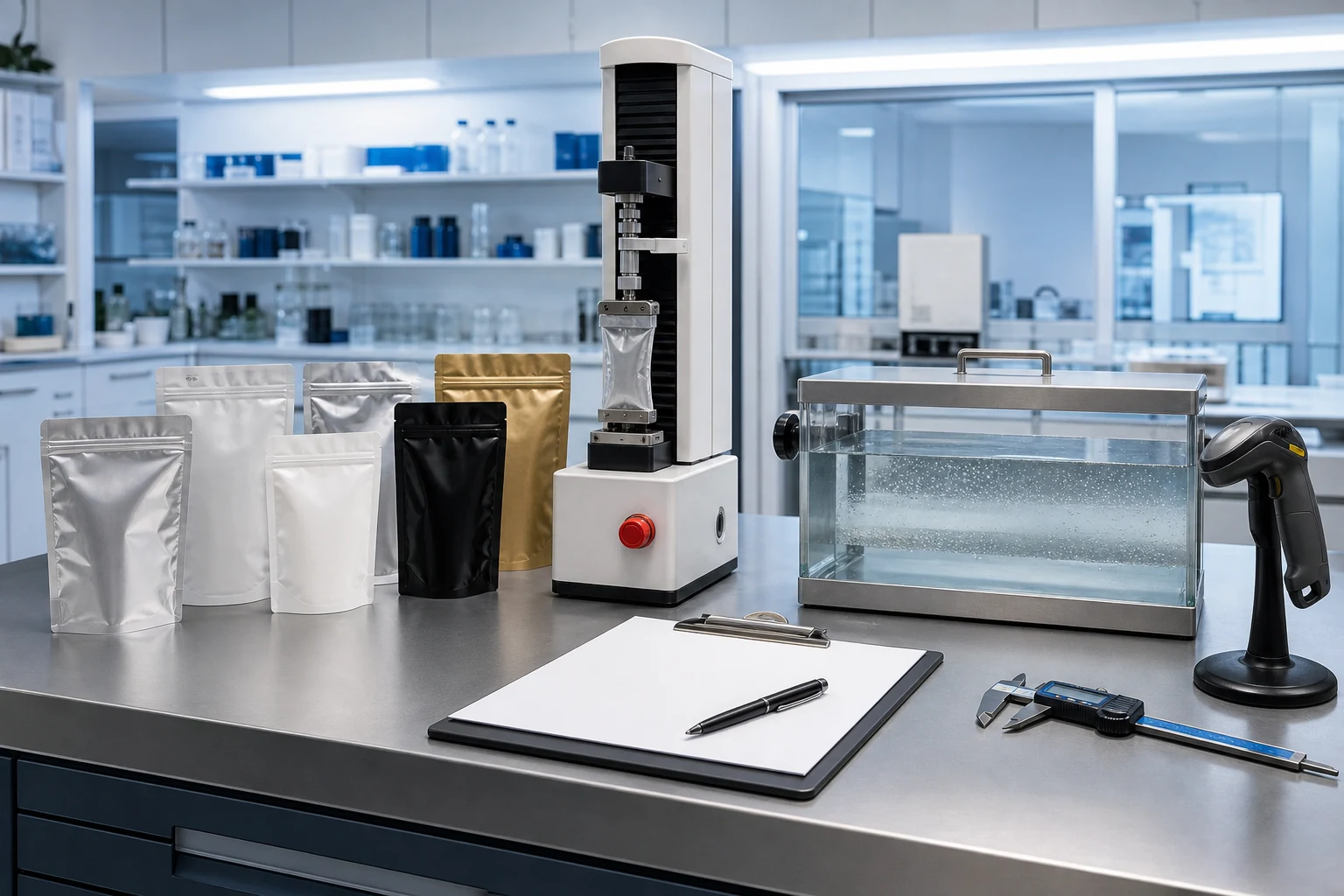
For body-seal comparisons I can ask the lab about ASTM F88/F88M, identified in ASTM’s public overview as a flexible-barrier seal-strength test.4 I also require the team to choose appropriate checks for the fitment weld and cap system. A strip seal measurement cannot answer every assembled-pack question. I retain samples before and after the filling exposure so a visible change can be traced to a defined stage rather than guessed from a damaged carton.
I define the route and the release decision
I place filled pouches in the proposed carton and document contact between caps, panels, dividers, and neighboring packs. I agree the handling sequence and observation period with the project owner. I look for syrup on absorbent inspection surfaces, panel damage, fitment movement, and closure changes. If the route needs a formal distribution study, I use the filled-pouch distribution guide to prepare that request. These are proposed checks, not reported test results.
- Exact syrup specification, lot, fill volume, and intended use.
- Laminate, sealant, dimensions, fitment, cap, and supplier component references.
- Food-contact scope and supported processing exposure.
- Producer-approved filling process and documented measurement plan.
- Closure application, leak and seal methods, conditions, and agreed limits.
- Serving instructions, carton layout, retained samples, and change approval.
I place the decisions in the written packaging specification. My sequence is material and component assessment, representative samples, a filled-pack trial, written confirmation, and a maple syrup pouch quotation. I identify unfinished process or product studies before an order is approved. I do not turn this concept guide into a promise about storage life, certification, price, MOQ, or delivery timing.
Conclusion
I choose packaging through evidence, filled-pack testing, and clear specifications. That process protects the product, the launch, and the customer experience.
Sources and Further Reading
- University of Vermont Extension, Best Maple Syrup Packing Practices: Hot Filling.
- University of Vermont, bottling size and material research context.
- FDA, Food Types and Conditions of Use for Food Contact Substances.
- ASTM F88/F88M-21, public seal-strength method scope (historical edition).
- Reddit r/Vermontmtb, maple syrup container leakage during riding.
Need a pouch specification?
I can review your product, size, quantity, artwork, and target market.