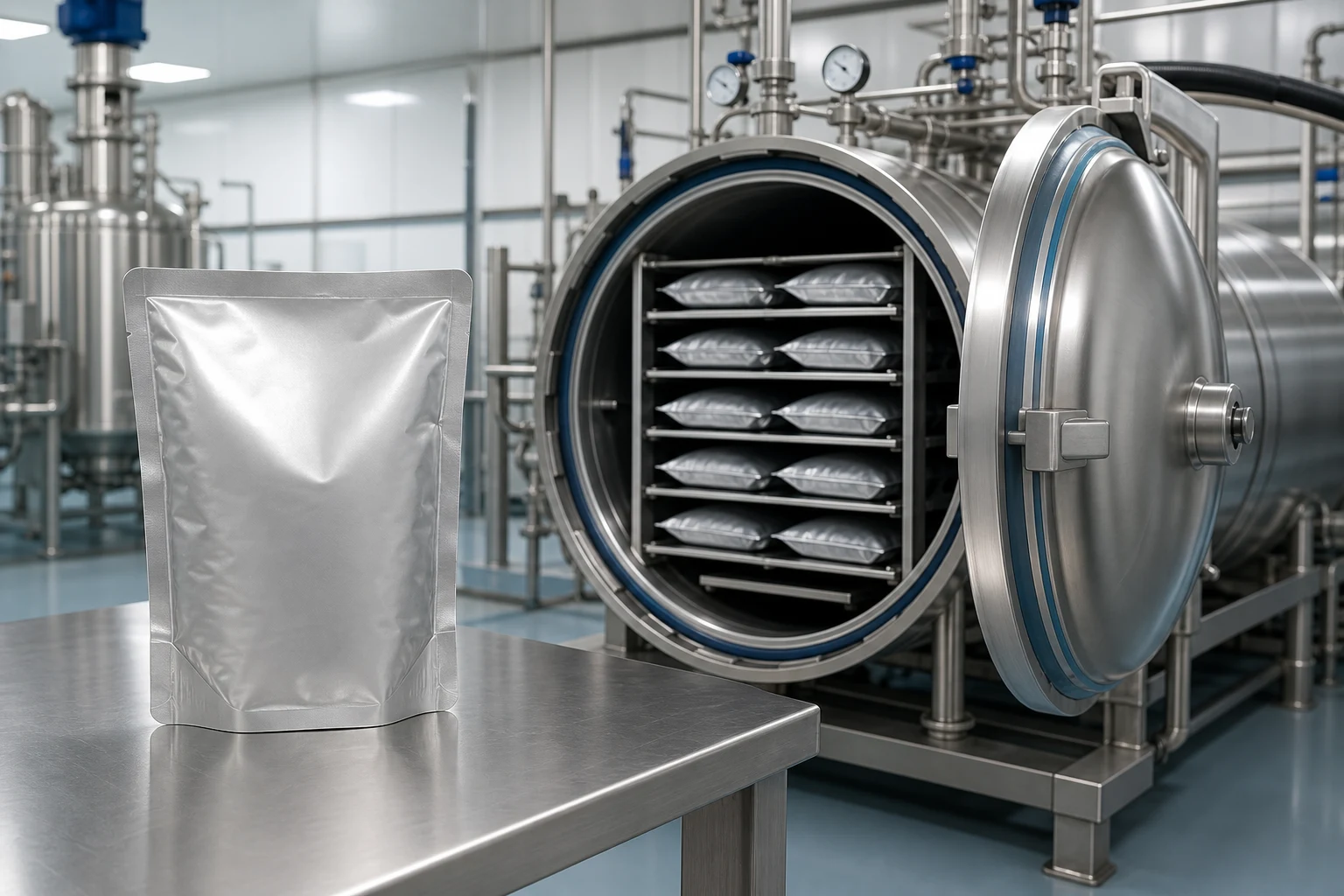
A pasta-sauce pouch can look suitable while its recipe, processing route, and container configuration have never been validated together.
I confirm the sauce classification and processing plan with qualified food specialists, then assess the exact pouch construction, seals, and representative processed packs. I buy against the approved formula, container, and written process scope.
I treat packaging selection as one part of a defined food process. A pouch supplier cannot replace the processing authority or the co-packer.
Does My Sauce Actually Require a Retort Process?
The phrase pasta sauce does not identify a validated processing route or justify a shelf-stable claim.
I ask qualified specialists to classify the actual formula and intended storage route. I confirm whether the proposed project uses retort, another validated shelf-stable process, or refrigeration before selecting the pouch.
I give the food team the recipe revision and intended market. I identify dairy, meat, vegetables, oil, and particulates where present. I describe the intended fill and storage route. I ask the processing authority and co-packer to explain which product and process classification applies. I do not classify a sauce from its color, ingredient name, or another brand’s label.
FDA explains that commercial processors of specified shelf-stable acidified and low-acid foods in hermetically sealed containers for the United States must register and file scheduled processes for the product and relevant container and process details.1 This establishes why I need a defined product-container process. It does not provide a cooking schedule for a new sauce. I ask the responsible specialists to establish and document the applicable requirements.
I resolve the manufacturing fit early
In the Reddit Contract manufacturing thread, u/couldntthinkofwon asks about retort production in jars or stand-up pouches, then clarifies that the product is a dairy-based sauce and the desired first run is limited.4 I use that attributed account to highlight a sourcing question: which facility can handle the exact formula and container? I do not use the replies as evidence of current market capacity or a universal MOQ.
I request a written response from the proposed co-packer about its relevant container and process capabilities before developing artwork. I connect the initial review to the retort validation guide. If the formula or storage route is still undecided, I leave the pouch choice conditional. That is a specific development decision, not a promise that any flexible sauce pack can become shelf stable.
Which Pouch Components Must Match the Processing Plan?
A dry-food pouch or an attractive liquid pouch is not automatically suitable for the sauce’s thermal processing conditions.
I request a construction and component specification that matches the food and processing conditions. I include the sealant, adhesives, printing, features, dimensions, and food-contact scope in the technical review.
I request the supplier’s complete proposed structure, with a traceable sample and specification revision. I include films, any barrier layer, sealant, lamination system, and the relevant converted features. I ask what evidence supports the intended use of that precise configuration. A general brochure headed retort does not answer the question for every sauce, fill, and process.
FDA’s food-contact tables distinguish thermal conditions from room-temperature uses.2 I use that distinction to request the applicable component documentation. The food-contact document guide helps separate an authorization’s scope from a marketing claim. I require the supplier and responsible food specialists to resolve the intended use before accepting the pack.
I compare configurations rather than names
| Proposal | Question to resolve | Review record |
|---|---|---|
| Plain retort pouch | Does it fit the approved fill and processing equipment? | Exact dimensions, structure, and sample |
| Featured or shaped pouch | Are all added components suitable for the intended route? | Component identities and process scope |
| Alternative processing format | Does the food team approve that different process? | Separate product-container validation |
I use the barrier-film guide to ask useful material questions, then return to the processed sauce pack. I do not select foil, a non-foil barrier, a spout, or a zipper by habit. Each proposed choice must belong to the agreed project. I also ask the co-packer which dimensions and sealing details its equipment can handle. That prevents an approved-looking pouch from reaching a facility that cannot fill or process it as specified.
What Should a Representative Processed-Pack Trial Show?
An empty pouch and a film report cannot show sauce in the seal, a process deviation, or damage after cooling and handling.
I review representative filled, sealed, processed, cooled, and handled packs under the qualified team’s documented plan. I retain process records and examine container integrity separately from food quality.
I ask the processing authority and co-packer to define the representative trial. The plan identifies the formula, fill, container, equipment, and applicable process conditions. I do not prescribe a generic time, temperature, or pressure schedule. I want the trial record to identify what was actually processed and which responsible party accepted the result.
I arrange pouch observations at relevant stages of that agreed plan. I inspect the mouth before sealing for product contamination and wrinkles. I retain sample identifiers through processing and cooling. I examine the finished seals, pouch appearance, handling damage, and any feature the customer will use. FDA’s low-acid container inspection guidance discusses flexible-pouch seal defects and examination.3 I use it as a source for the questions, while the qualified team sets the project controls.
I avoid treating one test as the whole approval
ASTM F88/F88M describes a seal-strength method.5 When it is selected, I request specimen location, support technique, speed, conditioning, and failure mode. I record whether the specimen came from an unprocessed or processed pack. I do not equate a favorable force measurement with commercial sterility or a complete container-integrity assessment.
I also ask the food team to review the sauce after the defined process, using its agreed quality and safety criteria. Packaging inspection and food evaluation answer different questions. If a trial fails, I want a defined investigation and repeat plan instead of a new shelf-life claim. I retain the accepted filled pack and its records through carton review, so handling changes remain visible to both the buyer and the manufacturing team.
Which Written Records Must Accompany the Purchase?
A reorder can change the approved project when its quote omits formula revision, container details, process scope, and change control.
I attach the approved formula and pouch revisions, responsible process references, trial records, and acceptance criteria. I request the quote against that configuration and require review of proposed substitutions.
I keep a purchasing record that connects the food brief to the packaging evidence. It identifies the recipe revision, intended market, storage route, fill range, dimensions, layer sequence, sealant, converted features, and artwork version. I include the approved sample identifier and the relevant food-contact documentation. I ask the co-packer to confirm which container and process references belong to its accepted manufacturing plan.
I assign owners to the open questions
The packaging supplier owns answers about the supplied construction. The co-packer owns its production capabilities and records. Qualified food specialists own the applicable process and product decisions within their scope. I make those responsibilities explicit so a supplier’s pouch specification is not mistaken for a food-process approval. Where FDA registration and process-filing requirements apply, I ask the responsible processor to confirm the correct scope rather than infer compliance from a company name.1
I organize the handover through the specification-sheet guide. The checklist includes inspection criteria, named test conditions, processed-pack observations, handling plan, retained samples, and triggers for re-review. I identify possible failures such as contamination at the seal, wrinkled sealing surfaces, component mismatch, handling damage, and unauthorized substitutions.
I request a quotation only after material assessment, representative processed-pack trial, and written specification confirmation have answered the relevant questions. I ask for quantity per design, commercial assumptions, and proposed deviations; I do not state a generic MOQ, timing, certification, performance, shelf life, or price. A change to recipe, fill, container dimensions, or components goes back to the responsible technical team. I can send the defined packaging brief through the project inquiry form, with the process questions clearly assigned.
Conclusion
I choose packaging through evidence, filled-pack testing, and clear specifications. That process protects the product, the launch, and the customer experience.
Sources and Further Reading
Need a pouch specification?
I can review your product, size, quantity, artwork, and target market.