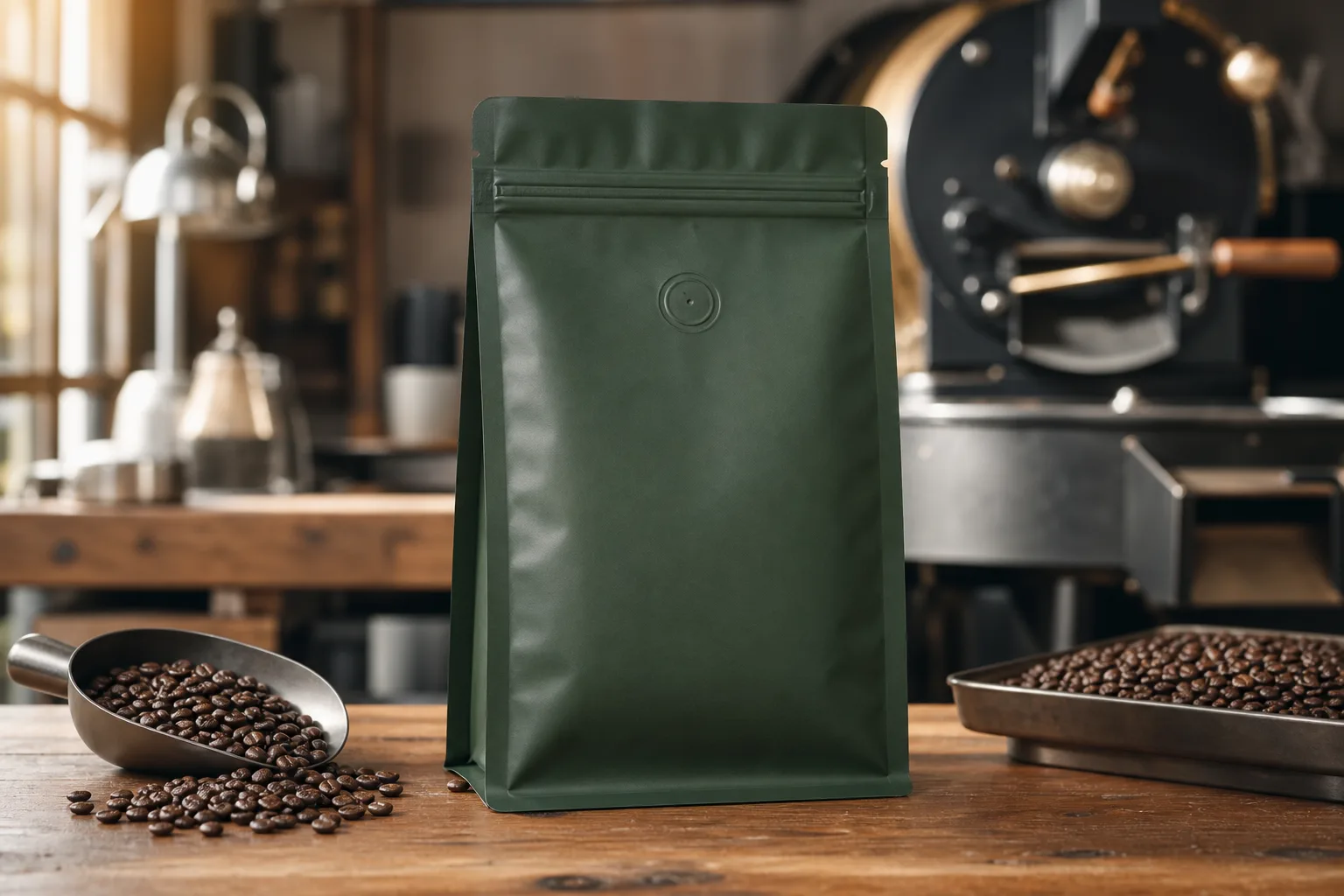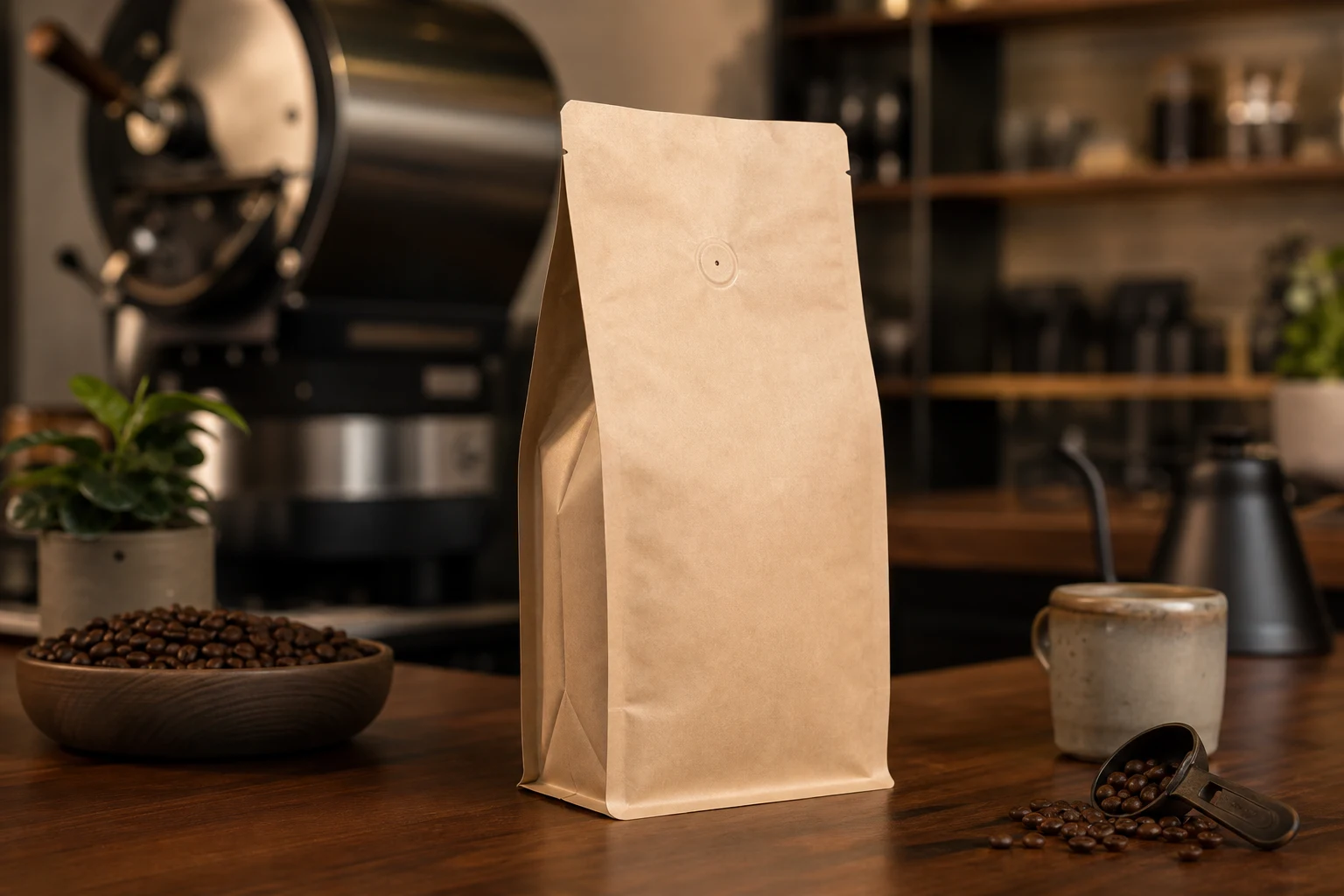
A side-gusset bag can look like a simple upright pack, yet the wrong fill, closure, panel design, or carton plan can make its folded sides work against the product.
A side-gusset bag is a vertical flexible bag with folded side panels that expand when filled; I use it for suitable dry products only after filled samples confirm volume, closure, handling, and shelf presentation.
I treat the pouch as a complete system. I confirm the product, material, filling, handling, and customer experience before I approve production.
How Does a Side-Gusset Bag Work?
A format name does not show how a bag will expand, which panels remain visible, or whether the filled footprint will suit the product and shelf.
I treat a side-gusset bag as a folded-side format that gains volume as its side panels open, then compare its filled shape, print panels, and footprint with stand-up and flat-bottom alternatives.
I inspect a filled sample from every angle. The front and back can offer familiar vertical panels, while the folded sides contribute volume and can carry information or graphics. But the useful result depends on the real product density, fill height, film structure, and closure. I do not assume it will stand like a flat-bottom pouch or present like a conventional stand-up pouch. I compare actual filled formats at the same target product quantity, then decide whether the visual profile and shelf footprint fit the brand and channel.
How I make this decision specific
For “How Does a Side-Gusset Bag Work?” in this what is a side-gusset bag and which products fit it review, I define the actual product, pouch configuration, intended use, and decision owner before I ask a supplier or tester for evidence. I keep the selected structure, component details, sample condition, and any stated test method together, then compare the result with the buyer’s actual route rather than a catalogue promise. That record lets me use the flat-bottom bag guide as a decision aid and retain a specification that another team member can check.
For What Is a Side-Gusset Bag and Which Products Fit It, I state what is known, the condition it applies to, and what must still be checked with the actual product. I do not transfer a number, a test result, or a feature choice from another product simply because its pouch looks similar. The result of “How Does a Side-Gusset Bag Work?” should give the buyer a clear next check, the supplier a precise request, and the project owner a record of the remaining uncertainty.
For What Is a Side-Gusset Bag and Which Products Fit It, I request the exact pouch structure, component specification, and test conditions from the supplier. A broad material name or catalogue claim is not a production specification. The right next step is a representative filled sample, where relevant, with observations recorded before production is approved.
Which Products Are Good Candidates for Side Gussets?
A bag that works well for one dry product can sag, wrinkle, puncture, or lose a clean seal margin when another product changes the fill behavior.
I consider side-gusset bags for dry, free-flowing or particulate products when filled samples confirm volume, barrier needs, product edges, fill method, closure, and the intended selling route.
Coffee, tea, dry snacks, grains, powders, pet treats, and similar products can be candidates, but the bag choice still starts with the product brief. I ask how the product settles, whether it creates dust, whether it has sharp edges, and whether it releases gas or needs repeat access. I test at the target weight, not a vague capacity claim. A coffee bag may also need a valve and a suitable closure; a powder may need special attention to seal-area cleanliness. The format is only one part of the package system.
How I make this decision specific
For “Which Products Are Good Candidates for Side Gussets?” in this what is a side-gusset bag and which products fit it review, I define the actual product, pouch configuration, intended use, and decision owner before I ask a supplier or tester for evidence. I keep the selected structure, component details, sample condition, and any stated test method together, then compare the result with the buyer’s actual route rather than a catalogue promise. That record lets me use the flat-bottom bag guide as a decision aid and retain a specification that another team member can check.
For What Is a Side-Gusset Bag and Which Products Fit It, I state what is known, the condition it applies to, and what must still be checked with the actual product. I do not transfer a number, a test result, or a feature choice from another product simply because its pouch looks similar. The result of “Which Products Are Good Candidates for Side Gussets?” should give the buyer a clear next check, the supplier a precise request, and the project owner a record of the remaining uncertainty.
Which Closures and Components Should I Specify?
A side-gusset bag can be visually right but awkward in use when the tear path, top seal, tin tie, zipper, valve, or label zone was not planned together.
I specify the top seal, opening feature, closure, any valve, component placement, and usable graphics zones from the filled bag and current converter dieline.
I start with how the user opens the bag and what happens after the first use. A tin tie, zipper, or other closure needs enough clearance from the top seal and enough room for the product to be poured or scooped. A one-way valve, when required by the actual product and route, must sit clear of folds, seals, and important information. I use the converter’s current template to map safe zones. I then ask people who did not design the pack to open, use, and reclose a sample. Their observations help identify awkward handling before production.
How I make this decision specific
For “Which Closures and Components Should I Specify?” in this what is a side-gusset bag and which products fit it review, I define the actual product, pouch configuration, intended use, and decision owner before I ask a supplier or tester for evidence. I keep the selected structure, component details, sample condition, and any stated test method together, then compare the result with the buyer’s actual route rather than a catalogue promise. That record lets me use the flat-bottom bag guide as a decision aid and retain a specification that another team member can check.
For What Is a Side-Gusset Bag and Which Products Fit It, I state what is known, the condition it applies to, and what must still be checked with the actual product. I do not transfer a number, a test result, or a feature choice from another product simply because its pouch looks similar. The result of “Which Closures and Components Should I Specify?” should give the buyer a clear next check, the supplier a precise request, and the project owner a record of the remaining uncertainty.
For What Is a Side-Gusset Bag and Which Products Fit It, I treat the filled pack as a separate check from the material data. I record the fill condition, seal area, opening or closure behavior, carton arrangement, handling observations, and limits of the comparison. That prevents a favourable bench result from becoming an unsupported claim about shelf life, transport, or every product route.
How Do I Validate a Side-Gusset Bag Before Release?
An empty sample can conceal the carton pressure, folded-panel distortion, opening experience, and shelf instability that appear only after the actual product is packed.
I validate filled side-gusset bags through defined fill, seal, closure, carton, handling, shelf, and opening checks, retaining the approved configuration and clear limits.
I make multiple samples with the actual product at the intended fill weight and condition. I inspect the base, side folds, top seal, closure alignment, print panels, and shape after normal packing. I place samples in the planned carton and assess them after ordinary handling. I view them upright at shelf distance, then ask a user to open and reclose the bag. I record the dimensions, product condition, observations, and acceptance decision. A change in product density, material, closure, or carton count can change the result, so I make those change triggers visible in the specification.
How I make this decision specific
For “How Do I Validate a Side-Gusset Bag Before Release?” in this what is a side-gusset bag and which products fit it review, I define the actual product, pouch configuration, intended use, and decision owner before I ask a supplier or tester for evidence. I keep the selected structure, component details, sample condition, and any stated test method together, then compare the result with the buyer’s actual route rather than a catalogue promise. That record lets me use the flat-bottom bag guide as a decision aid and retain a specification that another team member can check.
For What Is a Side-Gusset Bag and Which Products Fit It, I state what is known, the condition it applies to, and what must still be checked with the actual product. I do not transfer a number, a test result, or a feature choice from another product simply because its pouch looks similar. The result of “How Do I Validate a Side-Gusset Bag Before Release?” should give the buyer a clear next check, the supplier a precise request, and the project owner a record of the remaining uncertainty.
For What Is a Side-Gusset Bag and Which Products Fit It, I preserve the final decision in a written brief that names the approved sample, conditions, observations, open risks, and change triggers. I then use the coffee valve and zipper guide to keep the quotation tied to the evidence rather than to a remembered sample or a generic product name.
Conclusion
I choose packaging through evidence, filled-pack testing, and clear specifications. That process protects the product, the launch, and the customer experience.
Sources and Further Reading
Need a pouch specification?
I can review your product, size, quantity, artwork, and target market.