A tahini pouch can look easy to squeeze yet deliver oil first and leave paste behind. I test the real product before changing packs.
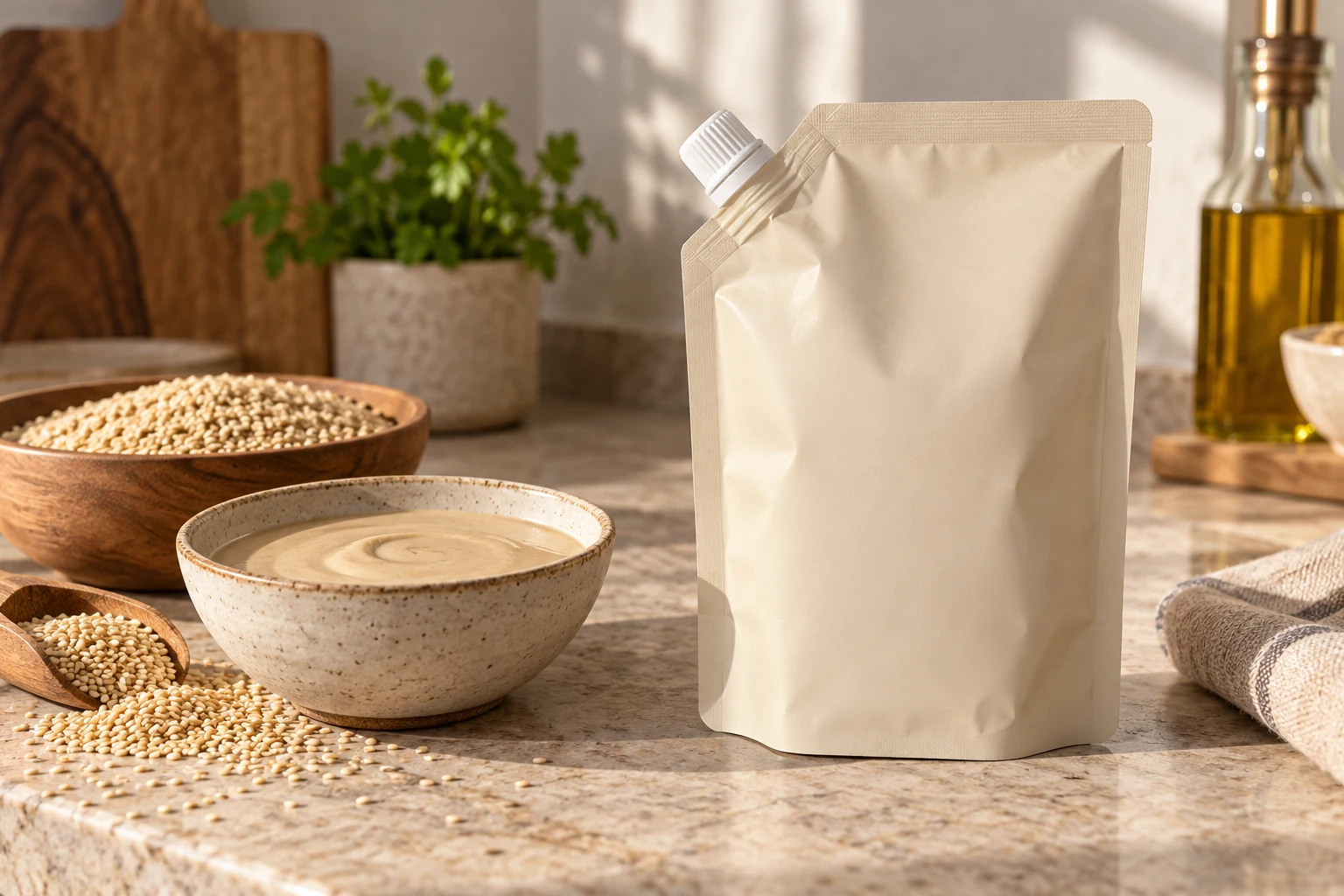
I consider a tahini spout pouch only when the actual formulation can be remixed, dispensed, reclosed, and handled in that format. I compare it with the existing jar or bottle, then verify the laminate, fitment, seals, and food-contact conditions before ordering.
The decision starts with tahini flow and customer use, then moves to material and production evidence.
Can Customers Remix and Dispense This Tahini?
A bottle-to-pouch switch can hide a dispensing problem. I need to know how the paste behaves after real storage and repeated use.
I test the actual tahini after the intended storage conditions, with its approved mixing instructions. I compare the first dispense, later portions, cap cleanliness, and leftover paste against the existing pack before accepting a spout design.
A real r/Packaging post describes a buyer moving tahini from a plastic bottle to a spout pouch. The buyer asks about aluminium-containing and plastic options and reports separation into oil and denser paste over time.1 I treat that as one buyer's project description. It does not identify a winning material, establish a shelf life, or show that every tahini will behave the same way in a pouch.
Soom Foods' FAQ gives a useful product-specific cross-check. It explains that its tahini can separate, with sesame oil rising, and that temperature changes texture. It also describes a finer grind for its Everyday Tahini squeeze application.2 I do not transfer Soom's formulation or storage instructions to another brand. The narrow conclusion is that the actual recipe and texture matter when choosing a dispensing format.
I compare complete user journeys
I fill candidate pouches with the product intended for sale. I retain a jar or bottle as the comparison pack. I ask the food owner to define the storage conditions and any approved mixing instruction. After each planned observation interval, I follow that instruction, dispense into a bowl, and document the result. I check whether oil and paste come out together, whether the user needs excessive effort, and whether a later portion changes noticeably.
I test the first opening with someone unfamiliar with the pack. I watch cap removal, hand position, squeeze control, wiping, and reclosure. I record product left around the cap and paste remaining when the user considers the pack empty. I do not create a target leftover percentage without project evidence. A simple side-by-side trial can reveal which observation needs a more formal measurement.
I use the spout-selection guide to record neck position and usable geometry. A convenient shape earns its place only if it serves the formulation and intended user. If normal remixing cannot restore a useful flow, I consider retaining the existing pack or revisiting the product with the food team. I do not expect a different laminate to solve a paste-flow problem it has never been tested against.
How Do I Compare the Film, Fitment, and Existing Pack?
A foil-versus-plastic question leaves out the spout, cap, and filling route. Those details can decide whether the whole package works.
I compare full constructions and product-use evidence rather than broad material names. I request exact film layers, contact components, fitment and cap specifications, seal geometry, and test conditions for each candidate, with the current pack as a reference.
I make the supplier identify the actual pouch structure. Aluminium foil, metallised film, and an opaque printed plastic layer are different descriptions, so I do not use a shiny surface as proof of a foil layer. I ask for thickness and layer information in writing. I also request the fitment resin, cap specification, seal interface, and the drawing that shows how the fitment joins the pouch.
I separate access, protection, and production
| Candidate | Question it can address | What I still validate |
|---|---|---|
| Existing jar | Direct stirring and spoon access | Closure and current user routine |
| Opaque spout pouch | Controlled squeeze dispensing | Remixing, flow, film, and fitment seals |
| Transparent spout pouch | Visible product presentation | Whole-pack protection and the same dispensing checks |
I use the barrier-film guide to organise film evidence. If oxygen or moisture transmission matters to the product owner's validation plan, I request the method, units, temperature, humidity conditions, and exact specimen. For moisture comparison, ASTM F1249 describes a method for plastic film and sheeting.3 I do not assign a finished-pouch shelf life from a flat-film report or assume a transparent construction is unsuitable without testing it.
FDA's food-contact framework distinguishes food types and use conditions.4 I ask the supplier to identify documentation for the actual tahini contact layers, fitment, and cap under the intended filling and storage conditions. I do not describe a generic pouch as approved for every oily food. I use the food-contact document guide to list gaps before a sample is approved.
I also state the filling process precisely. This article does not prescribe a preservation process or declare the tahini shelf-stable. The food owner must establish the safe process and instructions for the actual recipe. I request a pouch that is compatible with those defined conditions, then verify it with the packer. The right format is a complete film, closure, food, and process decision, with the existing pack providing a useful reference.
What Must the Filled Trial and Written Specification Cover?
A clean display sample cannot show a cap leak or a weak fitment junction. I need production evidence before the full order.
I trial the intended fill and cap process, inspect the seams and fitment, and test handling and dispensing. I record conditions and failures, then confirm the approved construction, closure, acceptance criteria, and change controls before requesting a specification-based quote.
I ask the packer to demonstrate the intended filling route. The record names product lot, fill mass, product temperature, pouch lot, equipment, cap application, and seal settings. I keep startup and later samples separate. I inspect the neck area for product left where it should not be, confirm how the cap is applied, and look for wrinkles or incomplete contact at the fitment junction. I document observations before asking for a remedy.
I then place filled packs in the planned carton arrangement. I observe the pack after the handling sequence the project proposes. I check side seams, bottom folds, spout position, and cap condition. A leak must be traced to its actual location. Replacing the film because a cap leaked would not explain the failure. I ask the supplier and packer to agree corrective action and repeat the affected check with labelled samples.
I name the test and its limits
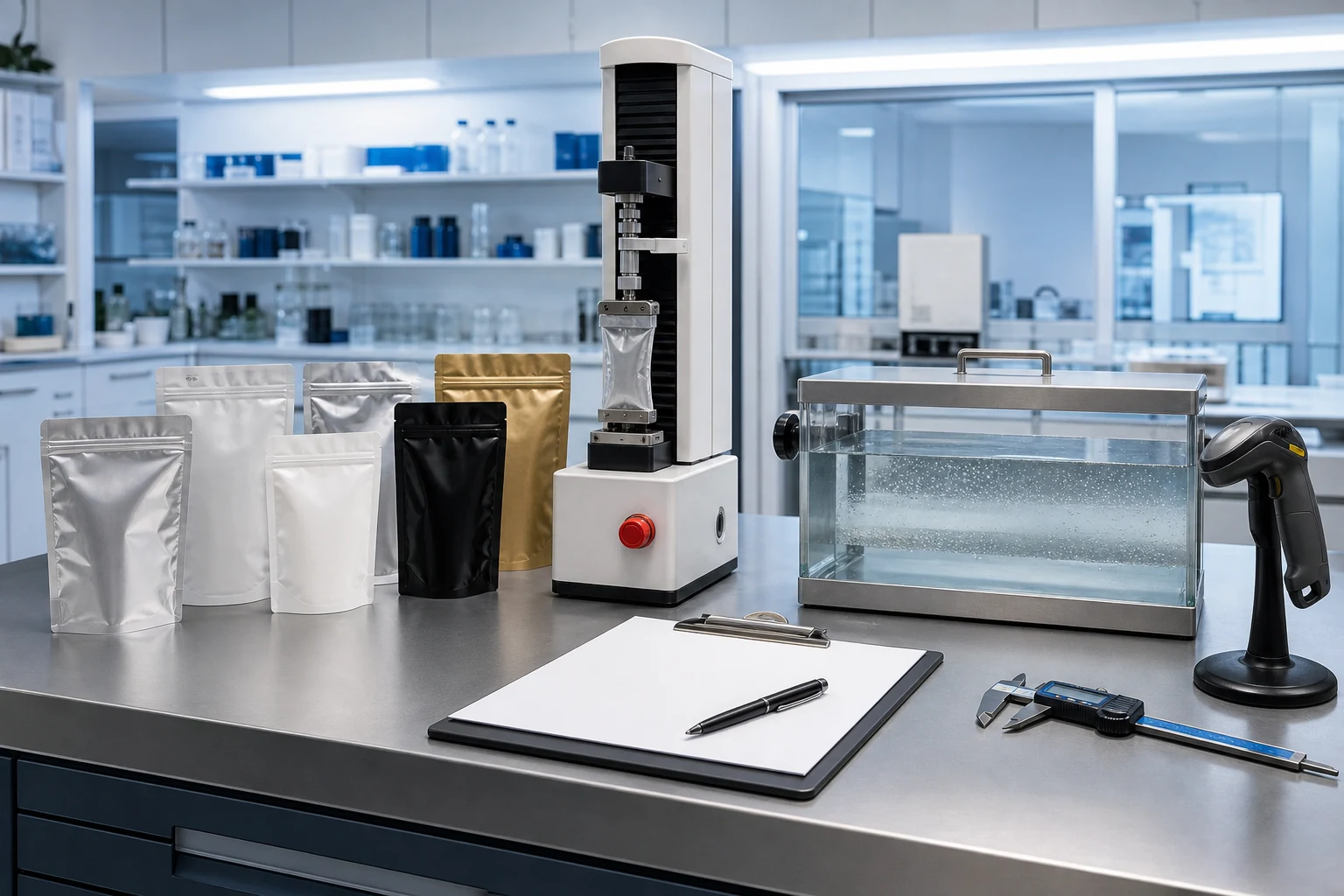
ASTM F88/F88M addresses seal strength in flexible barrier materials.5 I request a defined specimen location, width, support technique, test speed, conditioning, and failure mode for applicable pouch seals. I do not pretend that a seam-strip result validates the cap or three-dimensional fitment weld. The project needs a separate agreed method for those features and a finished-pack leakage assessment. I use the packaging test guide to keep those questions distinct.
My purchase checklist identifies the tahini formulation reference, approved fill process, package size and fill mass, layer construction, product-contact documents, fitment and cap part references, spout position, seal drawing, cap application requirements, test conditions, acceptance criteria, artwork version, and approved user instructions. I retain the sample that passed the flow comparison. I also name changes that trigger another review, such as a new cap, a narrower opening, an altered contact layer, or a changed recipe.
Once material assessment and the representative filled trial are complete, I confirm the specification in writing and request a quote tied to that specification. I ask the supplier to state quantity, designs, and delivery assumptions for this project. I publish no unsupported MOQ, price, or shelf-life promise. If the pouch fails remixing or dispensing, I keep the existing format while the project resolves the problem. A purchase decision should follow the product evidence, not the appeal of a new package photograph.
Conclusion
I choose packaging through evidence, filled-pack testing, and clear specifications. That process protects the product, the launch, and the customer experience.
Sources and Further Reading
- Reddit r/Packaging: attributed tahini bottle-to-spout-pouch buyer question.
- Soom Foods FAQ: product-specific separation, temperature, and squeeze formulation.
- ASTM F1249-25: water-vapour transmission method.
- FDA: food types and conditions of use for food-contact substances.
- ASTM F88/F88M-23: seal-strength method.
Need a pouch specification?
I can review your product, size, quantity, artwork, and target market.