Laundry sheets can be convenient until the pack frustrates repeat use. I check the actual formula, opening, and travel routine before choosing its material.
I specify laundry detergent sheet pouches around the formula, stack dimensions, portion removal, closure, fragrance observations, and filled handling trials. I compare the pouch with other formats and preserve product instructions, written construction, and test conditions before ordering.
At Unique Packaging, this review concerns solid laundry detergent sheets. It does not cover dryer sheets, liquid capsules, or a claim that packaging proves cleaning performance.
What Should I Learn from Travel and Fragrance Complaints?
A compact pack may still leave buyers unhappy about scent or reuse. I separate their reported experience from claims about how every packaging polymer behaves.
I record the formula and intended use, then compare filled samples with unused packaging and product controls. I treat fragrance observations as project evidence and investigate changes before claiming a chemical mechanism or universal material ranking.
A traveler in r/HerOneBag asked how to remove laundry-detergent-sheet scent from a silicone Stasher bag and whether it could return to food-storage use. I cite the question as an individual user concern about odor and reuse. It does not prove that all silicone retains fragrance, identify a migration rate, or establish the performance of a flexible film pouch.1
The question helps me define the brief. Is this the retail pack kept near a washing machine, a small travel pack, or a refill intended for a dedicated storage container? I ask whether it holds a scented or fragrance-free version and whether the brand expects customers to transfer the sheets elsewhere. The product owner supplies the instructions and the formula limits.
I keep laundry packaging dedicated to its stated use in the trial. I do not demonstrate a laundry pack alongside food or imply that rinsing makes it suitable for another product. When the intended use includes travel, I place the sample in its own organizer and record the surrounding materials used in the comparison. That arrangement is a project setup, not a guaranteed odor barrier.
How I set up a useful comparison
I ask the formula owner and laboratory to define filled, unused-packaging, and product-reference controls. I record the sheet version, sheet count, fragrance variant, film construction, exposure period, and temperature. I note odor, discoloration, tack, and changes in closure separately. A sensory observation can suggest a question for analysis; it cannot by itself identify sorption, diffusion, or a chemical reaction.
Intertek describes packaging material assessment and failure analysis across consumer-product applications. I use that service scope as a reason to ask for an appropriate investigation when changes appear, not as proof that a specific pouch has passed compatibility work. The formula owner must decide which analytical or performance checks are relevant to the product.4
I retain samples and photographs through the sample approval process. I include a separate travel-use comparison if that is part of the sales claim. The goal is to discover whether the selected pack works for the intended task, while keeping unsupported claims about fragrance retention, environmental benefits, and safe reuse out of the approval record.
Which Opening and Format Help Customers Remove One Sheet?
A pouch sized only by weight can squeeze a stack or make the last sheets hard to reach. I test the sheet geometry and the customer task.
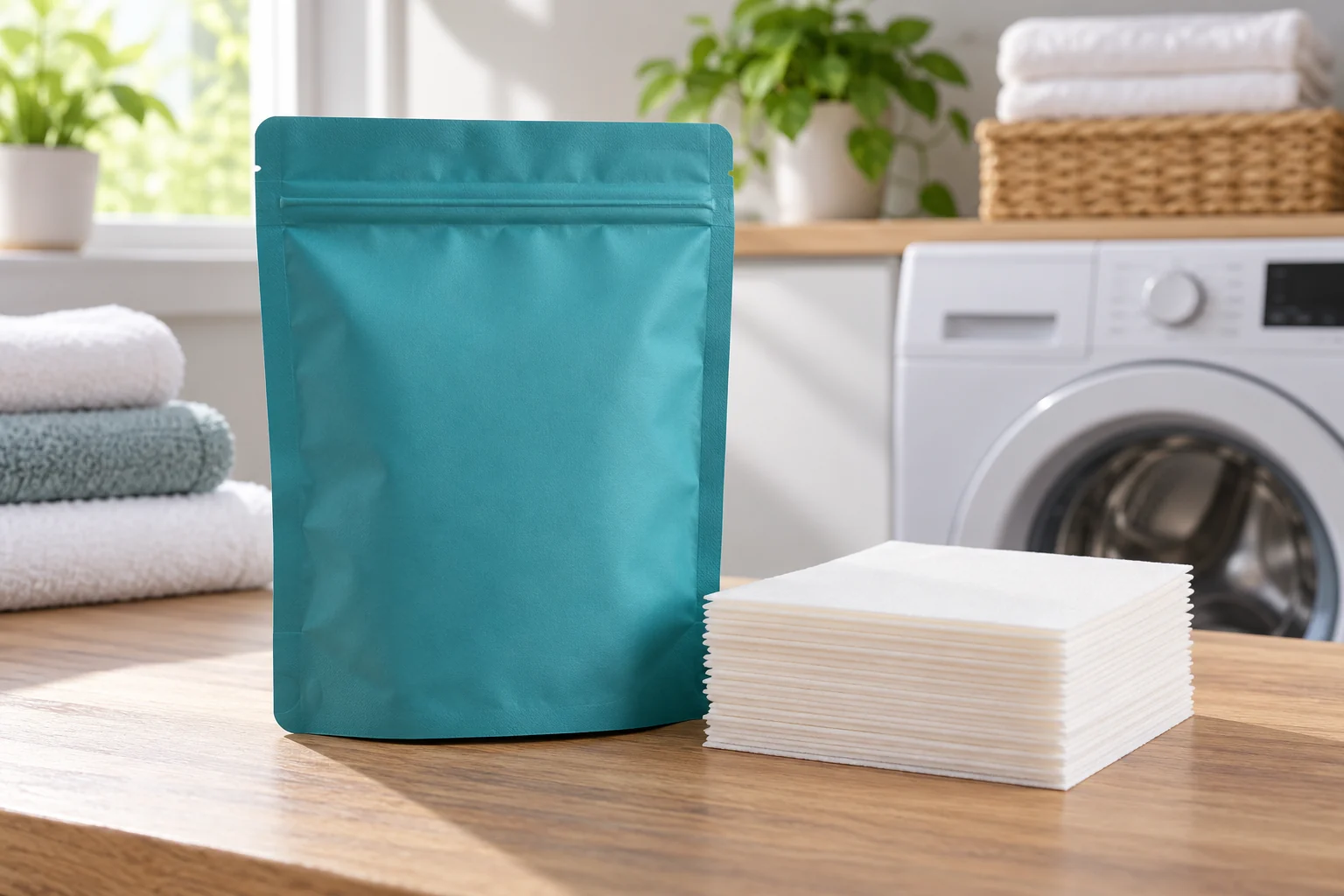
I size the pouch around the actual sheet dimensions, stack height, portioning instructions, and usable mouth. I compare a flat pouch, carton, and dedicated rigid container through repeated removal and closure using representative product.
I measure the actual sheet rather than copying dimensions from a powder pouch. I record length, width, stack height, sheet count, and any intended fold or perforation. I ask the product owner whether the sold unit is one sheet, one strip, or another portion. Those words must remain consistent between the pack count, directions, and the samples used for approval.
Tru Earth’s FAQ gives product-specific directions for detaching and placing its laundry strips, including different machine arrangements. I use that as an example of why instructions belong to the exact product. I do not transfer its dose, use period, washing claims, or machine guidance to another manufacturer’s sheets. A packaging guide should not create detergent directions from appearance.2
| Candidate or check | Decision | Evidence I request |
|---|---|---|
| Flat resealable pouch | Can a user remove one portion without bending the whole stack? | Usable opening and full-to-empty trial |
| Folded carton | Does access remain workable after repeated opening? | Product stack fit and observed closure behavior |
| Dedicated rigid container | Does the intended refill routine work cleanly? | Transfer task and product-owner approval |
I use the pouch dimension guide to request samples, while recognizing that a flat stack may not need a standing base. I allow space for the zipper, top seal, and fingers used to grasp the portion. I compare finished usable dimensions, including any restriction at the side seams. An attractive outside width can still conceal a cramped opening.
I ask users with dry hands to take a normal portion from full, partly used, and nearly empty packs. I record whether two sheets lift together, the stack folds, edges tear, or the user has to remove everything to reach one portion. If a problem appears, I examine product condition and packaging geometry separately before blaming either one.
I repeat closure using a defined number of cycles and retain the tested sample. I look for folds at the mouth and material caught in the zipper. I also check the direction panel after the opening feature has been torn away. The brand should not lose the only readable portion instructions during first use. Final product warnings and market requirements remain with the responsible owner.
I discuss the results alongside the dieline review. A deeper bag, wider mouth, or different format should address an observed task, not simply add features. I do not label an ordinary zipper child-resistant or claim that a convenient pouch proves cleaning performance. Those are separate questions requiring their own evidence.
What Film Tests and Written Specifications Support the Order?
A material nickname cannot describe the contact layer, closure, or actual storage route. I need the complete sample identity before comparing reports or prices.
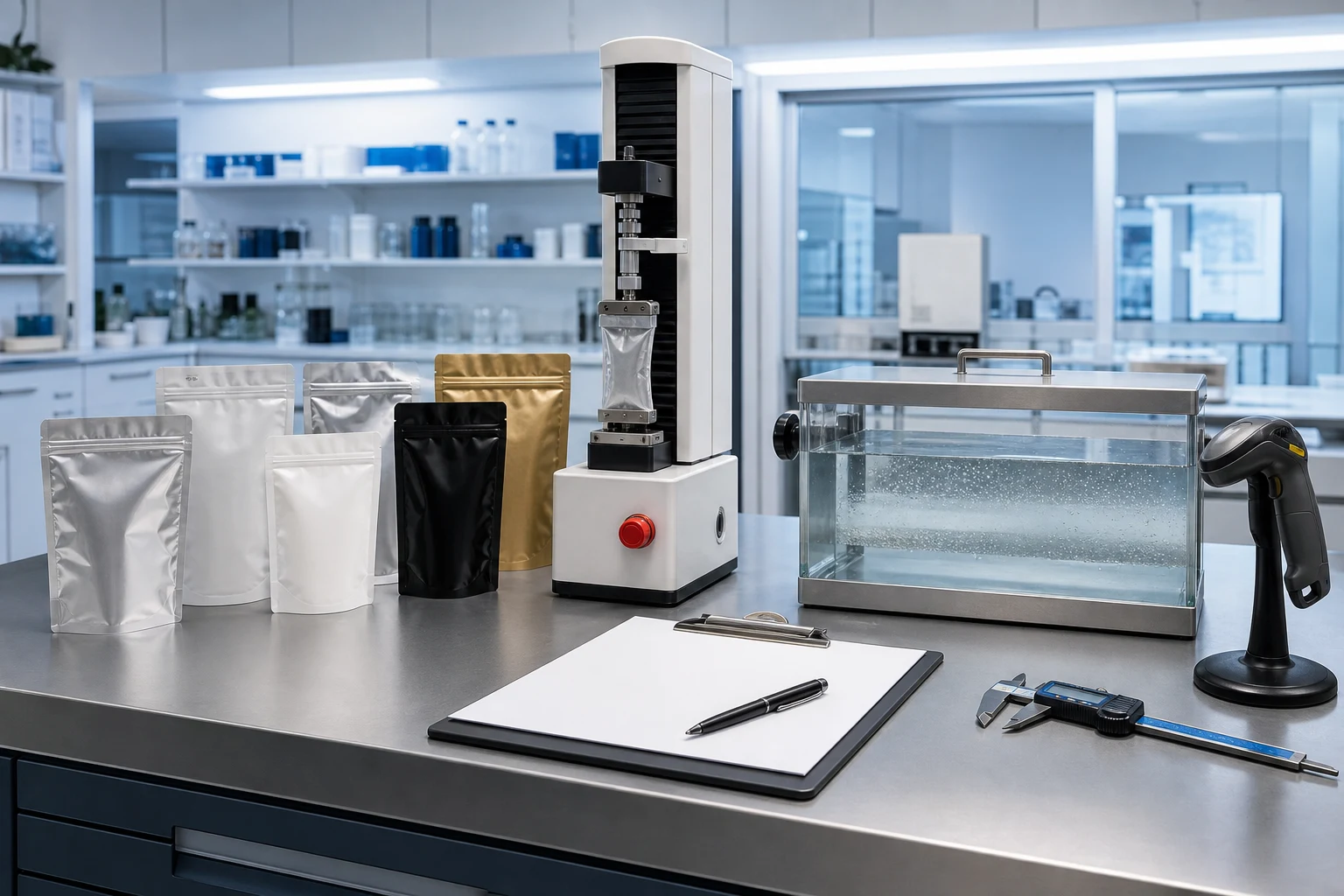
I request identified film constructions, conditioned transmission and seal data, formula compatibility observations, and representative handling trials. I attach the approved dimensions, instructions, test plan, and substitution rules to a written specification and quotation.
I request the full construction for each candidate, including contact layer, other films, adhesive, print arrangement, thickness and tolerances, zipper, and seal layout. If the supplier offers a paper-faced pack, I ask what the complete structure contains. A paper appearance does not establish a moisture barrier, recycling outcome, or compatibility with the detergent formula.
Intertek lists film methods including ASTM F1249 for water-vapor transmission and F88 for seal strength. I ask for the conditions and sample identity behind any result. For transmission, I request temperature, humidity conditions, units, and thickness. For seal strength, I retain conditioning, specimen support, pull speed, and the observed failure mode. These measurements answer distinct questions.3
I discuss moisture-related concerns with the formula owner rather than announcing that every sheet has the same sensitivity. If the product brief calls for controlled humidity exposure, the laboratory defines a suitable comparison. An illustrative reference might be 23°C and 50% relative humidity, plus a condition relevant to the route. These proposed settings are not a detergent-sheet standard or a shelf-life prediction.
I compare unopened filled candidates with reference samples over agreed intervals. I record changes in sheet separation, stack shape, visible residue, pouch appearance, and closure. The detergent team evaluates any required dissolution or cleaning checks independently using its chosen protocol. A passed packaging observation cannot substitute for a washing-performance test, and a poor wash result does not automatically diagnose the pouch.
For handling, I use the planned carton arrangement and intended pack count. I inspect seam stress, corner folds, abrasion, and sheet damage after the agreed sequence. If travel is part of the product claim, I include the proposed organizer and a defined compression comparison. I retain an unhandled control and avoid presenting an informal suitcase trial as a universal transport certification.
My written packaging specification identifies the formula reference, fragrance variant, sheet geometry and count, film construction, dimensions, closure and top seal, artwork revision, directions, lot-code area, carton layout, and retained sample. I name the owner of unresolved questions. A change in formula, film, adhesive, zipper, or converting route reopens the checks affected by that change.
After material assessment and a representative filled trial, I request a quotation against the approved specification. I ask suppliers to state assumptions and proposed substitutions. Quantity, lead time, price, certification, barrier performance, and storage claims need evidence for the exact project. This gives purchasing comparable offers while keeping the brand’s original use task and product directions intact.
Conclusion
I approve laundry sheet pouches through formula-specific trials, usable openings, separate fragrance and wash assessments, documented materials, and a quotation tied to the retained sample.
Sources and Further Reading
Need a pouch specification?
I can review your product, size, quantity, artwork, and target market.