A packaging trial can consume time and material yet leave no useful decision when the team records only whether the line ran.
I capture the product, pouch, machine settings, samples, seal and handling observations, test conditions, failures, decisions, and re-test triggers during a packaging line trial.
I treat the pouch as a complete system. I confirm the product, material, filling, handling, and customer experience before I approve production.
What Must Be Fixed Before a Line Trial Starts?
A trial produces confusing comparisons when material, product, fill, settings, sample timing, purpose, and pass criteria change without being recorded.
I define the trial objective, product, pouch configuration, machine route, settings, sample plan, checks, decision owner, and stop conditions before the line begins.
I state what question the run should answer. It may be format fit, seal-window exploration, fill cleanliness, downstream handling, carton fit, a comparison of two structures, or preparation of finished packs for a separately designed study. I identify the food or product, target fill, pouch dimensions, material and feature list, film or pouch lot, line and lane, equipment configuration, operators, sample times, and acceptance discussion. I also identify what the trial cannot establish. A brief packaging run is not automatically a shelf-life, food-safety, or transit certification. The Reddit discussion is helpful because it treats pilot product in finished packaging as input to later accelerated work rather than a shortcut around study design.2 I then prepare the specification record so the evidence stays traceable.
How I make this decision specific
For “What Must Be Fixed Before a Line Trial Starts?” in this what data should i capture during a packaging line trial review, I define the actual product, pouch configuration, intended use, and decision owner before I ask a supplier or tester for evidence. I keep the selected structure, component details, sample condition, and any stated test method together, then compare the result with the buyer’s actual route rather than a catalogue promise. That record lets me use the flexible-packaging quality-test guide as a decision aid and retain a specification that another team member can check.
For What Data Should I Capture During a Packaging Line Trial, I state what is known, the condition it applies to, and what must still be checked with the actual product. I do not transfer a number, a test result, or a feature choice from another product simply because its pouch looks similar. The result of “What Must Be Fixed Before a Line Trial Starts?” should give the buyer a clear next check, the supplier a precise request, and the project owner a record of the remaining uncertainty.
For What Data Should I Capture During a Packaging Line Trial, I request the exact pouch structure, component specification, and test conditions from the supplier. A broad material name or catalogue claim is not a production specification. The right next step is a representative filled sample, where relevant, with observations recorded before production is approved.
Which Measurements and Observations Matter on the Line?
A note that a pouch “looked good” cannot show which setting, sample, condition, or failure mechanism should guide the next production decision.
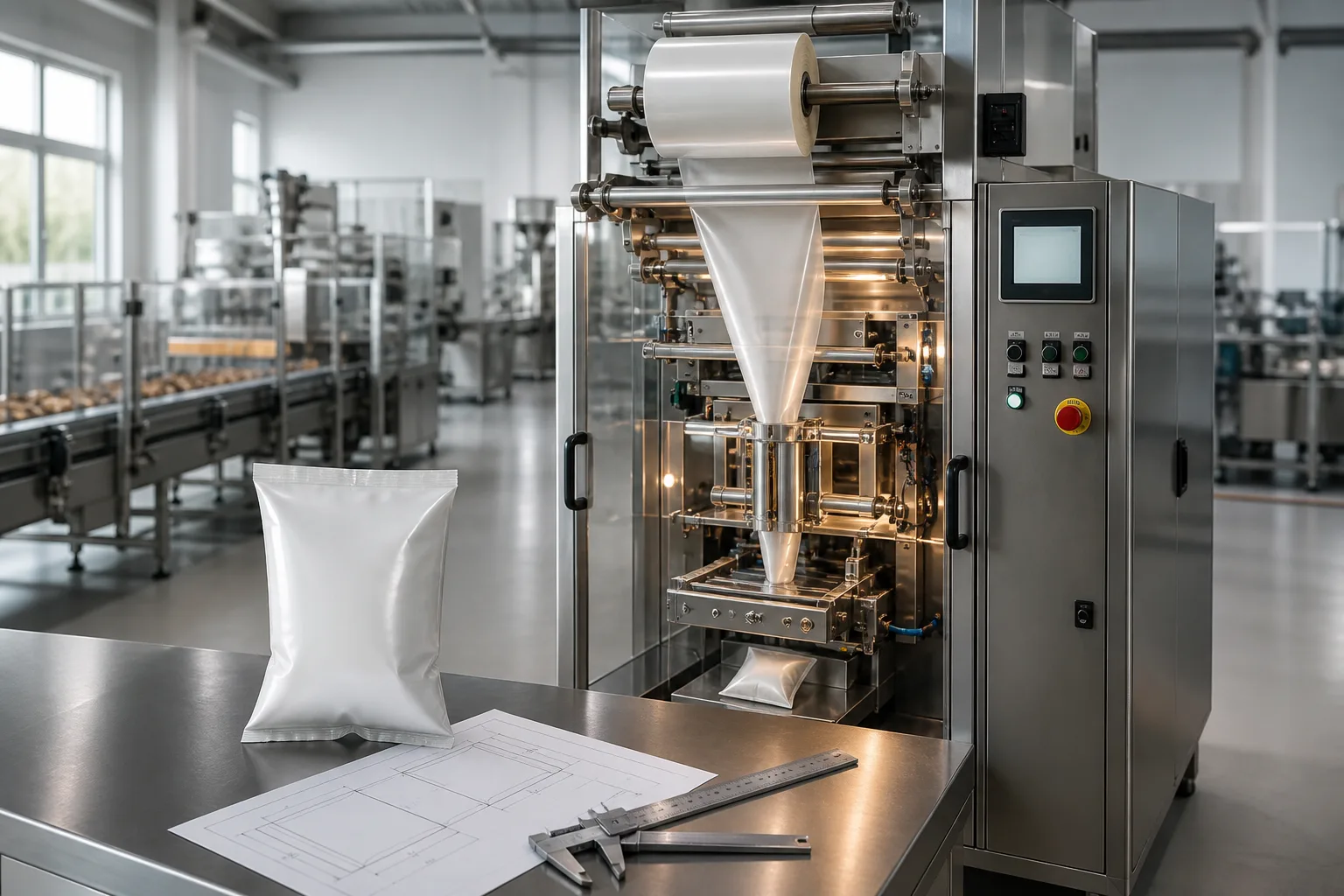
I capture actual product and pouch condition, machine settings, time and lane, seal appearance, dimensions, weight or fill observations, feature condition, reject reason, and photographed sample identity.
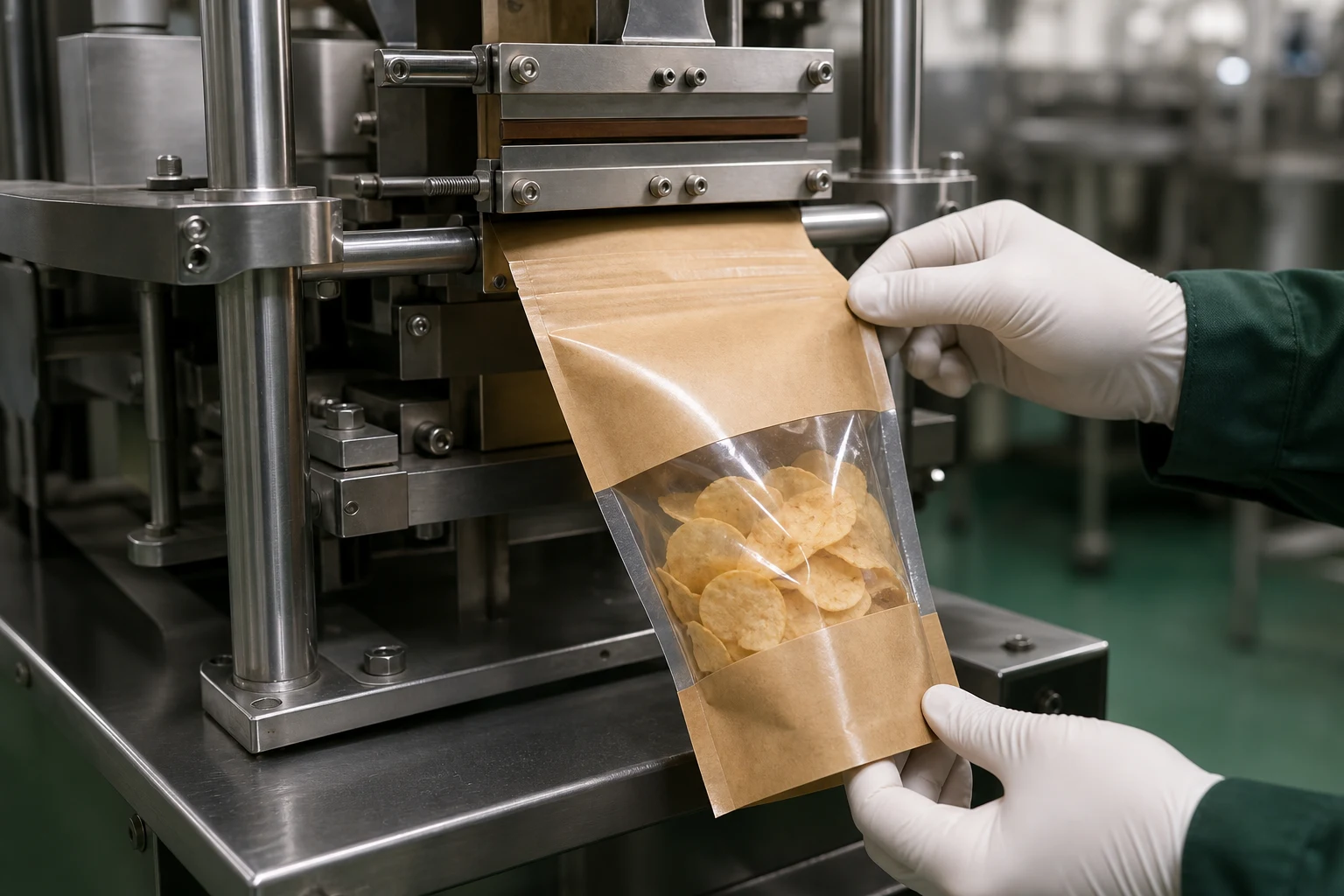
I collect data at the point where it can explain a result. For each sample group I record time, machine and lane, product lot, fill condition, pouch or film lot, temperature, pressure, dwell time, speed, tooling, and any intervention. I inspect top, side, and bottom seals; wrinkles; channels; contamination; zipper or valve location; pouch pitch; code placement; panel distortion; and carton transfer. ASTM F88/F88M provides a standard method to measure flexible-barrier seal strength and identify failure mode, so it can be an appropriate part of a defined project method.3 I do not substitute one force number for complete package evidence. I compare the observations with the seal-leak guide before accepting or reworking a configuration.
How I make this decision specific
For “Which Measurements and Observations Matter on the Line?” in this what data should i capture during a packaging line trial review, I define the actual product, pouch configuration, intended use, and decision owner before I ask a supplier or tester for evidence. I keep the selected structure, component details, sample condition, and any stated test method together, then compare the result with the buyer’s actual route rather than a catalogue promise. That record gives the buyer a decision aid and a specification that another team member can check.
For What Data Should I Capture During a Packaging Line Trial, I state what is known, the condition it applies to, and what must still be checked with the actual product. I do not transfer a number, a test result, or a feature choice from another product simply because its pouch looks similar. The result of “Which Measurements and Observations Matter on the Line?” should give the buyer a clear next check, the supplier a precise request, and the project owner a record of the remaining uncertainty.
How Do I Capture Handling and Distribution Evidence?
A pouch can survive the sealing station and still fail when it is cartoned, stacked, transferred, opened, or exposed to the route it will actually face.
I document the planned handling and carton configuration, then use a method suited to the decision while clearly recording whether the evidence is a screen, simulation, or comparative check.
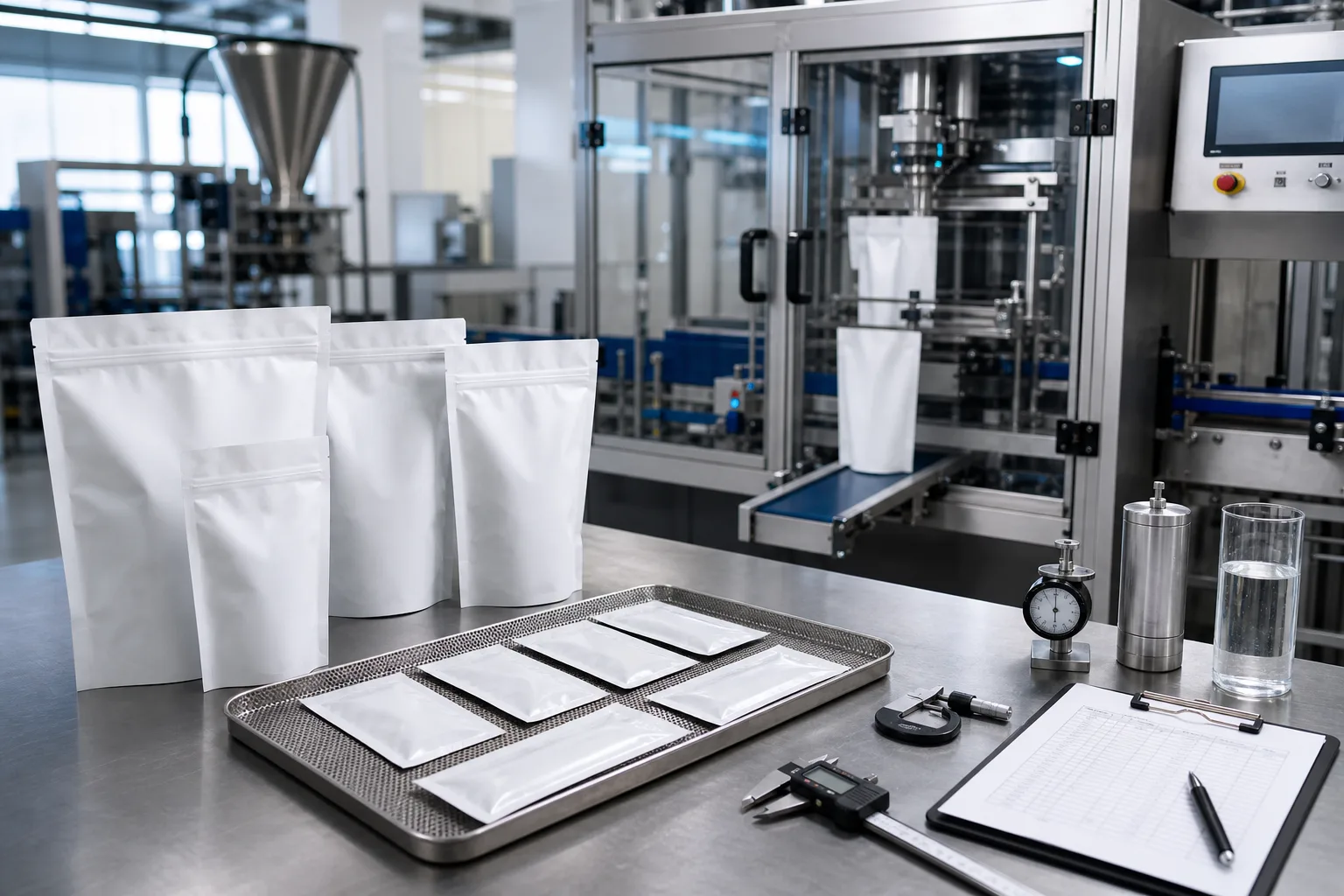
I pack trial pouches in the intended carton where possible. I record count, orientation, dividers, void control, closure, handling steps, and observed damage. Then I choose a test approach matched to the question. ISTA says its 1-Series tests are screening tools, while 3-Series procedures simulate damage-producing motions, forces, conditions, and sequences for specific shipment types.1 That distinction matters. A quick drop screen can find an obvious weak point, but it does not justify a broad shipping claim. I keep the product, pack, carton, method, observations, and decision together in the quality-test record.
How I make this decision specific
For “How Do I Capture Handling and Distribution Evidence?” in this what data should i capture during a packaging line trial review, I define the actual product, pouch configuration, intended use, and decision owner before I ask a supplier or tester for evidence. I keep the selected structure, component details, sample condition, and any stated test method together, then compare the result with the buyer’s actual route rather than a catalogue promise. That record gives the buyer a decision aid and a specification that another team member can check.
For What Data Should I Capture During a Packaging Line Trial, I state what is known, the condition it applies to, and what must still be checked with the actual product. I do not transfer a number, a test result, or a feature choice from another product simply because its pouch looks similar. The result of “How Do I Capture Handling and Distribution Evidence?” should give the buyer a clear next check, the supplier a precise request, and the project owner a record of the remaining uncertainty.
For What Data Should I Capture During a Packaging Line Trial, I treat the filled pack as a separate check from the material data. I record the fill condition, seal area, opening or closure behavior, carton arrangement, handling observations, and limits of the comparison. That prevents a favourable bench result from becoming an unsupported claim about shelf life, transport, or every product route.
How Do I Convert Trial Data into a Release Decision?
Trial findings get lost when the team has photos and spreadsheets but no agreed configuration, disposition, retained sample, responsible owner, or rule for rerunning the work.
I issue a brief release record that ties the approved configuration to its evidence, limits, corrective actions, retained samples, unresolved risks, and changes that require revalidation.
I summarize what actually ran. The release record identifies product, pouch structure, dimensions, components, machine setting range, sample groups, line and handling observations, test method, result, and conclusion. I distinguish passed, conditional, rework, and not-evaluated questions. I retain representative filled packs and the approved documents. I name a re-test trigger: product reformulation, fill change, material or sealant change, feature shift, equipment or tooling change, new carton, different route, or a failure trend. This final step connects material assessment, representative filled-pack trial, written specification confirmation, and a specification-based quote. It stops a team from carrying a one-off run into production without knowing what condition made it work.
How I make this decision specific
| Data group | Example capture | Decision it supports |
|---|---|---|
| Configuration | Product, pouch, material, features, fill, line. | Whether samples are comparable. |
| Process | Time, lane, speed, sealing and intervention. | Where performance changed. |
| Package result | Seals, dimensions, handling, carton observations. | Whether the pack works in the intended route. |
| Release control | Decision, owner, retained sample, re-test trigger. | Whether the evidence can be reused. |
For “How Do I Convert Trial Data into a Release Decision?” in this what data should i capture during a packaging line trial review, I define the actual product, pouch configuration, intended use, and decision owner before I ask a supplier or tester for evidence. I keep the selected structure, component details, sample condition, and any stated test method together, then compare the result with the buyer’s actual route rather than a catalogue promise. That record gives the buyer a decision aid and a specification that another team member can check.
For What Data Should I Capture During a Packaging Line Trial, I state what is known, the condition it applies to, and what must still be checked with the actual product. I do not transfer a number, a test result, or a feature choice from another product simply because its pouch looks similar. The result of “How Do I Convert Trial Data into a Release Decision?” should give the buyer a clear next check, the supplier a precise request, and the project owner a record of the remaining uncertainty.
For What Data Should I Capture During a Packaging Line Trial, I preserve the final decision in a written brief that names the approved sample, conditions, observations, open risks, and change triggers. I then use the packaging specification-sheet guide to keep the quotation tied to the evidence rather than to a remembered sample or a generic product name.
Conclusion
I choose packaging through evidence, filled-pack testing, and clear specifications. That process protects the product, the launch, and the customer experience.
Sources and Further Reading
- ISTA, packaged-product test procedure categories.
- Reddit r/foodscience, scale-up and shelf-life community discussion.
- ASTM F88/F88M, Seal Strength of Flexible Barrier Materials.
- ASTM D3078, Determination of Leaks in Flexible Packaging by Bubble Emission.
- Unique Packaging quality-test guide.
- Unique Packaging specification-sheet guide.
Need a pouch specification?
I can review your product, size, quantity, artwork, and target market.