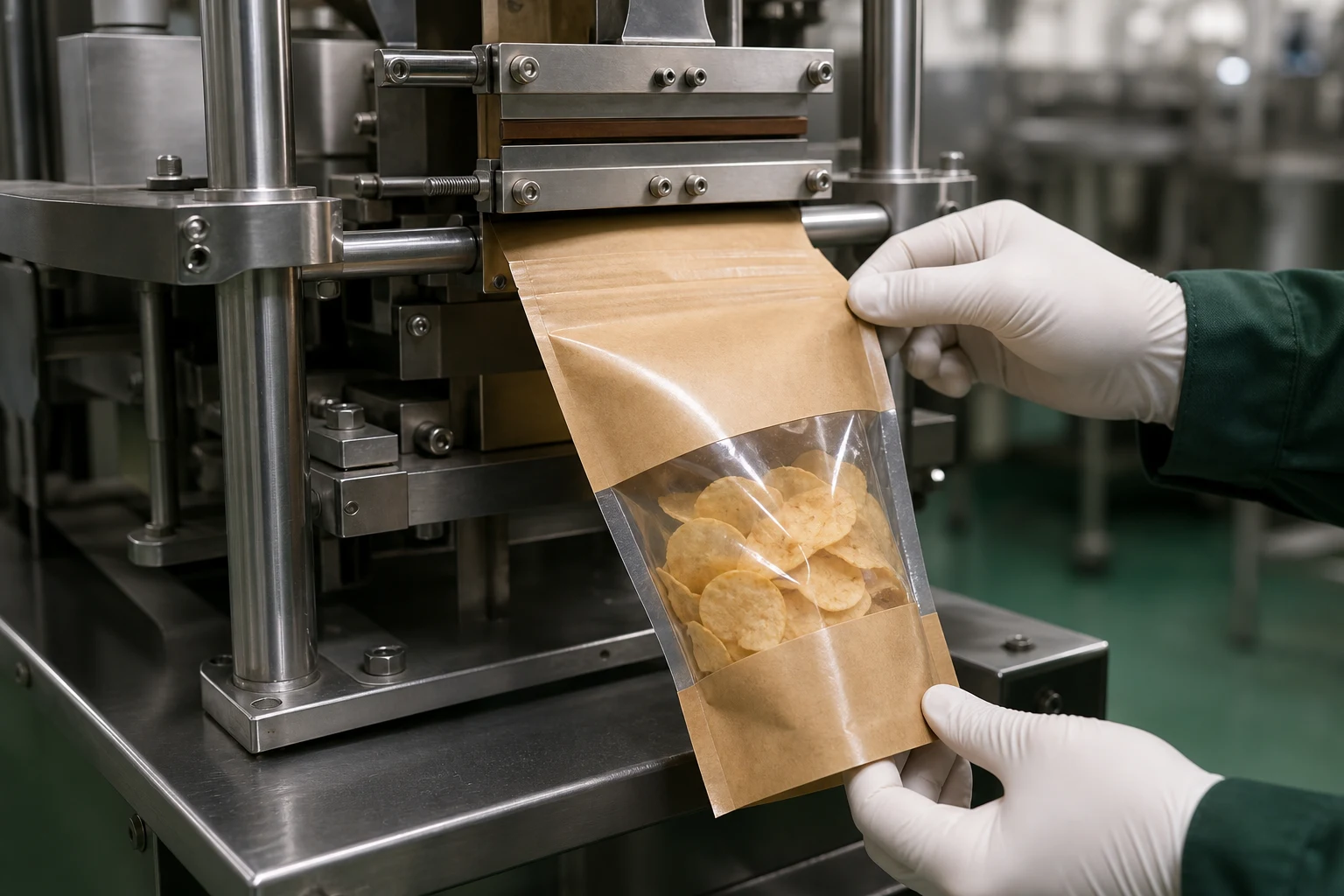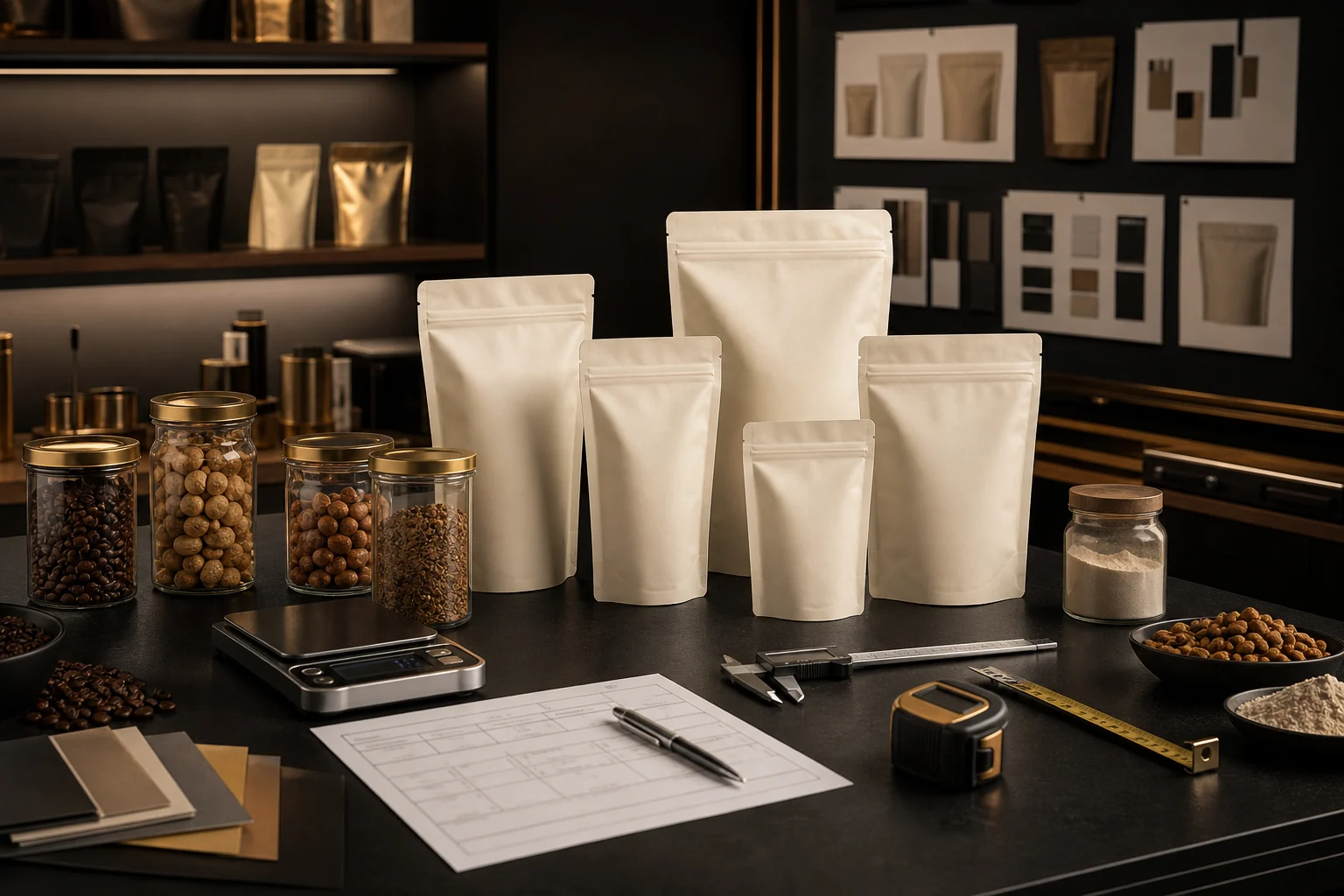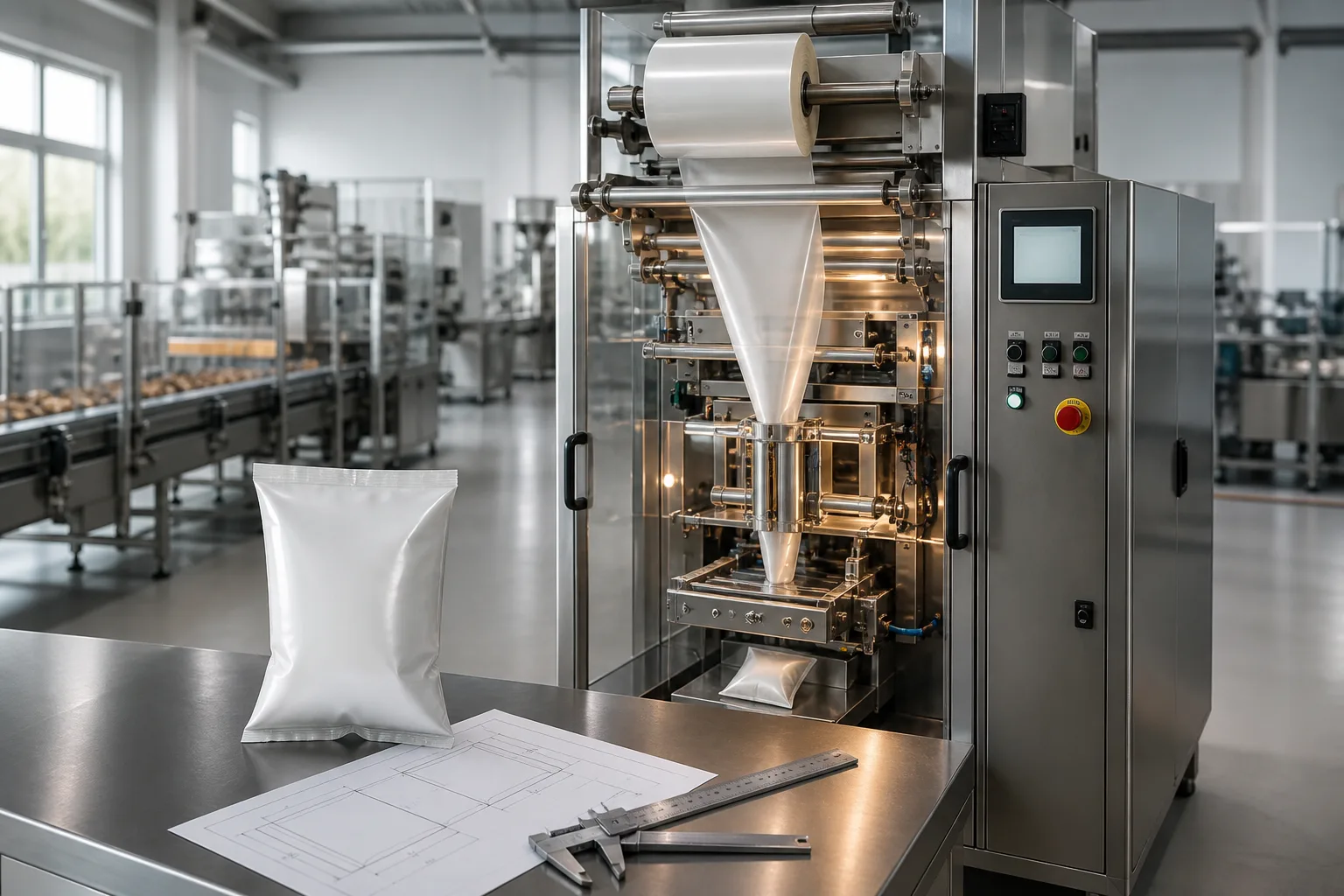
A pouch dimension can look sensible on a dieline yet jam, wrinkle, miss a seal, or fail downstream when it does not match the actual machine route.
I match pouch dimensions to VFFS or HFFS equipment by confirming the machine’s approved format range, film and forming path, product fill, seal zones, handling, and a representative line trial.
I treat the pouch as a complete system. I confirm the product, material, filling, handling, and customer experience before I approve production.
What Is the Difference Between a VFFS and HFFS Dimension Check?
“Fits the machine” is too vague when vertical and horizontal equipment form, fill, seal, and transfer material through different paths.
I start with the actual VFFS or HFFS machine, approved formats, forming parts, film width or pouch range, seal geometry, filler, and downstream transfer rather than a generic bag size.
I ask the machine owner or OEM for the relevant format documentation and the configuration that will run the order. Vertical and horizontal form-fill-seal systems can handle different styles, but that does not make every pouch interchangeable. A form-fill-seal material must suit the selected process, including sealing behavior and the physical route it travels. I list the required format, final width and length, side or bottom gusset, pitch, web or pouch supply, seal width, registration requirement, and product-fill position. I then reconcile those facts with the dieline guide before artwork or a purchase order is frozen. The point is to turn “machine fit” into a checkable configuration.
How I make this decision specific
For “What Is the Difference Between a VFFS and HFFS Dimension Check?” in this how do i match pouch dimensions to a vffs or hffs machine review, I define the actual product, pouch configuration, intended use, and decision owner before I ask a supplier or tester for evidence. I keep the selected structure, component details, sample condition, and any stated test method together, then compare the result with the buyer’s actual route rather than a catalogue promise. That record lets me use the custom pouch dieline guide as a decision aid and retain a specification that another team member can check.
For How Do I Match Pouch Dimensions to a VFFS or HFFS Machine, I state what is known, the condition it applies to, and what must still be checked with the actual product. I do not transfer a number, a test result, or a feature choice from another product simply because its pouch looks similar. The result of “What Is the Difference Between a VFFS and HFFS Dimension Check?” should give the buyer a clear next check, the supplier a precise request, and the project owner a record of the remaining uncertainty.
For How Do I Match Pouch Dimensions to a VFFS or HFFS Machine, I request the exact pouch structure, component specification, and test conditions from the supplier. A broad material name or catalogue claim is not a production specification. The right next step is a representative filled sample, where relevant, with observations recorded before production is approved.
Which Dimensions and Tolerances Do I Confirm?
A nominal width and height can hide the seal allowance, gusset, film registration, pitch, product profile, and component positions that determine whether a machine can make or handle the pack.
I confirm finished dimensions together with converting tolerances, seals, gussets, pouch pitch, film width, feature location, fill profile, and downstream clearances in the packer’s own format language.
I never convert a competitor’s retail dimensions into a machine brief without checking what the dimensions mean. I identify cut size versus finished size, seal allowance versus usable panel, and filled pouch shape versus flat pouch outline. I mark where a zipper, valve, tear notch, or perforation sits relative to sealing and handling points. ASTM F2029 is relevant when a project uses laboratory heat-sealability work, but that evidence still needs to be connected to the actual machine and conditions.1 I use a simple comparison record: requested dimension, machine or forming-part limit, sample observation, tolerance owner, and decision. The specification-sheet guide keeps those entries tied to one quote and one revision.
How I make this decision specific
For “Which Dimensions and Tolerances Do I Confirm?” in this how do i match pouch dimensions to a vffs or hffs machine review, I define the actual product, pouch configuration, intended use, and decision owner before I ask a supplier or tester for evidence. I keep the selected structure, component details, sample condition, and any stated test method together, then compare the result with the buyer’s actual route rather than a catalogue promise. That record gives the buyer a decision aid and a specification that another team member can check.
For How Do I Match Pouch Dimensions to a VFFS or HFFS Machine, I state what is known, the condition it applies to, and what must still be checked with the actual product. I do not transfer a number, a test result, or a feature choice from another product simply because its pouch looks similar. The result of “Which Dimensions and Tolerances Do I Confirm?” should give the buyer a clear next check, the supplier a precise request, and the project owner a record of the remaining uncertainty.
How Do Product Fill and Conveying Change the Answer?
A pouch may form and seal correctly yet become too thick, unstable, or uneven after product settles, passes a transfer, or reaches a cartoner.
I test the filled pouch through the intended transfer path and inspect thickness, product migration, orientation, seal stress, infeed behavior, and carton fit before I treat dimensions as approved.
The VFFS community thread makes the risk concrete: powder shifted after conveyor impacts, creating a bulkier end that challenged cartoner entry.2 I do not prescribe its suggested remedy to another line. I trace where the product first moves, then assess pouch orientation, conveyor transitions, drop points, fill profile, headspace, and carton infeed with the actual product. I record whether a pouch works flat, edge-on, upright, or in a controlled orientation. I also inspect seals after the same route. This connects geometry to the powder-pouch seal guide, because fill behavior and functional seal area must be evaluated together.
How I make this decision specific
For “How Do Product Fill and Conveying Change the Answer?” in this how do i match pouch dimensions to a vffs or hffs machine review, I define the actual product, pouch configuration, intended use, and decision owner before I ask a supplier or tester for evidence. I keep the selected structure, component details, sample condition, and any stated test method together, then compare the result with the buyer’s actual route rather than a catalogue promise. That record gives the buyer a decision aid and a specification that another team member can check.
For How Do I Match Pouch Dimensions to a VFFS or HFFS Machine, I state what is known, the condition it applies to, and what must still be checked with the actual product. I do not transfer a number, a test result, or a feature choice from another product simply because its pouch looks similar. The result of “How Do Product Fill and Conveying Change the Answer?” should give the buyer a clear next check, the supplier a precise request, and the project owner a record of the remaining uncertainty.
For How Do I Match Pouch Dimensions to a VFFS or HFFS Machine, I treat the filled pack as a separate check from the material data. I record the fill condition, seal area, opening or closure behavior, carton arrangement, handling observations, and limits of the comparison. That prevents a favourable bench result from becoming an unsupported claim about shelf life, transport, or every product route.
What Should I Send for a Machine-Ready Quote?
Suppliers can return incomparable quotes when one assumes a premade pouch while another assumes a film web, different seal zones, or a different downstream pack.
I send a machine-ready brief with product and fill data, equipment and format details, finished and flat geometry, material proposal, features, sample evidence, carton plan, and written acceptance criteria.
My quote package describes the product, density or fill behavior where relevant, machine type and configuration, pouch or web supply, dimensions and tolerances, structure, sealant and heat-seal concerns, closure or valve, print registration, code zone, expected output route, carton arrangement, and what the trial must demonstrate. I include named failure modes rather than vague quality words: web tracking, wrinkled seals, incomplete seals, component interference, pouch skew, product migration, and cartoner rejection. I ask for a representative sample or filled-pack trial, then retain the result with the written specification. That sequence keeps material assessment, actual line fit, quote comparison, and any later change under control.
How I make this decision specific
| Check | VFFS or HFFS evidence I request | Why it matters |
|---|---|---|
| Geometry | Finished size, flat size, seals, gusset, pitch. | Prevents a nominal-size mismatch. |
| Machine route | Approved forming parts, film or pouch path, transfer points. | Connects design to real equipment. |
| Filled handling | Product distribution, orientation, carton infeed. | Finds downstream failure. |
| Controlled release | Sample condition, observations, acceptance and revisions. | Makes the approval reusable. |
For “What Should I Send for a Machine-Ready Quote?” in this how do i match pouch dimensions to a vffs or hffs machine review, I define the actual product, pouch configuration, intended use, and decision owner before I ask a supplier or tester for evidence. I keep the selected structure, component details, sample condition, and any stated test method together, then compare the result with the buyer’s actual route rather than a catalogue promise. That record gives the buyer a decision aid and a specification that another team member can check.
For How Do I Match Pouch Dimensions to a VFFS or HFFS Machine, I state what is known, the condition it applies to, and what must still be checked with the actual product. I do not transfer a number, a test result, or a feature choice from another product simply because its pouch looks similar. The result of “What Should I Send for a Machine-Ready Quote?” should give the buyer a clear next check, the supplier a precise request, and the project owner a record of the remaining uncertainty.
For How Do I Match Pouch Dimensions to a VFFS or HFFS Machine, I preserve the final decision in a written brief that names the approved sample, conditions, observations, open risks, and change triggers. I then use the packaging specification-sheet guide to keep the quotation tied to the evidence rather than to a remembered sample or a generic product name.
Conclusion
I choose packaging through evidence, filled-pack testing, and clear specifications. That process protects the product, the launch, and the customer experience.
Sources and Further Reading
- ASTM F2029, Laboratory Heat Seals for Determination of Heat Sealability.
- Reddit r/manufacturing, VFFS powder-pouch handling community discussion.
- ASTM F88/F88M, Seal Strength of Flexible Barrier Materials.
- ISTA, packaged-product test procedure categories.
- Unique Packaging dieline guide.
- Unique Packaging specification-sheet guide.
Need a pouch specification?
I can review your product, size, quantity, artwork, and target market.