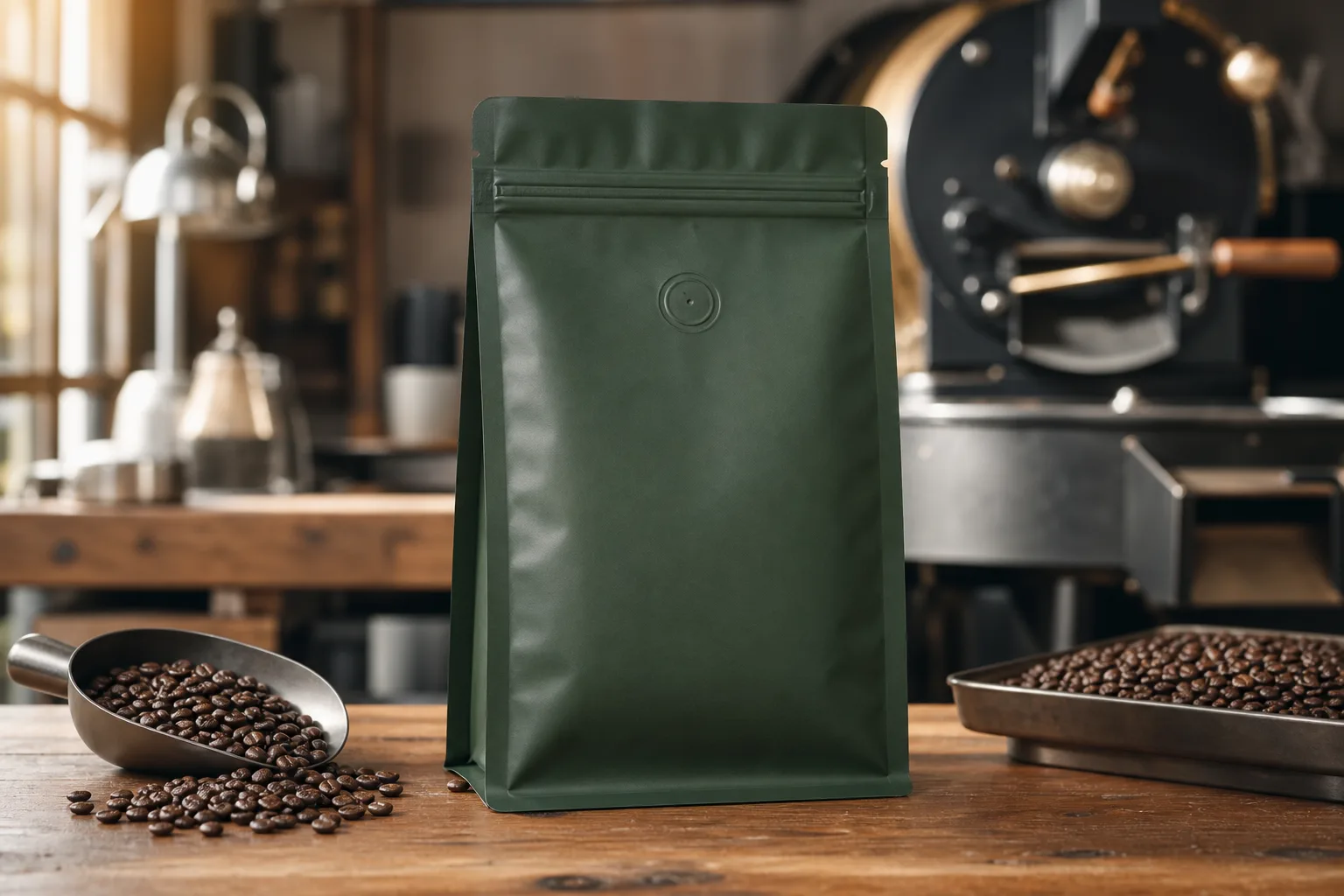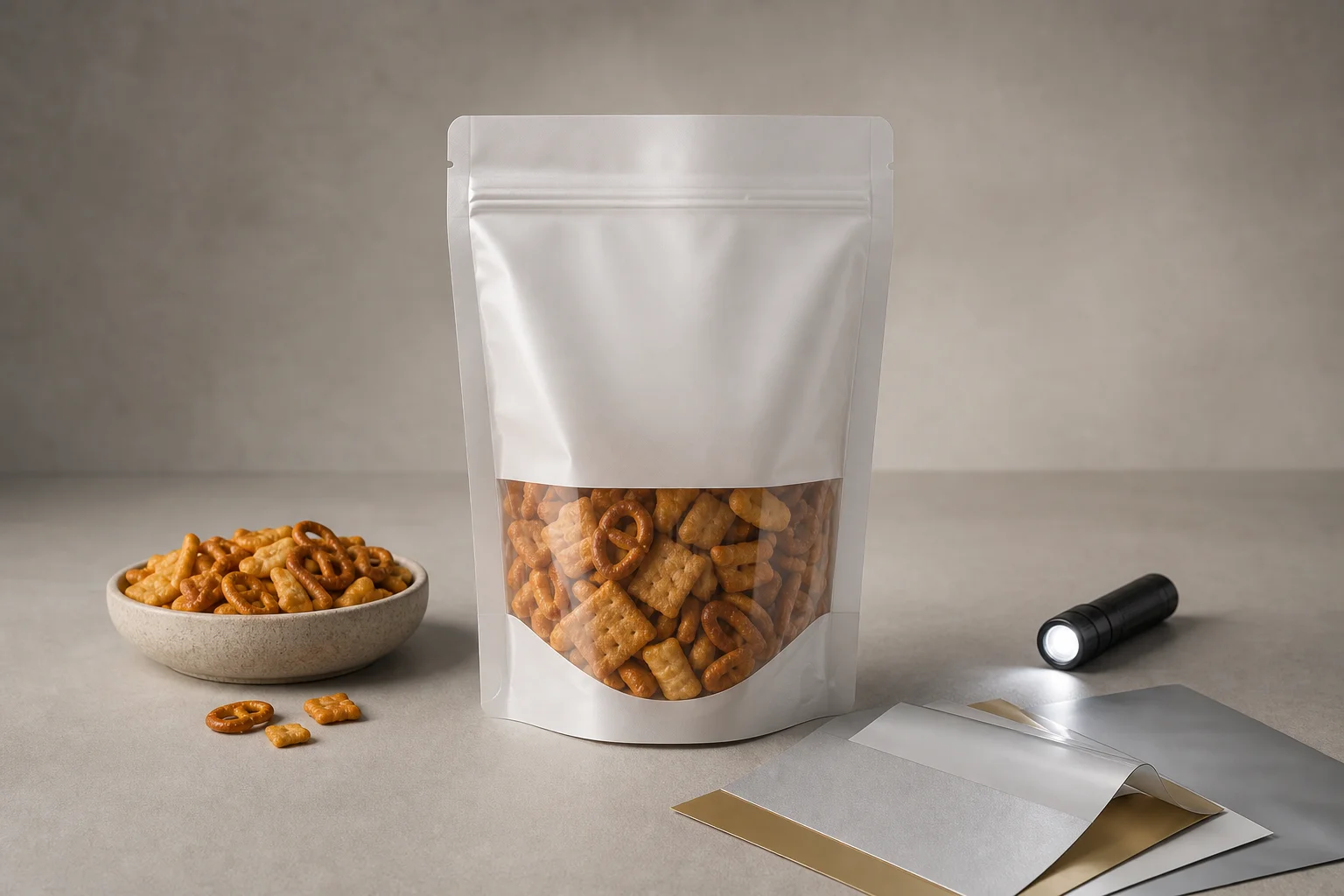
A pouch can look intact at approval, then lose protection after folds, sharp product edges, carton pressure, or a rough distribution route create a tiny hole.
I prevent pinholes by defining the product and handling route, selecting and testing the finished structure for flex risk, and validating filled packs after realistic packing and transport.
I treat the pouch as a complete system. I confirm the product, material, filling, handling, and customer experience before I approve production.
What Creates Pinholes in a Flexible Pouch?
A pinhole is easy to miss when the review stops at flat film or an empty pouch, even though the finished pack will be bent, pressed, and handled.
I identify whether flexing, sharp contents, abrasion, folding, gusset stress, seal geometry, or carton contact is the likely route to a hole before I change material or thickness.
I map the product and pack route in order. I ask whether the product has sharp corners, whether the pouch stands or hangs, how it is filled, where it folds in a carton, and how much movement it sees. A laminate can have more than one layer, so a loss of integrity in one ply is not automatically a complete-through hole. ASTM notes that flex testing and subsequent property testing have different scopes. I therefore inspect the finished pouch and choose a method that can answer the specific risk rather than presenting one test result as universal.
How I make this decision specific
For “What Creates Pinholes in a Flexible Pouch?” in this how do i prevent pinholes in flexible packaging review, I define the actual product, pouch configuration, intended use, and decision owner before I ask a supplier or tester for evidence. I keep the selected structure, component details, sample condition, and any stated test method together, then compare the result with the buyer’s actual route rather than a catalogue promise. That record lets me use the flexible packaging quality-tests guide as a decision aid and retain a specification that another team member can check.
For How Do I Prevent Pinholes in Flexible Packaging, I state what is known, the condition it applies to, and what must still be checked with the actual product. I do not transfer a number, a test result, or a feature choice from another product simply because its pouch looks similar. The result of “What Creates Pinholes in a Flexible Pouch?” should give the buyer a clear next check, the supplier a precise request, and the project owner a record of the remaining uncertainty.
For How Do I Prevent Pinholes in Flexible Packaging, I request the exact pouch structure, component specification, and test conditions from the supplier. A broad material name or catalogue claim is not a production specification. The right next step is a representative filled sample, where relevant, with observations recorded before production is approved.
How Should I Specify Material and Pouch Geometry?
A thicker web alone may not solve a repeated corner rub, a rigid snack edge, or a fold line that concentrates stress in the same place.
I specify the complete construction, pouch shape, gusset folds, fill level, seal areas, product orientation, carton pack, and known contact points, then compare production-style samples.
I ask for the actual film structure and thickness, but I avoid treating either name as a performance guarantee. A structure changes when a layer, coating, adhesive, sealant, zipper, or pouch geometry changes. I also look at how the product settles. A brittle snack, dried pet treat, or a sharp accessory can create a different contact pattern from a fine powder. ASTM F392/F392M is useful for flex conditioning, while its published scope also says it does not measure every abrasion component. That limit matters: if rub is the suspected mechanism, I add a suitable handling or abrasion review instead of claiming a flex test answered it.
How I make this decision specific
| Observed risk | What I trace | Evidence I keep |
|---|---|---|
| Corner rub | Carton contact and product movement. | Packed-sample observations. |
| Fold stress | Gusset and web geometry. | Conditioned sample record. |
| Sharp contents | Product orientation and fill. | Filled-pouch inspection. |
For “How Should I Specify Material and Pouch Geometry?” in this how do i prevent pinholes in flexible packaging review, I define the actual product, pouch configuration, intended use, and decision owner before I ask a supplier or tester for evidence. I keep the selected structure, component details, sample condition, and any stated test method together, then compare the result with the buyer’s actual route rather than a catalogue promise. That record lets me use the flexible packaging quality-tests guide as a decision aid and retain a specification that another team member can check.
For How Do I Prevent Pinholes in Flexible Packaging, I state what is known, the condition it applies to, and what must still be checked with the actual product. I do not transfer a number, a test result, or a feature choice from another product simply because its pouch looks similar. The result of “How Should I Specify Material and Pouch Geometry?” should give the buyer a clear next check, the supplier a precise request, and the project owner a record of the remaining uncertainty.
How Do I Validate Pinhole Prevention Before Production?
A clean sample on a desk does not prove a packed order will keep its barrier after filling, cartoning, vibration, and normal consumer handling.
I validate filled production-style samples at the intended weight, then inspect after the relevant folding, cartoning, handling, and storage steps and retain the accepted configuration.
I define the test condition and the observation first. I may compare flexed and unflexed samples, examine high-stress folds, check the headspace and seal regions, and inspect cartons for repeat contact points. I record the material revision, pouch dimensions, fill, carton arrangement, route simulation, method, and limits. The community discussion cited here is useful because it emphasizes that material choice and sampling depend on the actual product and sales route. It is not evidence that any supplier or online pouch will fail. I use it to insist on a sample path before scaling.
How I make this decision specific
For “How Do I Validate Pinhole Prevention Before Production?” in this how do i prevent pinholes in flexible packaging review, I define the actual product, pouch configuration, intended use, and decision owner before I ask a supplier or tester for evidence. I keep the selected structure, component details, sample condition, and any stated test method together, then compare the result with the buyer’s actual route rather than a catalogue promise. That record lets me use the flexible packaging quality-tests guide as a decision aid and retain a specification that another team member can check.
For How Do I Prevent Pinholes in Flexible Packaging, I state what is known, the condition it applies to, and what must still be checked with the actual product. I do not transfer a number, a test result, or a feature choice from another product simply because its pouch looks similar. The result of “How Do I Validate Pinhole Prevention Before Production?” should give the buyer a clear next check, the supplier a precise request, and the project owner a record of the remaining uncertainty.
For How Do I Prevent Pinholes in Flexible Packaging, I treat the filled pack as a separate check from the material data. I record the fill condition, seal area, opening or closure behavior, carton arrangement, handling observations, and limits of the comparison. That prevents a favourable bench result from becoming an unsupported claim about shelf life, transport, or every product route.
Conclusion
I choose packaging through evidence, filled-pack testing, and clear specifications. That process protects the product, the launch, and the customer experience.
Sources and Further Reading
- ASTM F392/F392M, flex durability conditioning of flexible barrier materials.
- Reddit r/Packaging, discussion of product-specific pouch selection and sampling.
- ASTM F88/F88M, seal strength of flexible barrier materials.
- ISTA, packaged-product performance test procedures.
- Unique Packaging quality-tests guide.
- Unique Packaging seal-leak guide.
Need a pouch specification?
I can review your product, size, quantity, artwork, and target market.