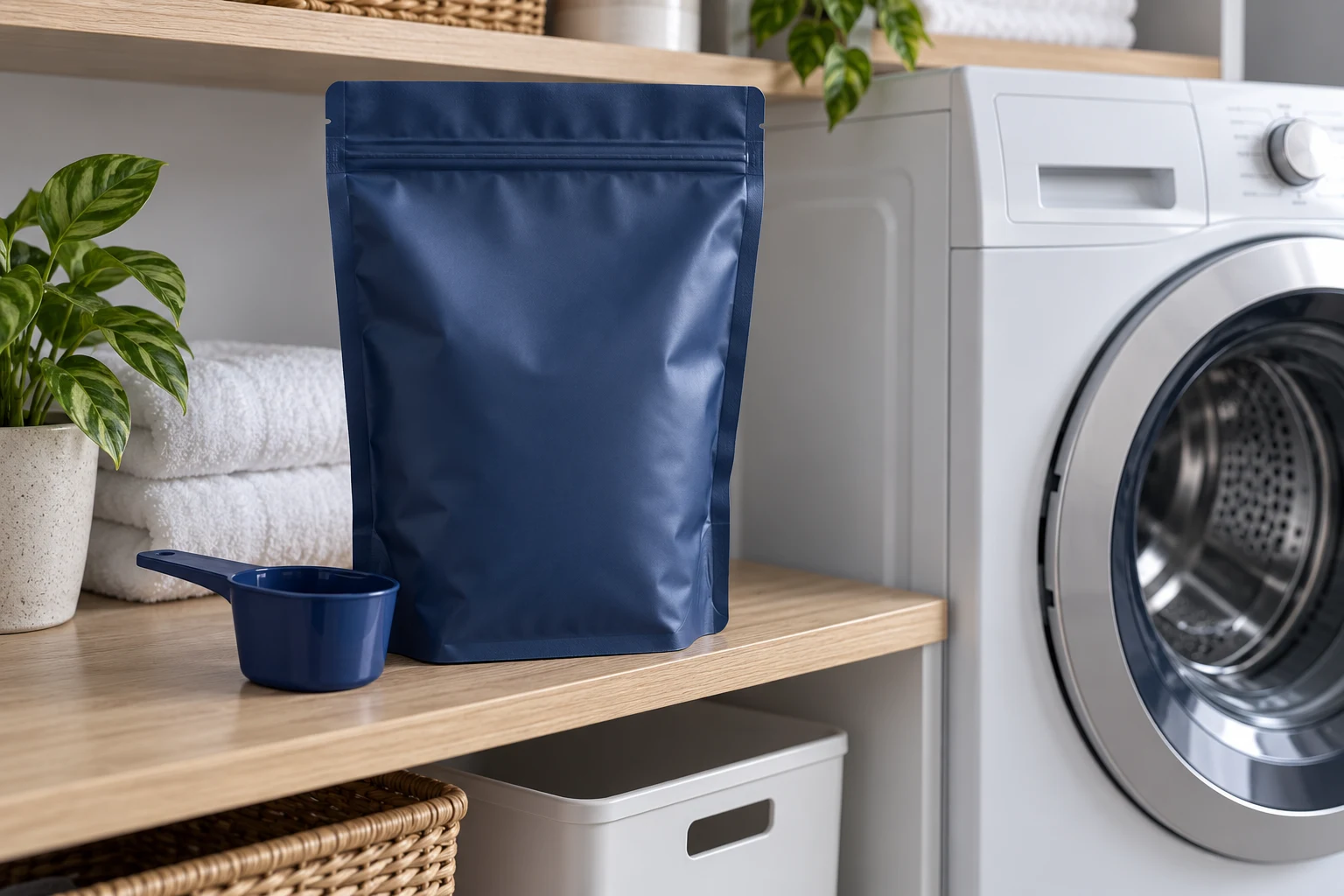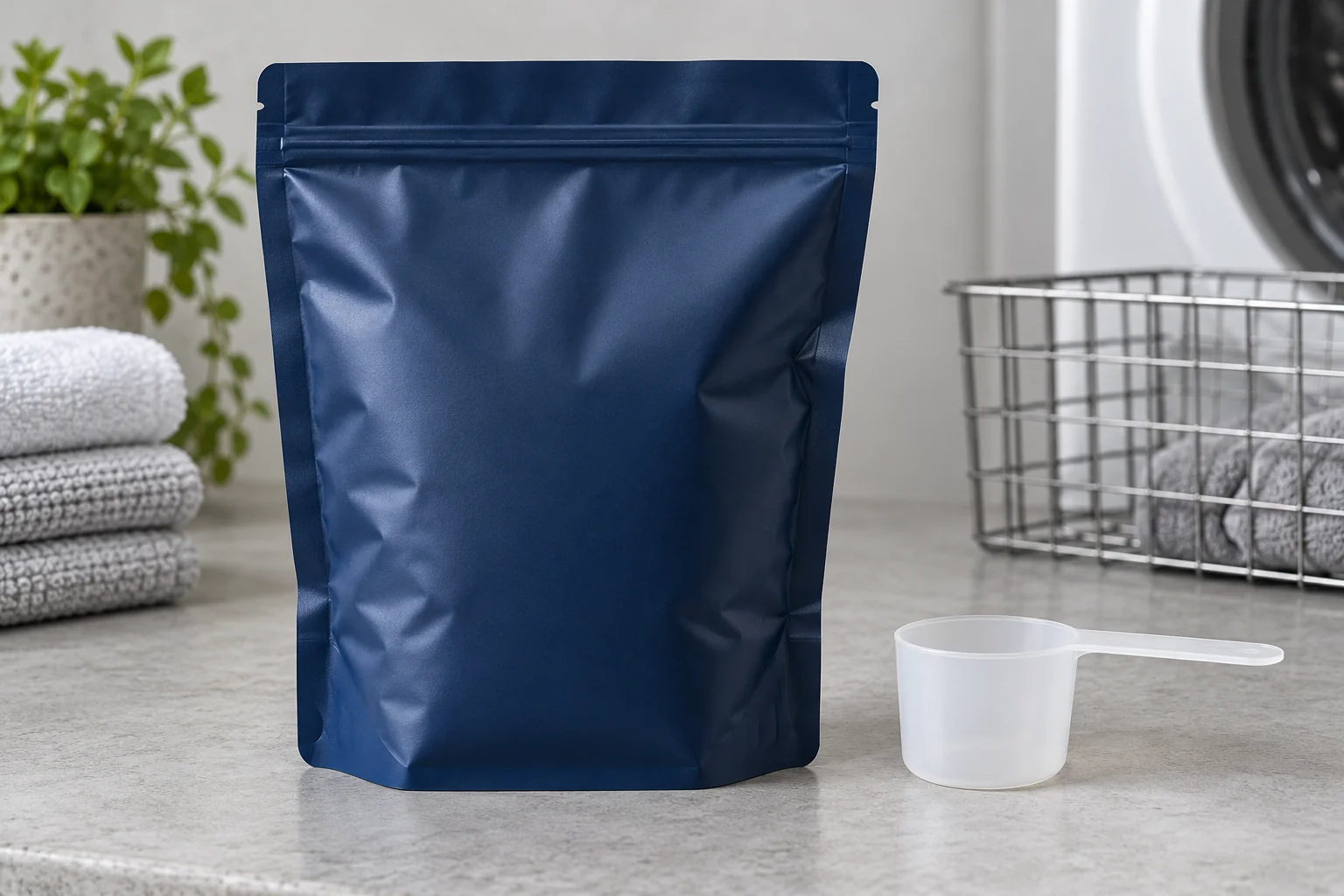
A powder refill can pour cleanly once yet become awkward to close, identify, and store through repeated use near a busy kitchen.
I specify dishwasher powder refill pouches by reviewing the exact formula, intended dispensing routine, closure geometry, moisture-test evidence, and required labeling. I validate representative filled packs before approving a specification and comparable supplier quotations.
I focus on a retail powder package. I do not treat a refill pouch as permission to modify an appliance cartridge or change the detergent manufacturer's directions.
What Does the Customer Need the Refill to Do?
A buyer can choose a narrow outlet for neat pouring and discover that the real product or intended measuring routine does not fit it.
I define whether the customer pours into the appliance's normal dispenser or another explicitly approved receiving system. I test that routine with the actual powder and keep appliance compatibility separate from pouch usability.
I ask the formula owner to describe the intended use in writing. The first question is not which spout looks premium. It is what receives the powder, how the customer measures it, and which instructions govern that step. I request the intended fill range, particle description, and any formulation-specific handling information. I use that brief to decide whether the trial needs an open mouth, a shaped pouring corner, or a proposed powder outlet.
A specific r/Miele discussion describes users refilling appliance cartridges and emphasizes keeping a measuring cup dry. A later comment reports damp powder clumping and failing to dispense.1 I use those observations to identify a handling question, not to endorse cartridge modification or off-brand compatibility. The community report is uncontrolled and concerns particular users' setups. It does not validate my proposed retail pack or prove a cleaning result.
Which directions should control the usability trial?
Whirlpool's current support page says a wet dispenser can make detergent stick, and it advises tightly closed storage in a cool, dry place.2 That is a useful manufacturer source for the dry-handling concern. I still ask the brand to check the intended appliance and detergent instructions. My package test does not decide how much detergent a customer should use or where a particular machine releases it.
I ask evaluators to follow a draft instruction card supplied by the product team. I observe the grip, view of the receiving opening, flow start, flow stop, and reclosure. I record powder lost outside the target and any need for an extra tool. I compare the observations with the pouch size guide, then adjust the drawing when necessary. A smaller retail footprint is not useful if the customer cannot control the pack.
I keep receiving equipment consistent within each comparison. If one candidate is tested with a broad funnel and another without it, I do not call that a fair outlet comparison. The final instructions must match the routine actually reviewed. This keeps the trial specific enough to identify a useful packaging change.
Which Material and Closure Evidence Should I Request?
A supplier's generic powder pouch can hide unanswered questions about the formula, film report, closure, and conditions behind a moisture claim.
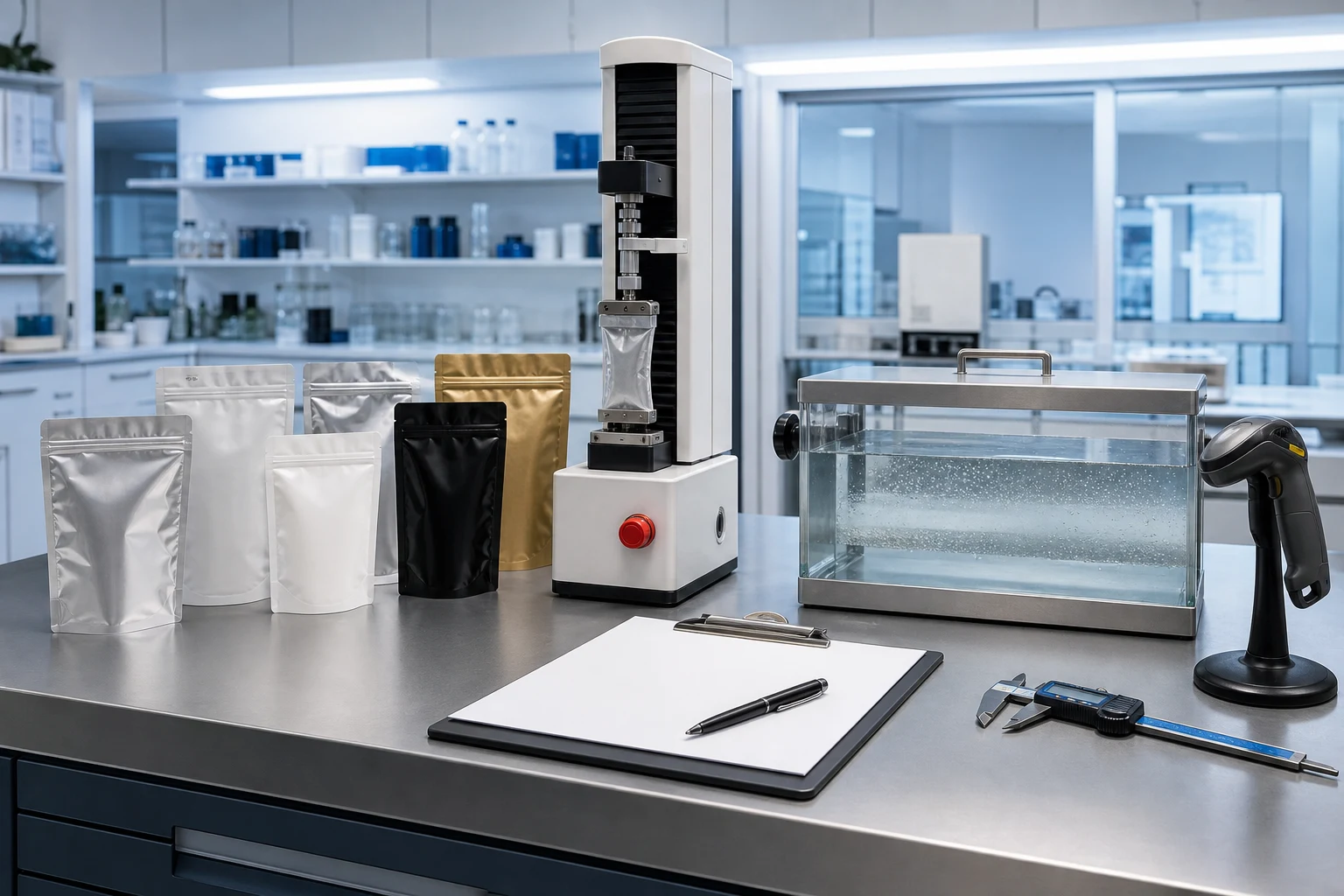
I request the exact laminate, contact components, formula compatibility review, water-vapor transmission conditions, and closure specification. I evaluate film transmission, heat-seal strength, and whole-pouch handling as separate evidence streams.
I send the selected formula identity and intended storage routine to the technical reviewer before approving a material. I ask which package changes should be monitored during the project: appearance, odor, panel condition, closure operation, seal behavior, and any formula-specific measurements. These are proposed checks. I do not claim every dishwasher powder attacks every film or that a familiar sealant is automatically compatible.
I request the full structure and thickness, including any proposed outlet or closure components. If the design uses a zipper, I ask for its drawing and usable opening. If it uses a spout, I ask for a powder trial rather than assuming a liquid-pouch fitting is suitable. I record interrupted flow, residue near the closure, and difficulty stopping the pour when those occur. The result belongs to that formula and geometry.
What does each report actually tell me?
| Evidence | Conditions I record | Decision it supports |
|---|---|---|
| Water-vapor transmission | Film identity, temperature, humidity, units, and thickness. | Comparison of the tested films. |
| Seal strength | Specimen width, preparation, technique, and conditioning. | Comparison of identified seal specimens. |
| Repeated pouring | Formula lot, receiving opening, fill level, and handling steps. | Usability of that pouch configuration. |
| Filled storage | Product, pack revision, time, environment, and observations. | Performance under the defined project protocol. |
ASTM F1249-20 describes film water-vapor transmission testing; ASTM F88/F88M-23 describes flexible-barrier seal-strength testing.34 I ask for comparable reports and the edition actually used. Neither method title supplies an acceptance limit for my detergent. I connect those questions to the core barrier-film guide for material terminology while retaining a separate household-product compatibility assessment.
I use the quality-test guide to keep film, seal, and finished-pack checks distinct. A good film report cannot settle whether users fully close a dusty mouth. A neat zipper cannot establish sealed storage performance. I approve the combined evidence only after each test owner states what was checked and what remains unresolved.
How Do I Approve Label Space, Trials, and the RFQ?
An easy-pour prototype can still fail approval when the artwork loses warning space or the quoted material differs from the tested sample.
I reserve space for the actual product's approved directions and applicable warnings, run identified filled-pack trials, and write the accepted drawing, structure, closure, test conditions, and change rules into the request for quotation.
I ask the responsible reviewer to classify the actual formulation for each market. CPSC explains that hazardous household products meeting FHSA criteria require cautionary labeling on the immediate container.5 I do not infer from the name dishwasher powder that every formula has the same warning or packaging requirement. The product owner supplies the approved content and any required closure evidence. A normal zipper is not evidence of child resistance.
CPSC's poison-prevention material also stresses original containers, product labels, and separating household products from food.6 I therefore avoid suggesting an unlabeled beverage bottle as a refill destination. I make the retail powder identity visible and review the intended storage instructions with the safety team. The final label must remain readable after opening; a warning placed entirely on a removed tear strip cannot help the later user.
What does my pilot release record contain?
I run the approved routine at several representative fill levels selected in the plan. I identify the formula lot, pouch revision, sample count, environment, receiving equipment, and observations. I separate unopened storage from repeated opening. I ask the product owner to approve numerical limits and qualitative rejection criteria before the work begins. I do not convert a short bench trial into a claim about cleaning effectiveness or storage life.
- Formula revision, target market, intended appliance routine, and approved directions.
- Fill range, mouth or outlet drawing, closure, seal zones, and artwork revision.
- Exact construction, contact components, compatibility plan, and report references.
- Storage and pouring conditions, acceptance criteria, retained samples, and traceability.
- Required label review, applicable safety evidence, and substitution rules.
I place those details in the purchase specification. I then ask suppliers to quote the same approved configuration and identify deviations clearly. A different film, mouth, cap, or zipper needs review before substitution. I leave MOQ, price, and production timing to current project quotations rather than publishing unsupported figures.
I retain the instruction card used in the trial alongside the artwork proof. If the commercial team later changes the recommended routine, I ask which usability and safety checks must be repeated. This makes the final approval a record of the system customers will receive, rather than just an attractive empty pouch.
Conclusion
I approve dishwasher powder pouches through formula-specific review, controlled pouring, recorded storage trials, readable labeling, and supplier quotes tied to the tested specification.
Sources and Further Reading
- Reddit r/Miele, refill handling and damp powder observations.
- Whirlpool, detergent remaining in the dispenser and dry storage.
- ASTM F1249-20, published water-vapor transmission method scope.
- ASTM F88/F88M-23, published seal-strength method scope.
- CPSC, FHSA cautionary labeling requirements.
- CPSC, Locked Up Poisons household-product guidance.
Need a pouch specification?
I can review your product, size, quantity, artwork, and target market.