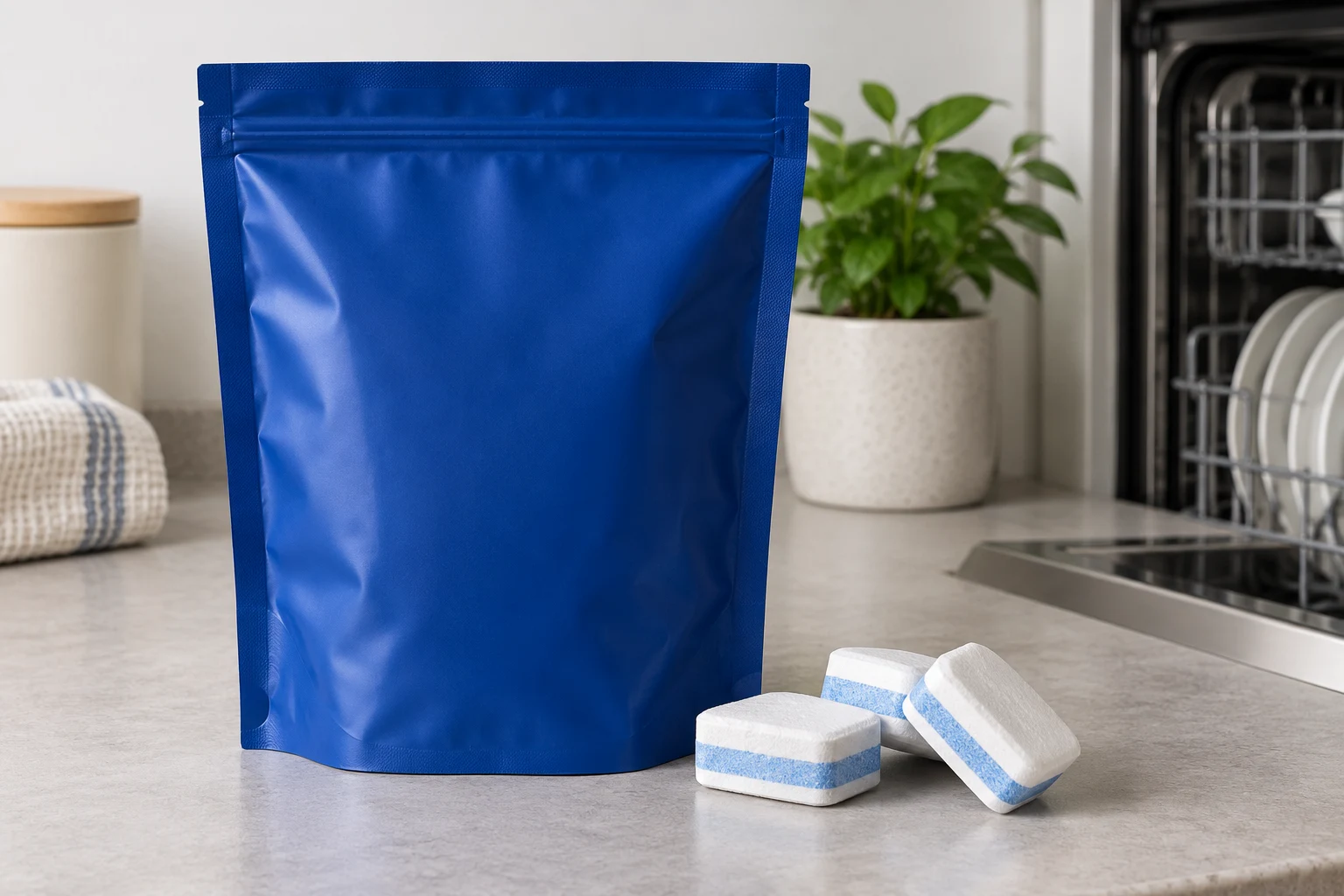
A bag of stuck dishwasher tablets is frustrating to use. I check the actual tablet, closure routine, and dry storage brief before choosing a pouch.
I specify dishwasher tablet pouches by identifying the tablet format, testing dry-hand access and complete reclosure, comparing documented moisture performance, and checking breakage in filled packs. I retain the original labelled storage system and confirm the approved construction before ordering.
At Unique Packaging, I place this in the pouch-features cluster. Solid tablets, their possible individual wrapping, and their repeated removal need different trials from loose powder or laundry sheets.
Which Tablet Format Am I Designing Around?
A solid tablet, wrapped tablet, and filled capsule need different handling questions. I confirm the product architecture before treating a pouch sample as representative.
I record tablet geometry, mass, count, wrapping, formulation reference, and the product owner’s directions. I size the pouch with actual units and retain the proposed warning, storage, and opening information with the sample.
I ask the detergent owner what the package will contain. I distinguish an unwrapped compressed tablet from an individually wrapped tablet or a multi-compartment capsule. I keep that distinction in the brief even if marketing uses the word tablet for several products. The sample needs to represent the format that the customer will remove and use.
Finish’s storage page advises using dry hands and explains that some of its products have water-soluble wrapping that should not be removed. I use that manufacturer example to show why product-specific directions matter. I do not assume that another brand has the same wrapper, formula, dosing instructions, or storage period.1
I request representative units from the proposed production version. I record dimensions, count, mass where useful for handling, visible surface condition, and any individual wrapping. I photograph the starting tablets and identify the lot. A sample filled with wooden blocks or unrelated demonstration tablets can establish rough geometry, but it cannot establish product compatibility or damage behaviour.
How I choose usable space
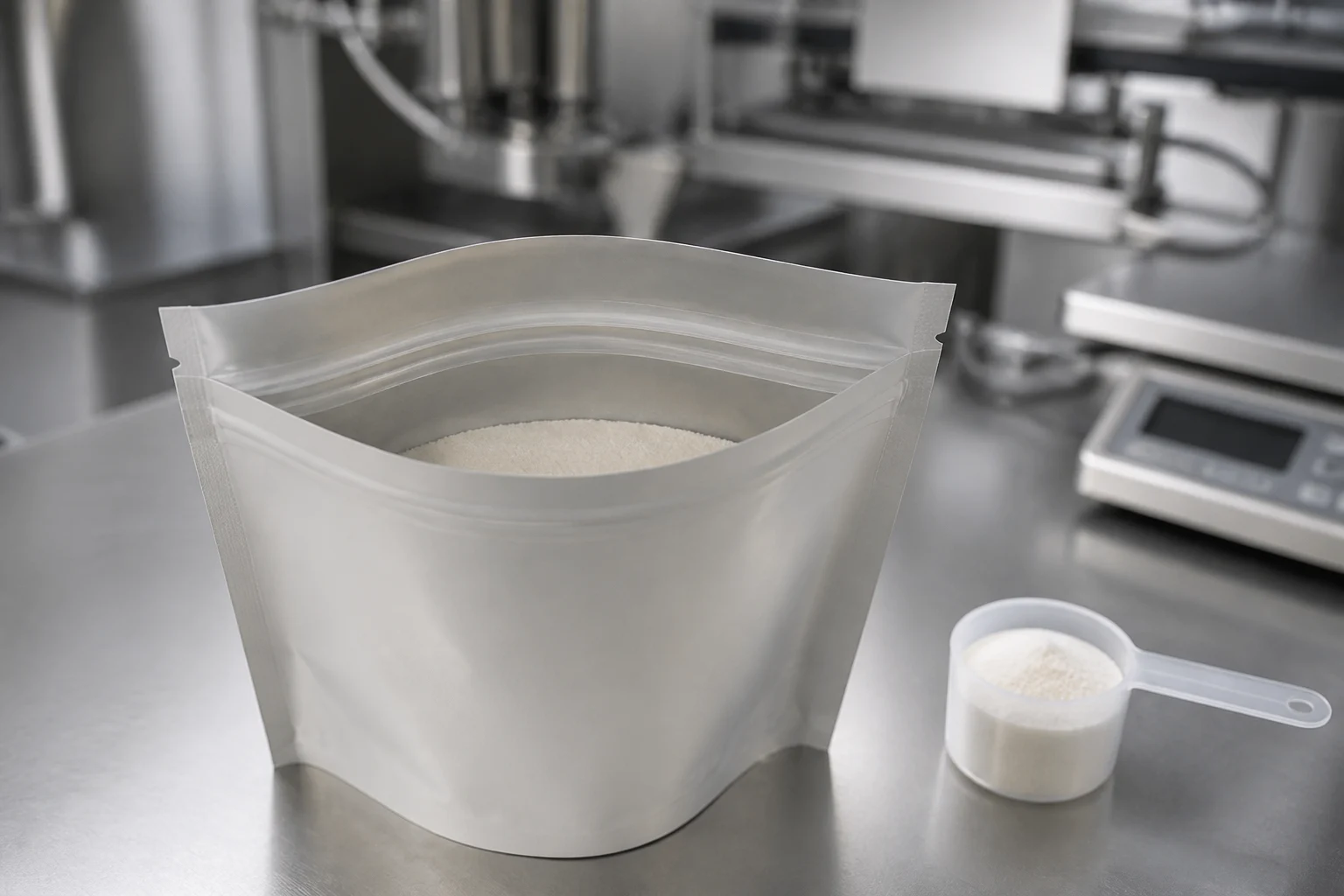
I fill several candidate pouches with the intended count and observe the settled arrangement without deliberately aligning every tablet for a tidy display. I check whether the opening allows an adult to remove one unit while keeping the remaining contents inside. I compare full and low-count packs because the grip and tablet position can change as the pack empties.
I use the filled pouch sizing guide to record dimensions and usable opening space. I inspect corners and seams where tablets press against the pouch. If a retailer requires a particular shelf presentation, I test that arrangement with filled samples. I avoid inferring pack capacity from a pouch marketed for a similar weight of powder.
The American Cleaning Institute advises keeping dishwasher detergent in its original container with the label intact, following directions, and storing it out of reach of children and pets. I retain those requirements in the product-owner review. A new brand package must have approved directions and warnings; an attractive pouch is not a reason to encourage decanting into food-style containers.2
I also ask the responsible team to decide any applicable closure-safety requirements for the intended market. I do not describe an ordinary zipper as child-resistant. That question needs its own evidence and responsible approval, while the geometry and material trial proceeds against the actual tablet and labelled-use brief.
How Do I Test Reclosure Without Encouraging Damp Handling?
A zipper can be easy to open but awkward to close across its full width. I observe the dry-hand routine and keep tablets away from water during usability checks.
I test opening, single-unit removal, and full reclosure with dry hands at several pack counts. I record closure obstructions and grip changes, preserve original storage instructions, and investigate sticking as a product-and-package issue.
I begin with the proposed sealed retail pouch. I ask an adult tester to open it, remove a unit with dry hands, and close the full track. I watch where the fingers land and whether the opening can be managed without touching several other tablets. I keep the exercise on a dry work surface and follow the product owner’s handling directions.
I repeat at full, middle, and low counts. I record whether the pouch collapses into the contents, whether a tablet blocks the zipper, and whether visible powder or wrapper material reaches the track. If the tester needs a second grip or a flat surface to close it, I note that step. I compare closure candidates with the same unit format and task.
A buyer in r/britishproblems described a bag of dishwasher tabs that had stuck together. One commenter admitted not resealing the bag consistently. I use these as attributed accounts of a frustrating storage routine. They do not prove that a particular film or zipper caused the problem, and I do not reproduce the thread’s suggestions for handling damaged products.3
How I separate observation from diagnosis
I retain unopened controls and packs used on a defined opening schedule. I record unit count removed, time open, reclosure method, temperature, humidity, and visible changes. If units stick or a wrapper changes, I preserve the sample and ask the detergent owner to investigate. I do not recommend breaking apart, heating, or changing the dose of a damaged product.
Finish links moisture contact with sticking and advises dry handling for its tablets. I use that narrow manufacturer guidance to justify evaluating the proposed storage routine. It does not establish the sensitivity of every competing tablet or supply a universal humidity threshold. The formula owner must set suitable product-specific conditions and acceptance criteria.1
I keep the sample approval checklist with the closure observations. I ask the artwork owner to confirm that opening and storage directions remain visible after repeated use. If the pouch is likely to be folded, I inspect that state too. The aim is an adult-use task that works with the approved labelled storage system, while any separate safety assessment remains attached to the final closure and complete package.
What Moisture and Handling Evidence Belongs in the Order?
A low transmission number does not describe every filled pouch. I need its conditions, the complete material, and evidence that tablets survive the intended handling sequence.
I compare identified film constructions, conditioned moisture and seal reports, product compatibility observations, and filled-pack handling. I confirm tablet count, closure, process settings, artwork, and sample references before requesting comparable quotations.
I request the full film construction, thickness and tolerances, contact layer, adhesive and print arrangement, zipper, and top-seal layout. If a supplier offers a paper-faced or proposed mono-material version, I ask for its complete composition and the same evidence as other candidates. Appearance alone does not establish moisture protection, chemical compatibility, or an end-of-life claim.
| Option or observation | Question I ask | Evidence for approval |
|---|---|---|
| Conventional laminate | Does this exact structure meet the product brief? | Identified film, compatibility observations and filled trial |
| Paper-faced candidate | What layers actually contact and protect the tablets? | Complete construction and conditioned moisture results |
| Alternative closure | Can adults close the full track after each use? | Repeat-use observations and any required separate safety evidence |
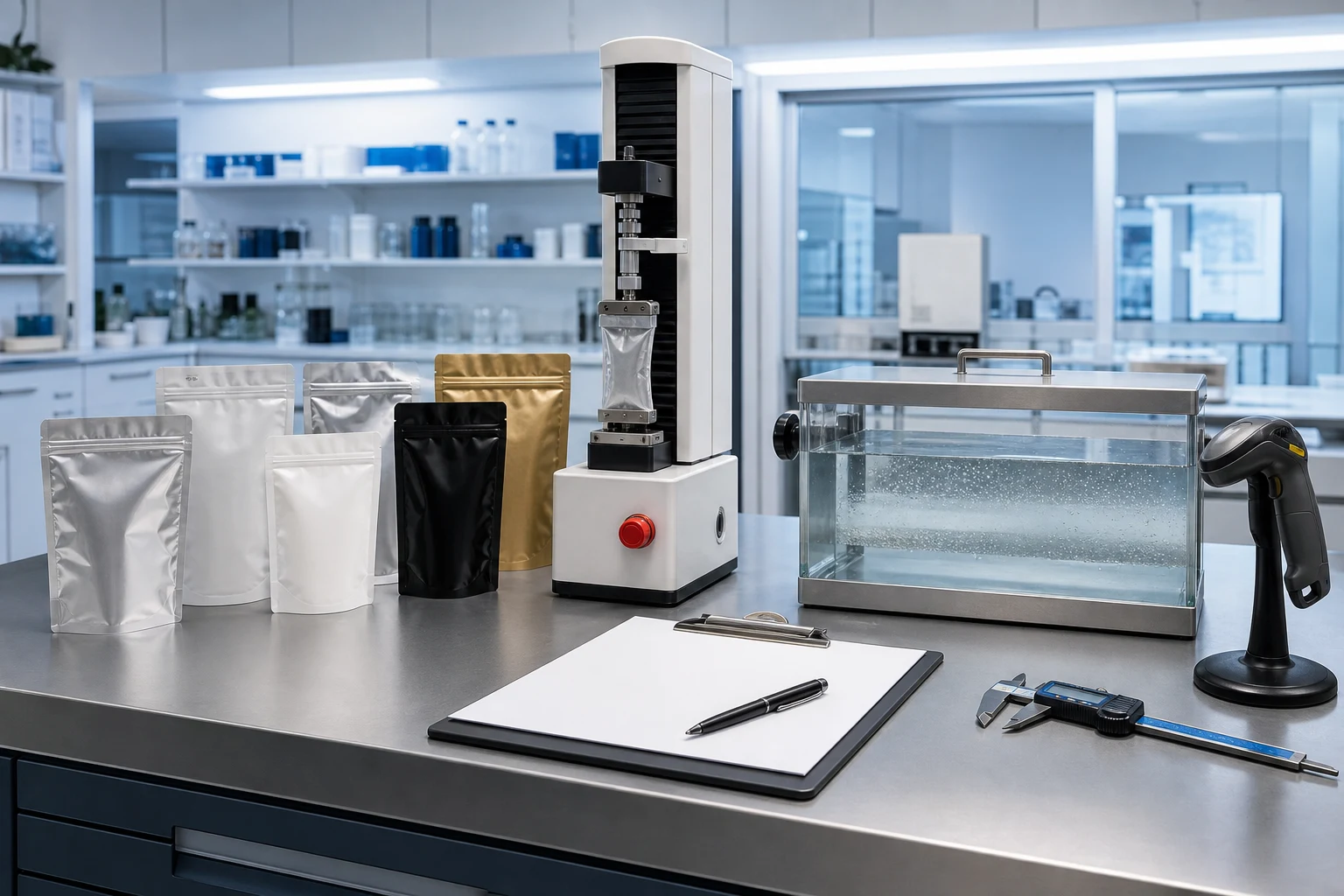
Intertek lists ASTM F1249 for water-vapour transmission and ASTM F88 for seal strength. I ask for temperature, humidity conditions, units, thickness, sample conditioning, and identity as relevant. For seal testing, I retain specimen support, pull speed, and failure description. A peel result and a transmission report answer different questions.4
How I run a useful filled comparison
I ask the detergent owner and laboratory to choose conditions representative of the proposed route. A project might use 23°C and 50% relative humidity as a reference, plus another agreed exposure. These are proposed settings, not a dishwasher-tablet standard or a shelf-life claim. I retain unopened references and keep repeated-use packs on a separate schedule.
I record tablet integrity, sticking, wrapper appearance where applicable, residue, pouch changes, and closure function at agreed intervals. The detergent team defines any dissolution or cleaning-performance work separately. A package that remains upright has not passed a cleaning test. A poor cleaning result also needs investigation before anyone blames the film.
I use the filled-pouch handling guide to plan carton arrangement and an appropriate handling sequence. I compare intact units and fragments with the starting reference, inspect pressure points and seams, and record leakage or abrasion if present. I do not present a casual bench drop as transport certification or claim a breakage reduction without comparable results.
My written specification identifies the tablet version, unit count, wrapping, dimensions, film, closure, sealing settings, label revision, coding area, carton layout, and approved sample. After material assessment and the filled trial, I request a quotation against the confirmed specification. I require proposed substitutions in writing. Price, quantity, delivery, certification, barrier performance, and storage promises need evidence for the exact order.
Conclusion
I approve tablet pouches through format-specific samples, dry-use closure checks, conditioned material evidence, handling observations, and a written specification that preserves labelled storage.
Sources and Further Reading
Need a pouch specification?
I can review your product, size, quantity, artwork, and target market.